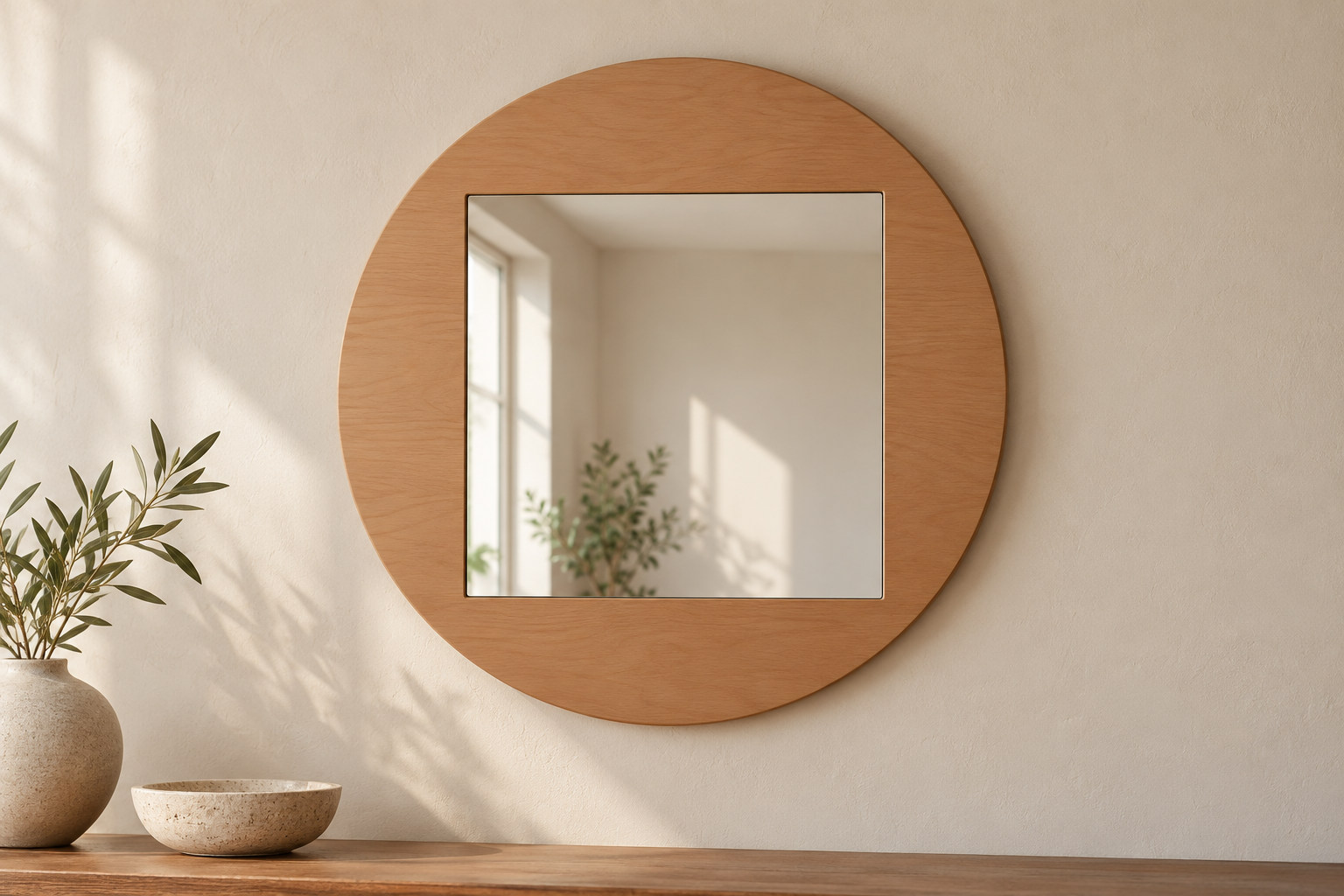
A circle that keeps its square
A mirror can give its frame a quiet supporting role, but this one makes the relationship between frame and reflection the central idea. The circular wooden form remains obvious while the reflective square keeps its corners.
Spectrum dates the design to 1956 and credits Benno Premsela. Its description identifies beech plywood and a square mirror that slides into the surrounding circle through a slot at the top.1
The result is easy to recognise and surprisingly satisfying to inspect. One geometry curves continuously; the other changes direction at four corners. Their difference becomes the object’s visual organisation.
The opening makes two shapes legible
The square supplies a familiar kind of reflection. The circle gives it a surrounding boundary with a different rhythm. The eye can follow the curve, arrive at a corner of the glass, then return to the wood.
That movement makes the spaces around the reflective surface matter. They allow the two outlines to remain separate in the viewer’s reading. The wood is doing more than tracing the mirror’s edge.
The slot-based description also keeps the assembly idea direct. A small number of clearly related elements can produce a strong visual result without asking the object to imitate a complex historical frame.
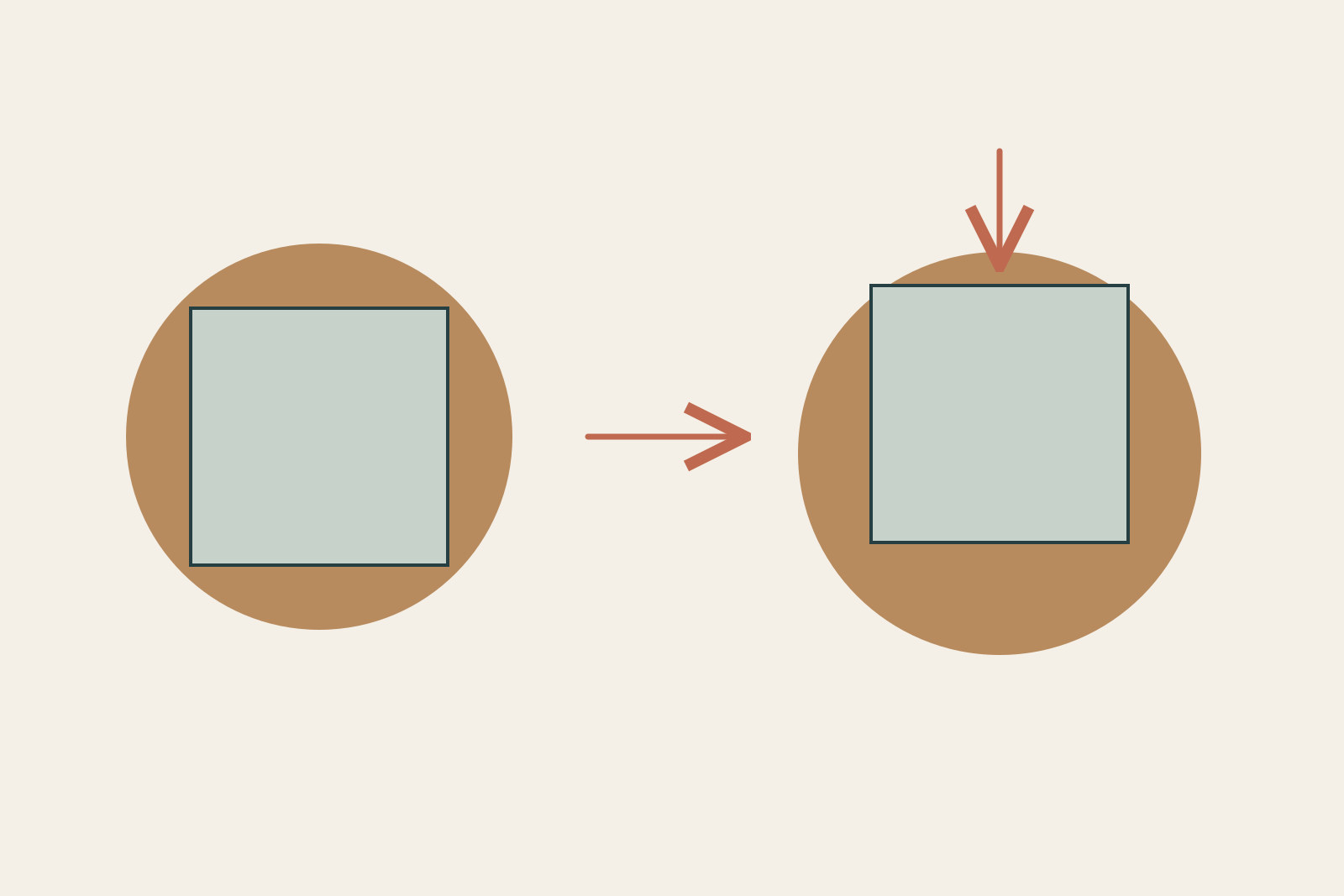
A practical story told by the maker
Spectrum introduces an origin anecdote in which Premsela found a wooden ring among existing stock for a small table and added a slot. The manufacturer explicitly presents it as a story; it is useful for understanding the design’s economy without becoming an independently verified archival event.1
Spectrum’s profile connects Premsela’s object designs to his work with interiors and display. It describes a practitioner interested in clarifying a person’s problem before answering it, a concern that fits the mirror’s direct arrangement.2
The material decision can therefore be read alongside a broader working attitude. There is pleasure in making a small accessory through a clear relationship between existing forms, rather than through accumulating more details.
A new palette keeps an older idea visible
The current record gives 50 cm and 100 cm circular versions and describes recent colour development under Studio RENS. Spectrum’s accessories presentation places that work within a later collection context.13
Those choices change scale and colour while the design date remains 1956. The small visual argument continues to be the same one worth noticing: a round form can make a square feel more, rather than less, distinctly square.