Design story

Bamboo Chair: thin strips learn to share the work

A thin strip seems an unlikely starting point for a chair. Tejo Remy and René Veenhuizen make the repetition and bending of bamboo the organising idea, allowing a small vocabulary of parts to describe a whole seat.

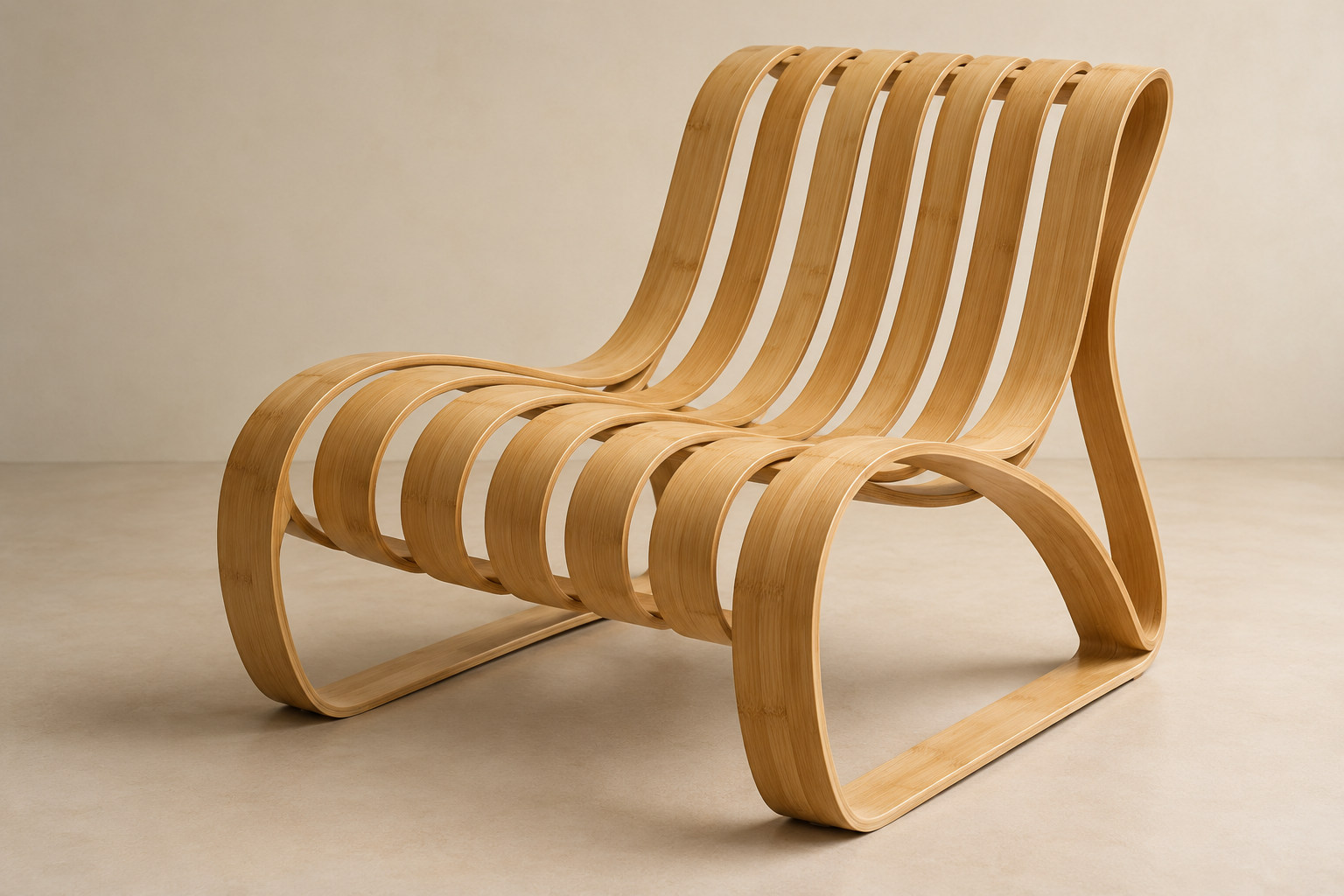
Repeated broad bamboo-like strips bend through an open chair form.
PatinaHall editorial reconstruction. It is not a documentary photograph. Bent strips and the spaces between them make the chair-like volume legible. The arrangement interprets the source-described idea and does not reproduce a museum specimen’s exact geometry or part count.
On this page
Key facts & takeaways

At a glance

Subject
Bamboo Chair
Entry
Design story
Last reviewed
25 October 2026
Designed
2007documented

Three things to remember

  1. Tejo Remy and René Veenhuizen share the design credit.
  2. Centraal Museum describes seven strips in its example.
  3. Design date and the manufacture date of a particular chair are separate facts.

Strips that describe a chair

Tejo Remy and René Veenhuizen give Bamboo Chair a small, repeated vocabulary of parts. Centraal Museum describes its example through seven bent and glued bamboo strips. Their arrangement brings the seat and supporting areas into the same visual system.1

The National Gallery of Victoria dates the design to 2007 and the manufacture of its particular example to 2023. Its description explains the exploration of laminated bamboo through bending and assembling strips.2

Start with one strip and follow its curve. The change of direction helps connect areas that a conventional chair might describe through separate rails, legs and a covered seat.

The memory of a basket

The NGV compares the result to a woven basket. It is a useful visual comparison: repeated strips and the spaces between them describe a larger volume.2

A basket is familiar through the relationship between an enclosing form and the open pattern that makes it. That association gives the chair's unfamiliar curves an approachable point of reference.

The comparison concerns appearance; the documented making account is bent and assembled laminated strips. Their breadth and repetition let the eye keep track of the material while reading the whole chair.
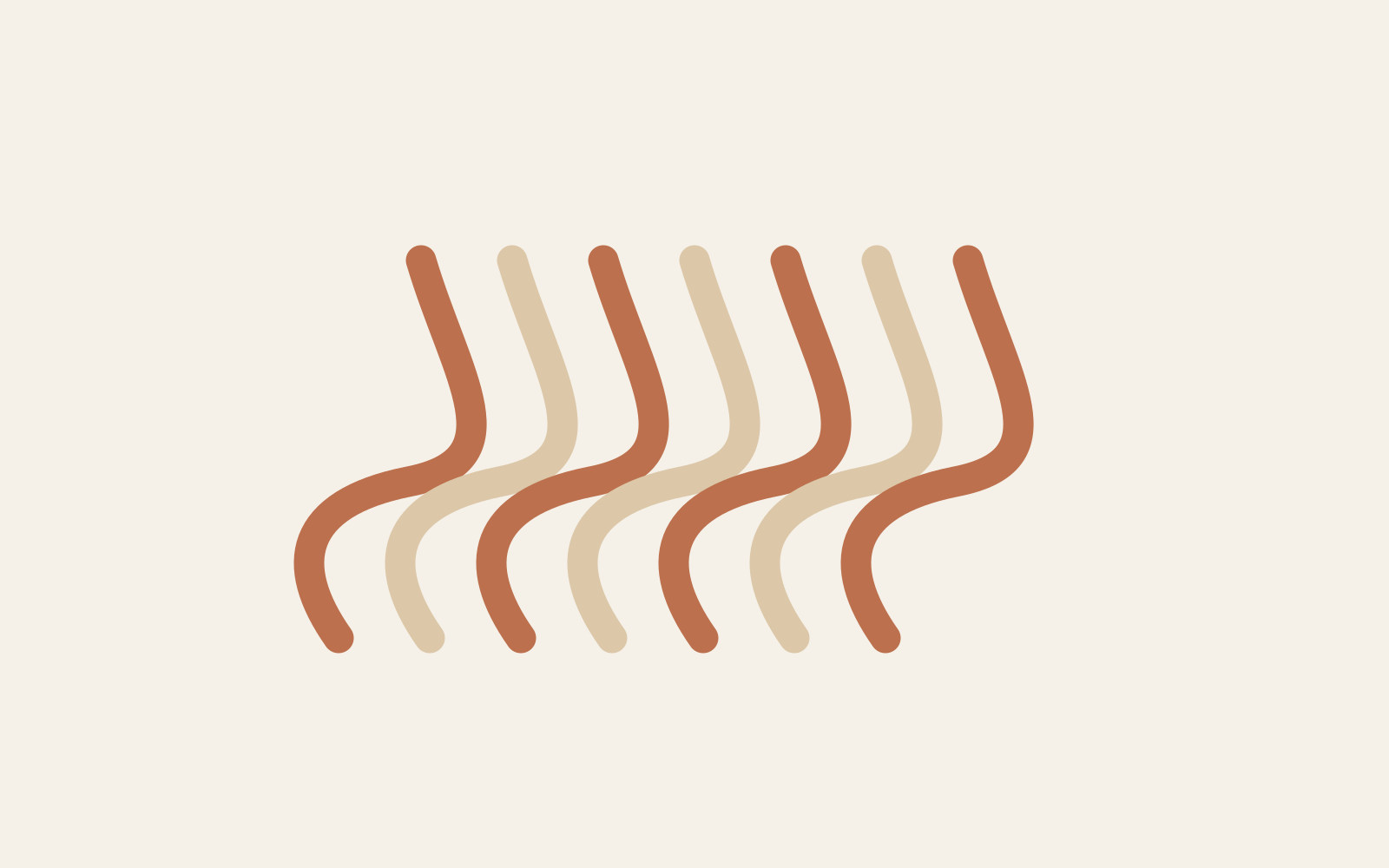
Repeated broad curved strips form a shared seat-like area with open spaces between them.
Repeated bent strips organise a whole seat. Original PatinaHall schematic, not to scale; seven refers to Centraal Museum’s description, not a universal part count or measured assembly.

Looking along the bends

Bending gives a strip more than one direction within the object. Looking along a curve draws attention from a relatively flat area towards a rising or supporting one.

The open spaces matter too. They separate the parts enough for each curve to remain legible, while the repeated material brings the parts back together.

Bamboo Chair asks the eye to assemble its whole from those relationships. A small kit of strips becomes memorable because its repetition never quite settles into a simple straight line.

Research notesEvidence, connections and limits

The seven-strip description belongs to Centraal Museum’s example. The NGV explicitly separates its 2007 design date from manufacture in 2023; these records do not establish a load rating or measured environmental advantage.

Evidence map

Connected subjects and evidence

Reviewed facts

  • Designed 2007documented

    NGV explicitly separates the 2007 design from the 2023 manufacture of its example, accession 2024.152.

    Reviewed 25 October 2026 by PatinaHall editorial.
    • Source 2Designer credits; designed/manufactured field; inscription; place of execution

Reviewed connections

  • Bamboo Chairdesigned byTejo Remydocumented

    Both museums credit Tejo Remy alongside René Veenhuizen. Centraal's explanation of seven bent and glued strips concerns its described example.

    Reviewed 25 October 2026 by PatinaHall editorial.
    • Source 1Generic Dating field and explanatory label marked text 2023
    • Source 2Designer credits; designed/manufactured field; inscription; place of execution
  • Bamboo Chairdesigned byRené Veenhuizendocumented

    René Veenhuizen is jointly credited with Tejo Remy. The duo's name is Atelier Remy & Veenhuizen; a gallery copyright or representation credit is a different role.

    Reviewed 25 October 2026 by PatinaHall editorial.
    • Source 1Generic Dating field and explanatory label marked text 2023
    • Source 2Designer credits; designed/manufactured field; inscription; place of execution

Research trail

Sources and further reading

  1. Centraal Museum, Bamboo chair 33685Centraal Museum UtrechtAccessed 25 October 2026
  2. NGV, Bamboo chair 2024.152National Gallery of VictoriaAccessed 25 October 2026

Last reviewed 25 October 2026. Found an error or a stronger primary source? Contact PatinaHall.