Design story

Slim: the wooden table with a hidden partner

Slim begins with a surprising edge. A broad wooden tabletop meets the eye as a narrow line, made possible by a supporting structure whose development has its own history.

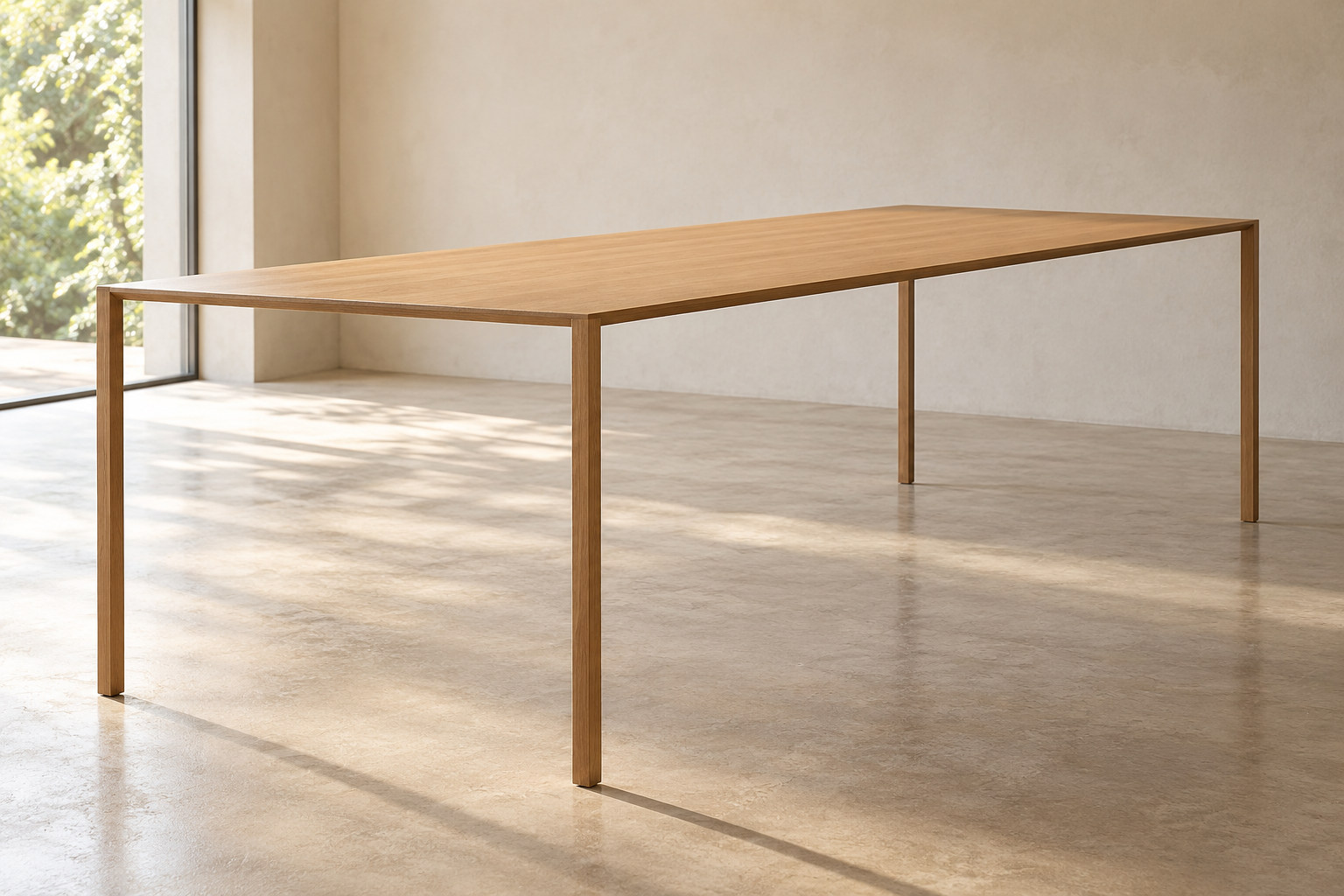
A long rectangular wooden table with a very thin top and slender straight legs, viewed across one corner.
PatinaHall editorial reconstruction. It is not a documentary photograph. The interpretation makes the thin wooden outline visible. The hidden core is not shown and should not be inferred from this view; early and current production descriptions differ.
On this page
Key facts & takeaways

At a glance

Subject
Slim table
Entry
Design story
Last reviewed
23 October 2026
Designed
2005documented

Three things to remember

  1. Arco dates Slim to 2005; Pot labels its development 2005/2006.
  2. The thin appearance depends on a composite structure.
  3. The studio’s early metal account and current factory specification differ.

The edge sets up the surprise

Slim looks like a wooden table whose top has become improbably thin. The surprise begins at the edge: a broad surface ends in a narrow line, and the legs continue the restrained outline. Arco dates Bertjan Pot’s design to 2005 and describes a construction that combines wood with a supporting metal structure.1

The thinness is not a matter of asking ordinary timber to behave miraculously. Materials share the work. Wood supplies the familiar surface and appearance, while the internal structure makes the proportions possible. The table lets a technical decision become a spatial pleasure.

The hidden partner has its own history

Pot’s development account, labelled 2005/2006, describes aluminium in the early composite idea.2 Arco’s current description specifies a steel-sandwich construction. These accounts belong to different production moments and should not be flattened into a single universal core.

The distinction improves the story rather than spoiling it. A visual idea can remain recognisable while the engineering that supports it develops. The important relationship is the partnership between a thin wooden exterior and an organised supporting structure. Looking only at the finish misses half of what makes the table possible.
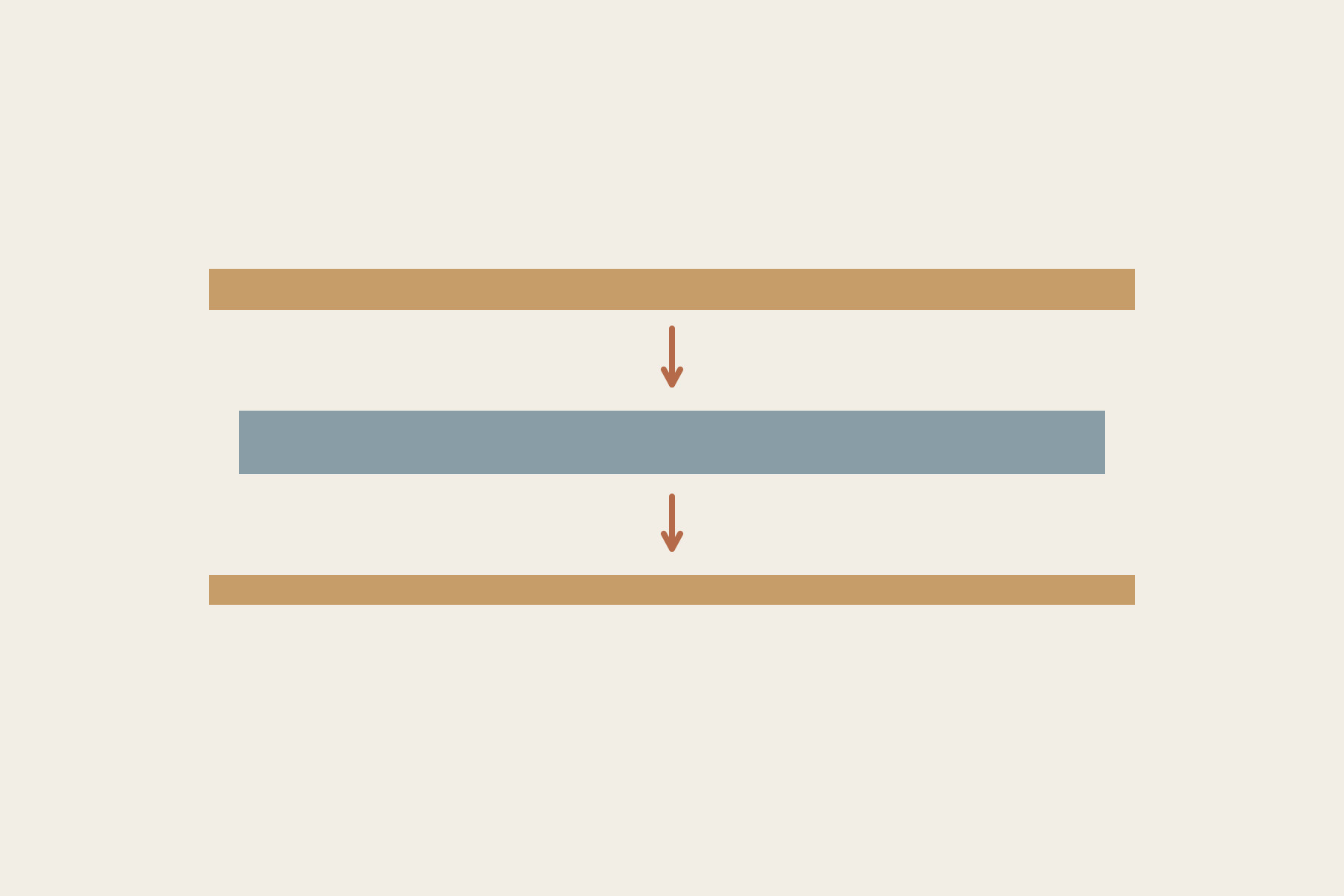
Two thin wood-coloured layers and a thicker blue structural layer are separated vertically.
Original PatinaHall schematic, not to scale. Separated coloured layers explain a wood exterior working with a metal partner. The drawing does not identify every edition’s core, show a measured section or prescribe layer thickness and bonding.

A thin object makes room around itself

Arco’s catalogue places Slim within a wider furniture collection and shows how the family inhabits interiors.3 Its restrained edge leaves a clear view beneath the top. The table can occupy a useful area without presenting a correspondingly heavy band at eye level.

That observation is not a load rating or a promise about every size. It is a way to notice proportion. Slim turns something hidden inside the object into something visible around it: the supporting structure allows the room to retain more of its open appearance.
Research notesEvidence, connections and limits

Pot’s prototype account describes aluminium; Arco’s current description specifies a steel-sandwich construction. These are not merged into one universal core. The illustration explains material roles rather than a measured section or load rating.

Evidence map

Connected subjects and evidence

Reviewed facts

  • Designed 2005documented

    Pot’s prototype account describes aluminium; Arco’s current description specifies a steel-sandwich construction. These are not merged into one universal core. The illustration explains material roles rather than a measured section or load rating.

    Reviewed 23 October 2026 by PatinaHall editorial.

Reviewed connections

  • Slim tabledesigned byBertjan Potdocumented

    The cited record explicitly identifies this designer for the repeatable design or coherent project family.

    Reviewed 23 October 2026 by PatinaHall editorial.
  • Slim tablemanufactured byArcodocumented

    This production relationship is scoped to the source record. Later manufacture, current specifications and the date of the original design remain distinct.

    Reviewed 23 October 2026 by PatinaHall editorial.

Research trail

Sources and further reading

  1. Slim, Bertjan Pot, 2005ArcoAccessed 23 October 2026
  2. Slim table, 2005/2006Studio Bertjan PotAccessed 23 October 2026
  3. Arco Home/Work catalogue: Slim familyArcoAccessed 23 October 2026

Last reviewed 23 October 2026. Found an error or a stronger primary source? Contact PatinaHall.