Designer profile

Mieke Meijer: furniture thinks about the room

A piece of furniture can be approached as a small structure that helps organise a room. Mieke Meijer’s practice follows that possibility from material experiments into a joint studio with Roy Letterlé. Frames, openings and changes of scale become ways to offer people more than one use.

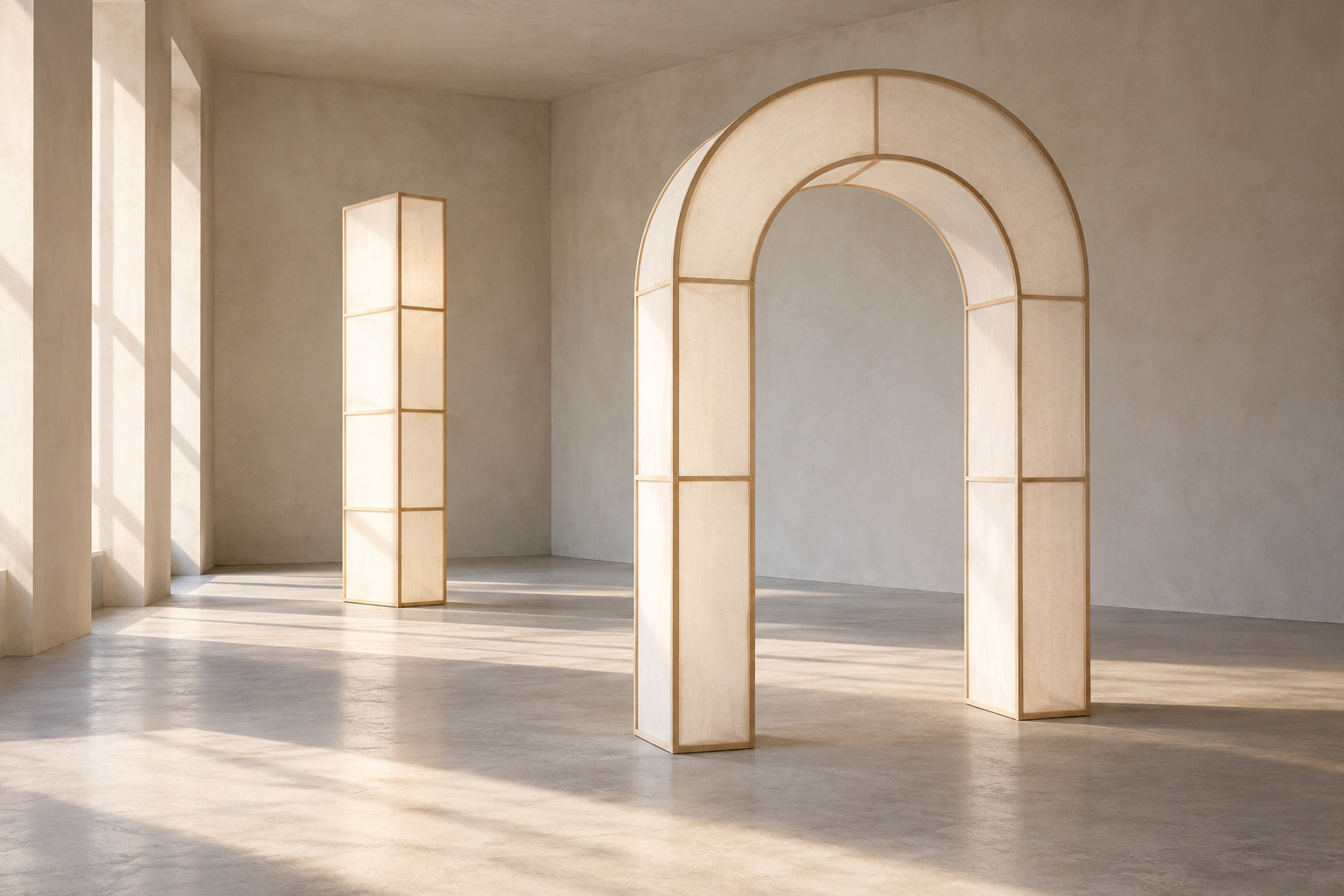
Conceptual luminous frame arch and column in a neutral interior, related to a jointly credited studio practice.
PatinaHall editorial reconstruction. It is not a documentary photograph. A conceptual related-work study connects frame volumes, light and room-scale relationships in the joint studio practice.
On this page
Key facts & takeaways

At a glance

Subject
Mieke Meijer
Entry
Designer profile
Last reviewed
26 October 2026

Three things to remember

  1. The studio is run jointly by Mieke Meijer and Roy Letterlé.
  2. An individual material idea and its collaborative development are different stages.
  3. Open frames and changes of scale help objects relate to surrounding space.

Begin with the possibility in a material

Meijer’s NewspaperWood account starts with a student assignment about wood. In the interview published by Vij5, she recalls the 2003 experiment that led her towards a layered paper material with a wood-like grain.4

The starting point matters. An idea for a material can come before an idea for a finished product, leaving several uses open. Development then requires people who can help the experiment become something others can work with.

Vij5 dates its first meeting with Meijer to 2007. Its account describes the collaboration that followed, keeping the initial material idea distinct from its further development and applications.1

The room enters the design question

The studio’s own statement places its work between architecture and design and describes scalable concepts developed and built for particular projects. An object can be considered through the space it helps define, as well as through its immediate function.3

A frame makes this particularly easy to imagine. Its members establish an outline while its openings keep another part of the room visible. Increasing its scale can change its role from something looked at within a room to something that helps organise the room.

The idea is not simply to make furniture larger. It is to notice how an object’s positive form and the space around it belong to the same experience.
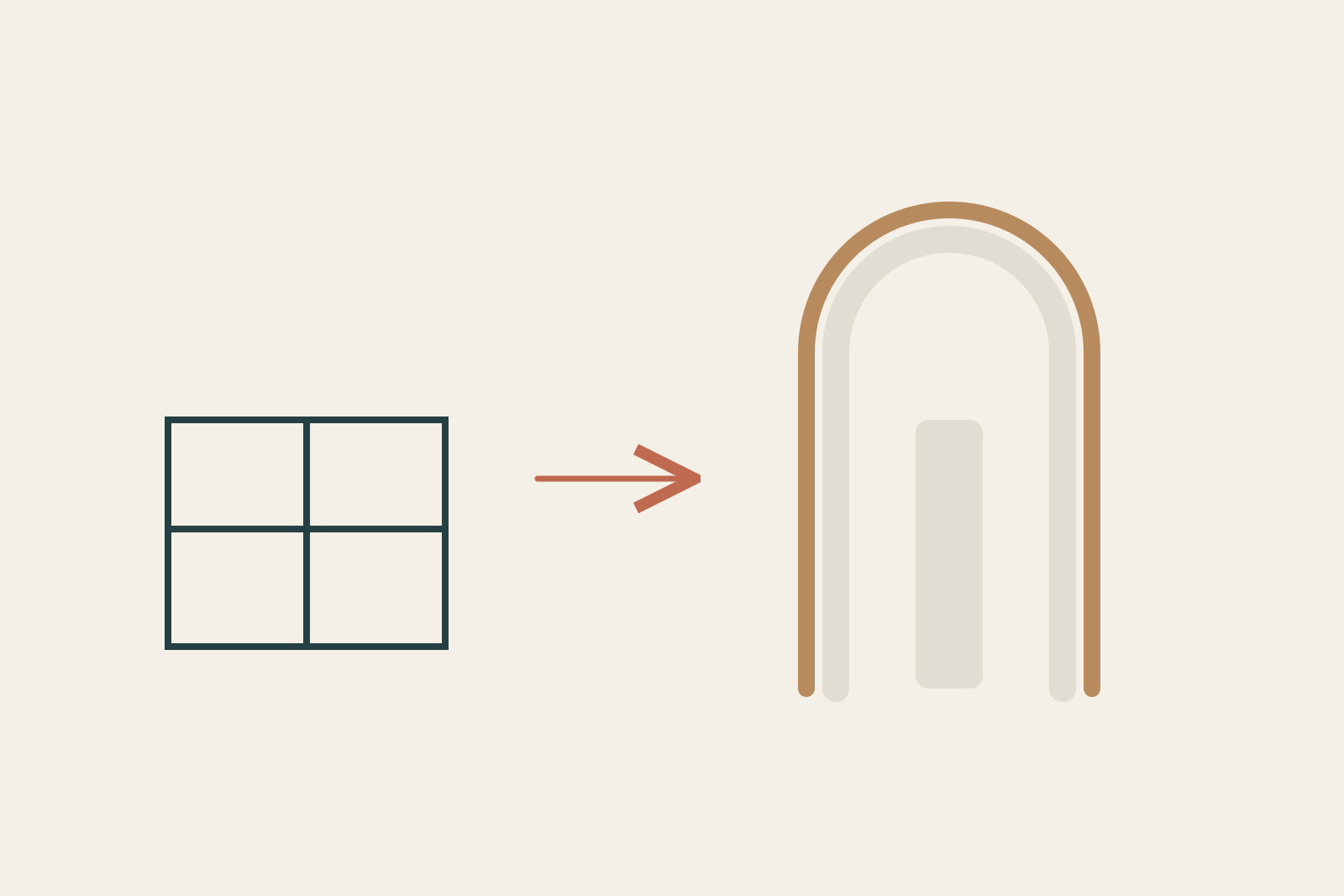
A small open frame and a room-scale arch are conceptual comparisons of scale and use.
A small open frame and a room-scale arch are conceptual comparisons of scale and use. Original PatinaHall schematic, not to scale.

A joint practice develops the system

Vij5 identifies the studio as run by Meijer and Roy Letterlé, bringing together their design and architectural backgrounds. The name of the practice should not make its collaboration disappear.1

In the Dutch Design Week interview, both speak about Space Frames. They describe wanting to stack light and make elements respond to architecture, then developing an experimental project into a system that could interest a client.2

That progression gives the work a human and practical setting. An experiment can open a possibility, but a larger commission also involves conversations, production decisions and a relationship with an actual place. The shift in scale brings other people into the process.

A use can remain open

Vij5’s profile describes objects that allow people to use them in their own way. The DDW conversation similarly leaves room for new applications while recognising that the studio still has a distinct design approach.12

Looking at the work through that balance makes its open structures more interesting. A frame can define something clearly without filling in every possibility. Furniture and architecture meet in the room that remains for a person’s own interpretation.

Research notesEvidence, connections and limits

This is a person profile that explicitly retains the joint studio and Roy Letterlé’s contribution. Conceptual illustrations depict neither the actual workshop nor a particular client commission; no stair or structural safety claim is made.

Evidence map

Connected subjects and evidence

Reviewed connections

  • Mieke Meijercollaborated withRoy Letterlédocumented

    Vij5 identifies Mieke Meijer and Roy Letterlé as the people running Studio Mieke Meijer, with distinct design and architectural backgrounds. The joint DDW interview supports their collaborative practice. The studio name does not make all team output Meijer’s individual authorship.

    Reviewed 26 October 2026 by PatinaHall editorial.
    • Source 1Work or object record and accompanying maker account: Mieke Meijer. Studio Mieke Meijer
    • Source 4Work or object record and accompanying maker account: NewspaperWood layering. Interview met Mieke Meijer
    • Source 2Designer Dialogues interview: both Mieke Meijer and Roy Letterlé discuss Space Frames experiments, development and public-space commissions
  • Mieke Meijercollaborated withVij5documented

    Vij5’s interview traces Meijer’s newspaper-material idea to a 2003 student workshop and its collaboration with her to 2007. Later development also involves the joint studio and a separate material business. The individual origin and collaborative development remain distinct.

    Reviewed 26 October 2026 by PatinaHall editorial.
    • Source 1Work or object record and accompanying maker account: Mieke Meijer. Studio Mieke Meijer
    • Source 4Work or object record and accompanying maker account: NewspaperWood layering. Interview met Mieke Meijer

Research trail

Sources and further reading

  1. Studio Mieke MeijerVij5Accessed 26 October 2026
  2. Designer Dialogues: Studio Mieke MeijerDutch Design WeekAccessed 26 October 2026
  3. Studio Mieke Meijer: practice statementStudio Mieke MeijerAccessed 26 October 2026
  4. Interview met Mieke MeijerVij5Accessed 26 October 2026

Last reviewed 26 October 2026. Found an error or a stronger primary source? Contact PatinaHall.