Designer profile

Kho Liang Ie: a chair thinks about the whole room

Kho Liang Ie’s career invites a change of viewing distance. Start where a cushion meets a frame, then step back towards the room and the collaborators who help give it shape.

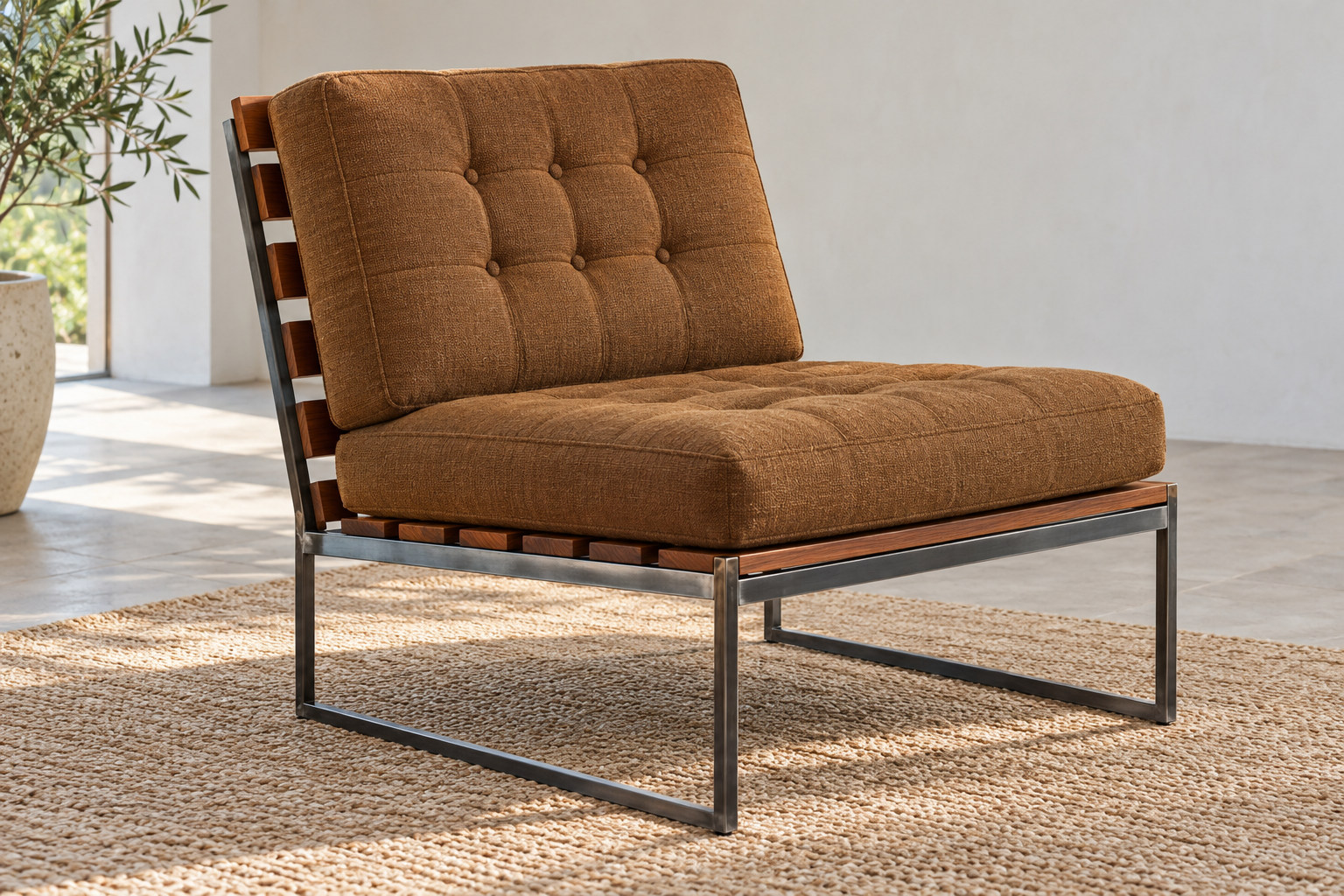
An interpretive lounge chair has deep upholstered cushions within a clear low metal frame with visible wooden slats.
PatinaHall editorial reconstruction. It is not a documentary photograph. Related work introduces the profile through the 416 seating idea. This is not a portrait, a reconstruction of Schiphol or a record of an original armchair’s current materials or cushions.
On this page
Key facts & takeaways

At a glance

Subject
Kho Liang Ie
Entry
Designer profile
Last reviewed
23 October 2026

Three things to remember

  1. Artifort appointed Kho Liang Ie as aesthetic consultant and designer in 1958.
  2. His work included Schiphol interiors as well as furniture.
  3. Objects and spatial planning are distinct but connected parts of the career.

Start with the person, then widen the view

A chair is experienced at the scale of a body, but it also belongs to a larger arrangement. Kho Liang Ie’s work moved between those scales. Artifort records his appointment as aesthetic consultant and designer in 1958 and connects his furniture practice with his interior work at Schiphol in the following decade.1

That movement supplies a more interesting question than a list of famous objects. How does a seat participate in a room? Its shape matters, but so do the spaces beside it, the directions people move and the other things a setting asks them to do.

A frame gives softness somewhere to sit

Artifort’s account of the 416 family, introduced in 1960, describes the contrast between a restrained supporting frame and substantial upholstered cushions.3 The parts retain different characters. The support provides a clear arrangement; the upholstery makes a place for the person within it.

Looking at that relationship is a small-scale way into the wider spatial question. A useful interior needs structure and contact, order and places to pause. The comparison does not turn an armchair into a plan for Schiphol. It shows why studying a nearby object and thinking about an entire setting can belong to the same practice.
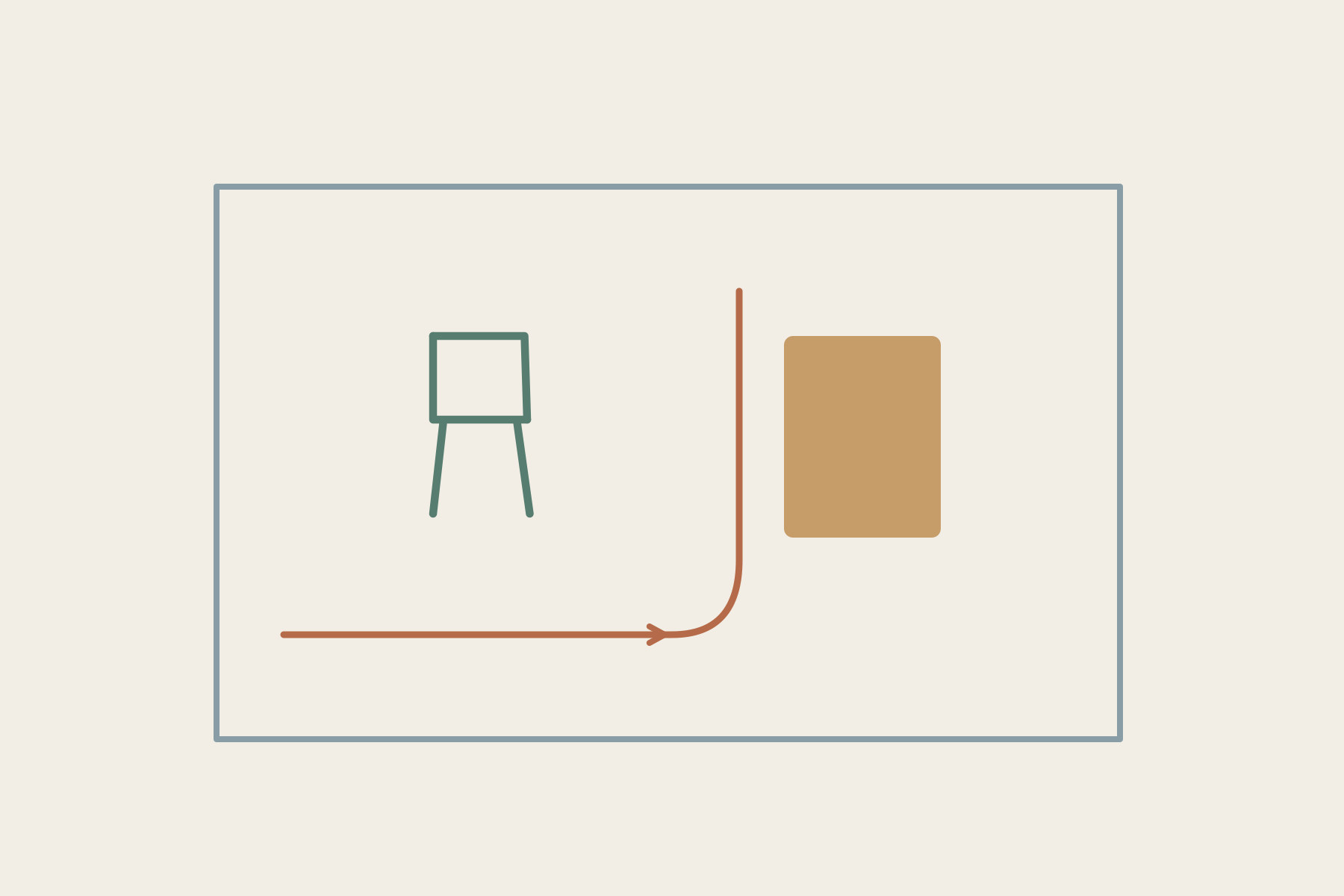
A small chair sits inside a larger room boundary beside a circulation line and a simple block.
Original PatinaHall schematic, not to scale. A seat and another generic object sit within a larger room outline and a suggested route. It explains changing design scale, not a Schiphol plan, documented interior or furniture attribution.

Design also means connecting other people

Artifort’s retrospective account describes furniture, interiors, exhibition design and graphic work.2 The manufacturer’s biography records his role in bringing in designers such as Pierre Paulin and Geoffrey Harcourt. Influence can therefore come through creating conditions for other people’s work as well as making one’s own.

This makes the career rewarding to look at from several distances. Move close enough to see how a cushion meets a frame, then step back towards the room and the network of collaborators. The object becomes richer when the surrounding relationships enter the view.

Research notesEvidence, connections and limits

Artifort’s biography, retrospective archive account and furniture record describe different aspects of his multidisciplinary practice. The illustrative chair is related work, not a portrait or a reconstruction of Schiphol; later specifications do not date every earlier example.

Evidence map

Connected subjects and evidence

Reviewed connections

  • 416 seating familydesigned byKho Liang Iedocumented

    Artifort credits Kho Liang Ie for the 416 family introduced in 1960; this is related work, not a designer portrait.

    Reviewed 23 October 2026 by PatinaHall editorial.
  • Kho Liang Iecollaborated withArtifortdocumented

    Artifort records his appointment in 1958 as aesthetic consultant and designer, alongside his own furniture work.

    Reviewed 23 October 2026 by PatinaHall editorial.
    • Source 1Kho Liang Ie: designer and aesthetic consultant

Research trail

Sources and further reading

  1. Kho Liang Ie: designer and aesthetic consultantArtifortAccessed 23 October 2026
  2. Kho Liang Ie retrospective at Stedelijk Museum: Artifort archive contributionArtifortAccessed 23 October 2026
  3. F416 armchair, design 1960ArtifortAccessed 23 October 2026

Last reviewed 23 October 2026. Found an error or a stronger primary source? Contact PatinaHall.