An ordinary chair with an unusual section
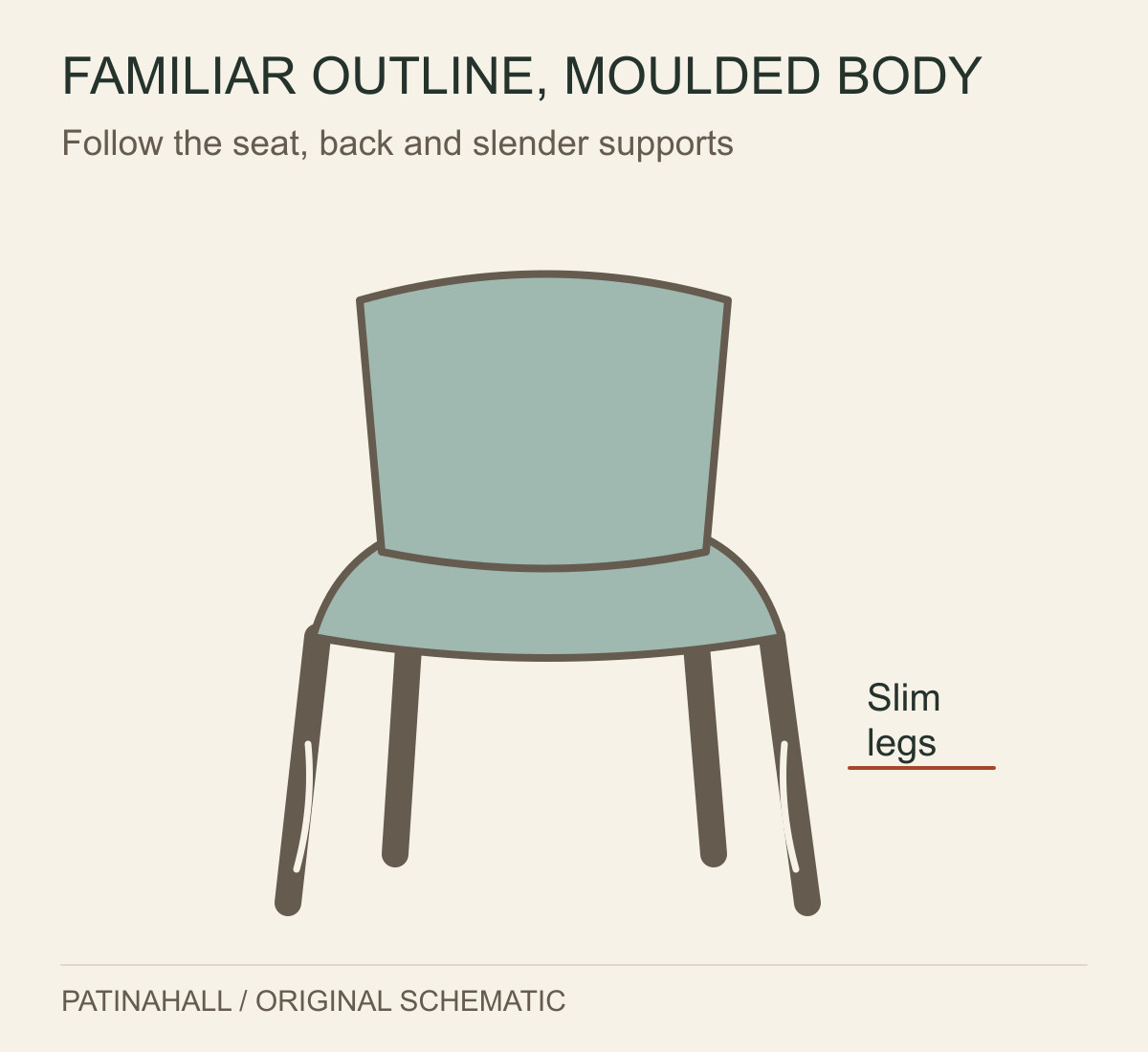
From across a dining room, Selene can look almost modest: four legs, a gently shaped seat and a separate-looking back. The surprise comes when you follow the material between them. What reads as familiar furniture is formed as a continuous plastic body.
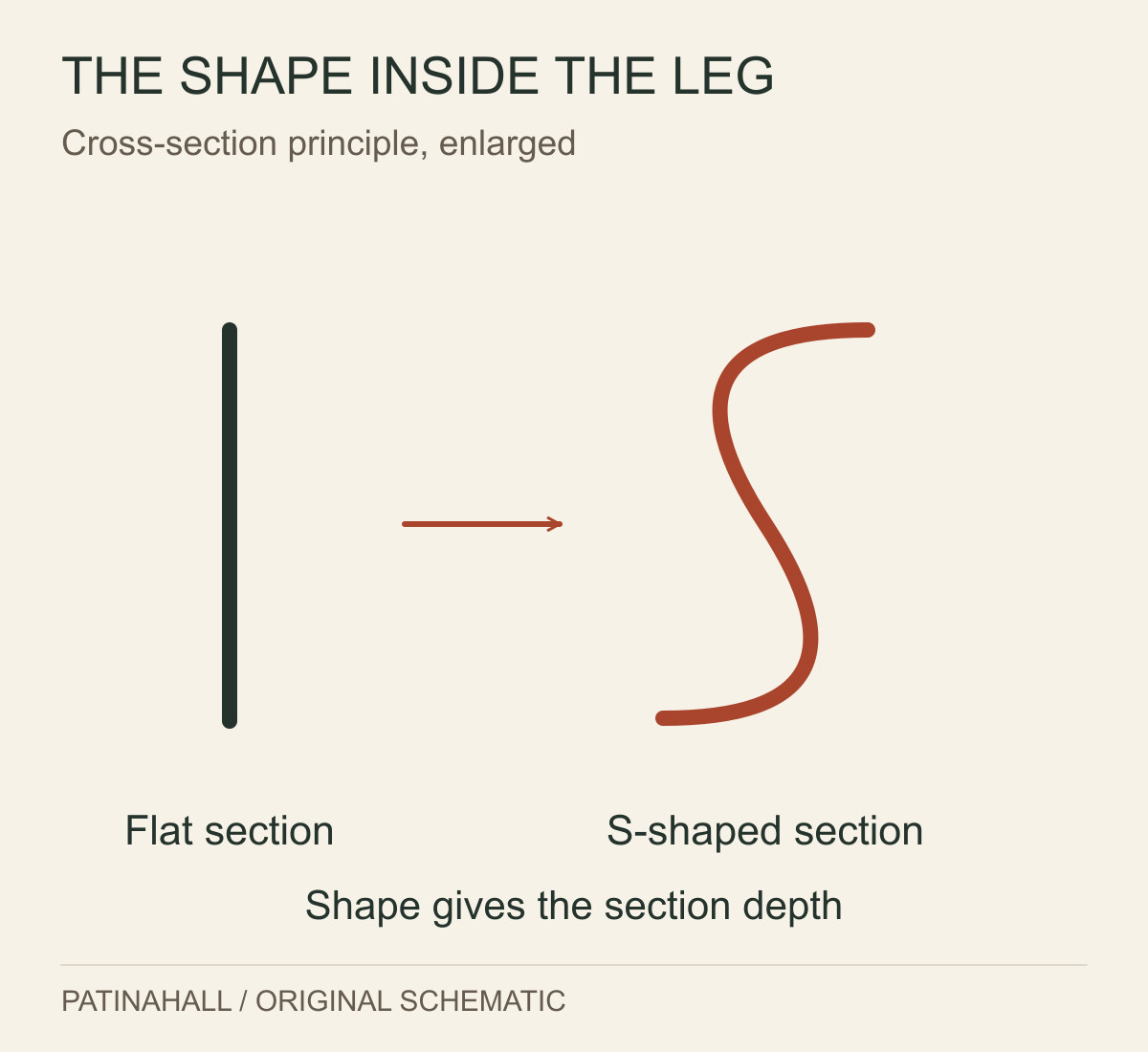
Vico Magistretti’s archive places the design in 1966 and Artemide production in 1969–1990. Its account makes the legs central to the project. Magistretti wanted a slender chair, and an S-shaped cross-section helped him achieve it.1
The important shape is therefore one you might miss in a straight-on photograph. The chair’s structural idea lives in the section of its legs.
A fold instead of a thick leg
A thin sheet can gain resistance to bending when its section is shaped. Think of how a fold changes a piece of card: the material has not become thicker, but its depth in space has changed. Selene applies a more carefully engineered version of that principle.
The foundation describes a three-millimetre sheet and an S-shaped leg section, formed in a compression-moulding process. Rather than giving the chair bulky supports, the section makes the material work in a more useful arrangement.1
Follow the light along an edge. A small return or channel can matter more than a large visible curve in the seat. This is one of the pleasures of a restrained object: learning where to look reveals how much thinking is contained in an apparently simple outline.
The factory is part of the form
Danese’s technical account identifies the original material as Reglar and places Selene within early experiments in industrially moulded plastic chairs. The entire chair could be made as one monoblock piece. The document also preserves the historical account of a finished chair emerging at roughly five-minute intervals.3
That connection between outline and production is essential. The legs, seat and back had to make sense together, both as furniture and as a form that manufacturing could repeat.
Stackability adds another everyday consideration. A dining chair occupies room even when nobody is sitting in it. The ability to bring several chairs into a smaller stored group belongs to its usefulness just as surely as the seat does.
A new chapter in 2026
Danese’s 2026 reissue keeps the recognisable design while changing the material. The current product record specifies recycled polypropylene copolymer reinforced with 20 per cent glass fibre.2
The return makes Selene a particularly useful object to understand through its history. A recently made chair and an older Artemide example can share a design without sharing the same production material.
What connects those chapters is the underlying question: how can a plastic chair remain slim, coherent and useful? Selene’s answer begins in the legs. Once you have seen that folded section, the quiet dining-chair outline stops looking quite so ordinary.