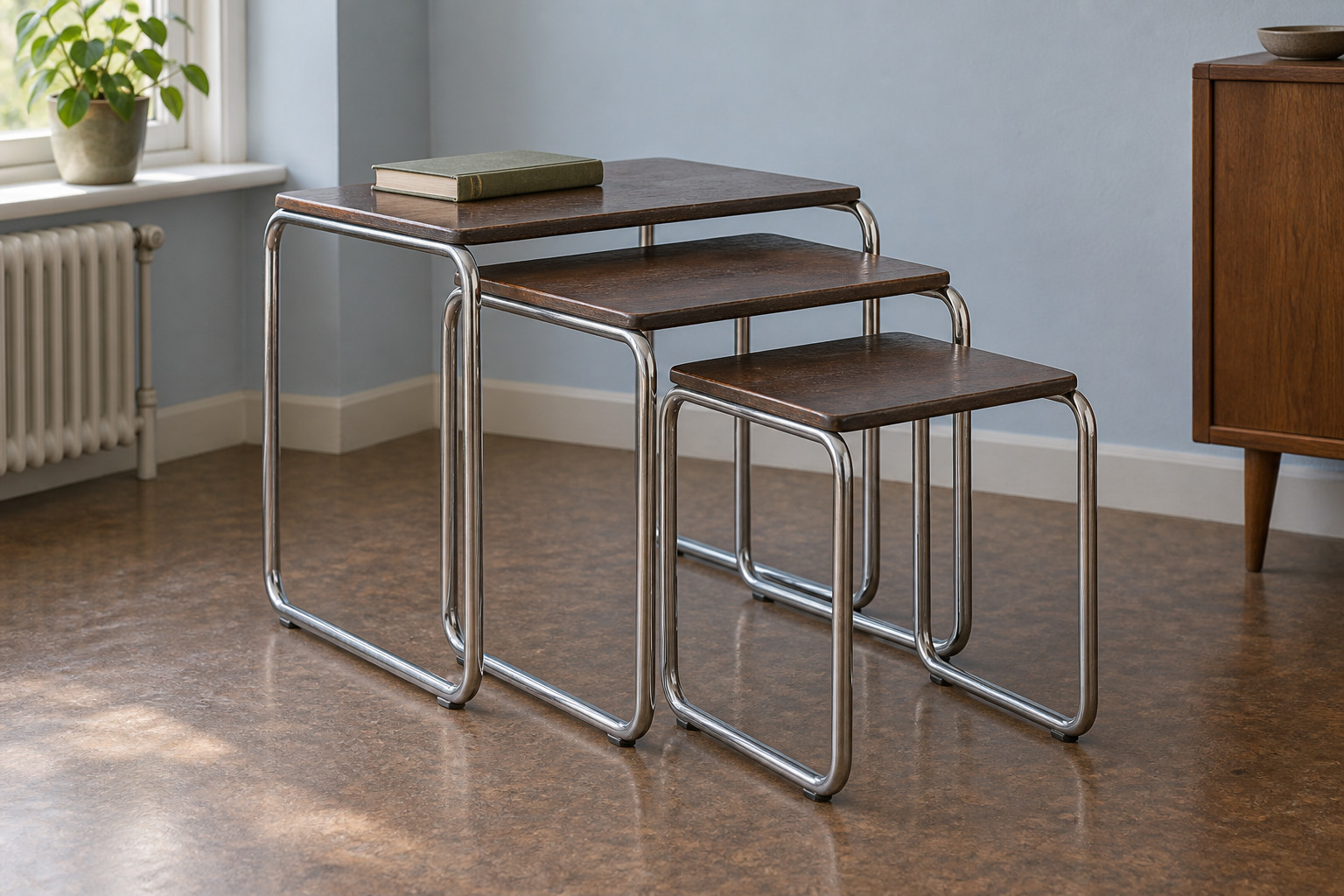
Modern furniture arrives as a range
The selected copy is titled Kovový nábytek, or Metal Furniture, and names Vichr & Spol. Smithsonian Libraries describes a photogravure catalogue with a photomontage cover and tentatively assigns it to Prague in 1937.1
The tentative date is worth keeping because catalogues are often practical, short-lived publications. Their purpose was to help someone choose furniture, not necessarily to provide a future historian with a complete account of the edition.
Even without a firm year, the range offers a clear invitation. Metal is presented as a material for a furnished life, capable of moving from one room and activity to another.
The room does some of the selling
Cooper Hewitt’s account of the Vichr pages draws attention to beds, chairs, cots and plant stands, as well as photographs of coordinated interiors. The company’s trade mark repeats through the publication, tying the varied products to one manufacturer.2
A room photograph supplies information that an isolated product view cannot. It proposes neighbours for the object. A chair acquires a table, a bed belongs against a wall, and a plant stand gives the eye something familiar to recognise among the metal frames.
This is one of the catalogue’s most effective arguments. The reader does not have to invent a whole interior from a single unfamiliar chair. The page has already rehearsed a possible arrangement.
It also encourages comparison. Repeated materials can make different pieces seem related, while their dimensions and functions keep them distinct. The range begins to look like a set of choices within a shared domestic language.
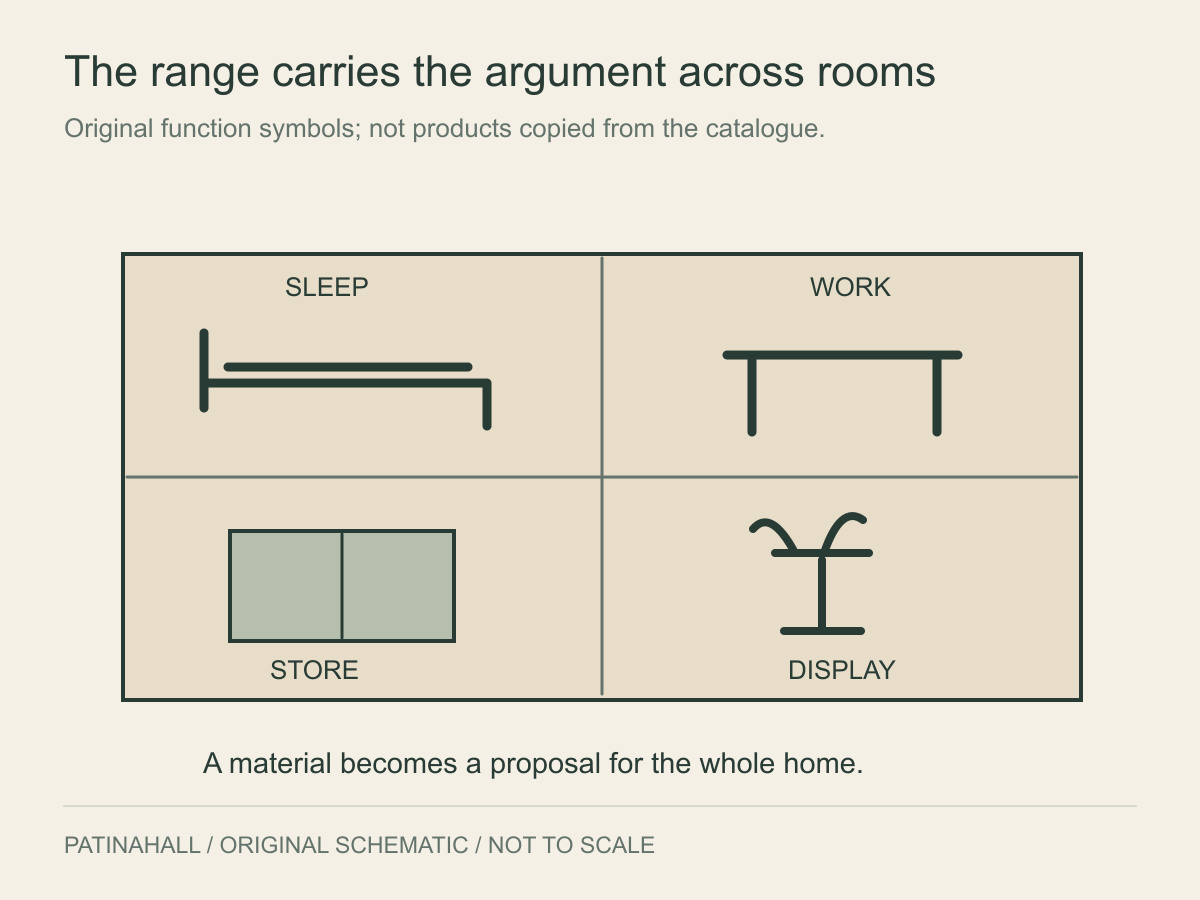
The factory is present between the pictures
Cooper Hewitt relates the firm’s metalworking history to its production of hospital furniture during the First World War. The later domestic pages place that manufacturing capacity in another setting.2
A smooth tube is therefore more than a fashionable outline. It belongs to a way of making: repeated lengths, bends, connections and finishes. The catalogue turns that industrial vocabulary into things a household might want to live with.
That does not establish who first invented every form on the page. A manufacturer’s catalogue documents an offer. Questions of authorship, patents or sales require their own evidence.
Another catalogue, another set of choices
A separate Smithsonian account examines another publication called Kovový nábytek, dated broadly to the 1930s. It includes gold-toned metal finishes and combinations of tables, mirrors, beds and chairs. The shared title does not make it the same Vichr volume.3
The comparison broadens our mental picture of metal furniture. It could appear severe and economical in one arrangement, decorative and reflective in another.
The most revealing page may be the fully furnished room. It catches the moment when a manufacturing material is translated into a proposed way of living. The catalogue closes; the reader is left imagining where the next chair might go.