Thirty units make a household problem
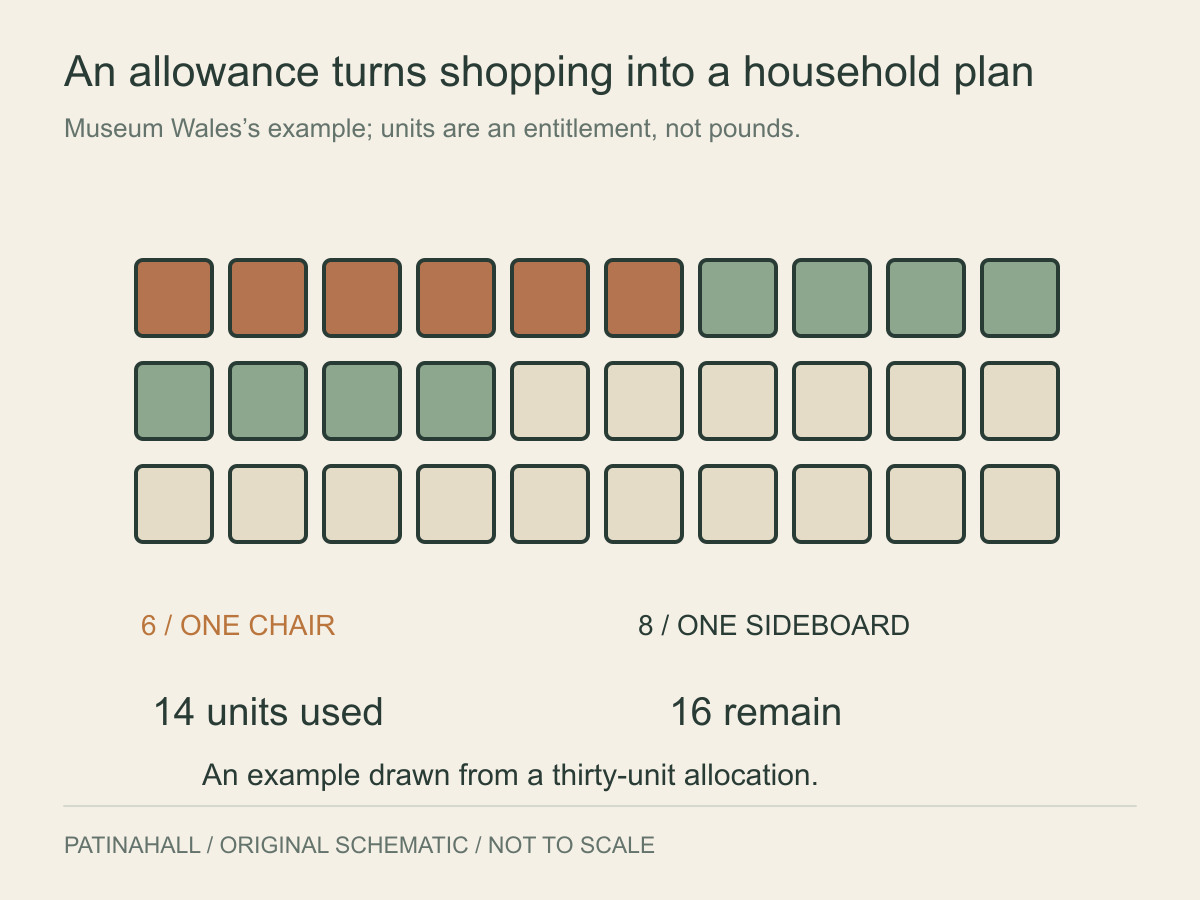
Museum Wales describes a Utility Furniture permit allowing thirty units, with a fireside chair taking six and a sideboard eight. Newly married couples and people whose homes had been bombed were among those given priority. The allocation made each choice part of a larger domestic calculation.1
A fireside chair and a sideboard could use fourteen units before a bedroom had been considered. The question was no longer simply which object looked best. It was how to distribute a limited entitlement across the activities of a home.
The figures are revealing because they make an invisible constraint visible. Every attractive choice leaves less room for another. A catalogue becomes a planning exercise in which the household, rather than the individual item, is the unit that matters.
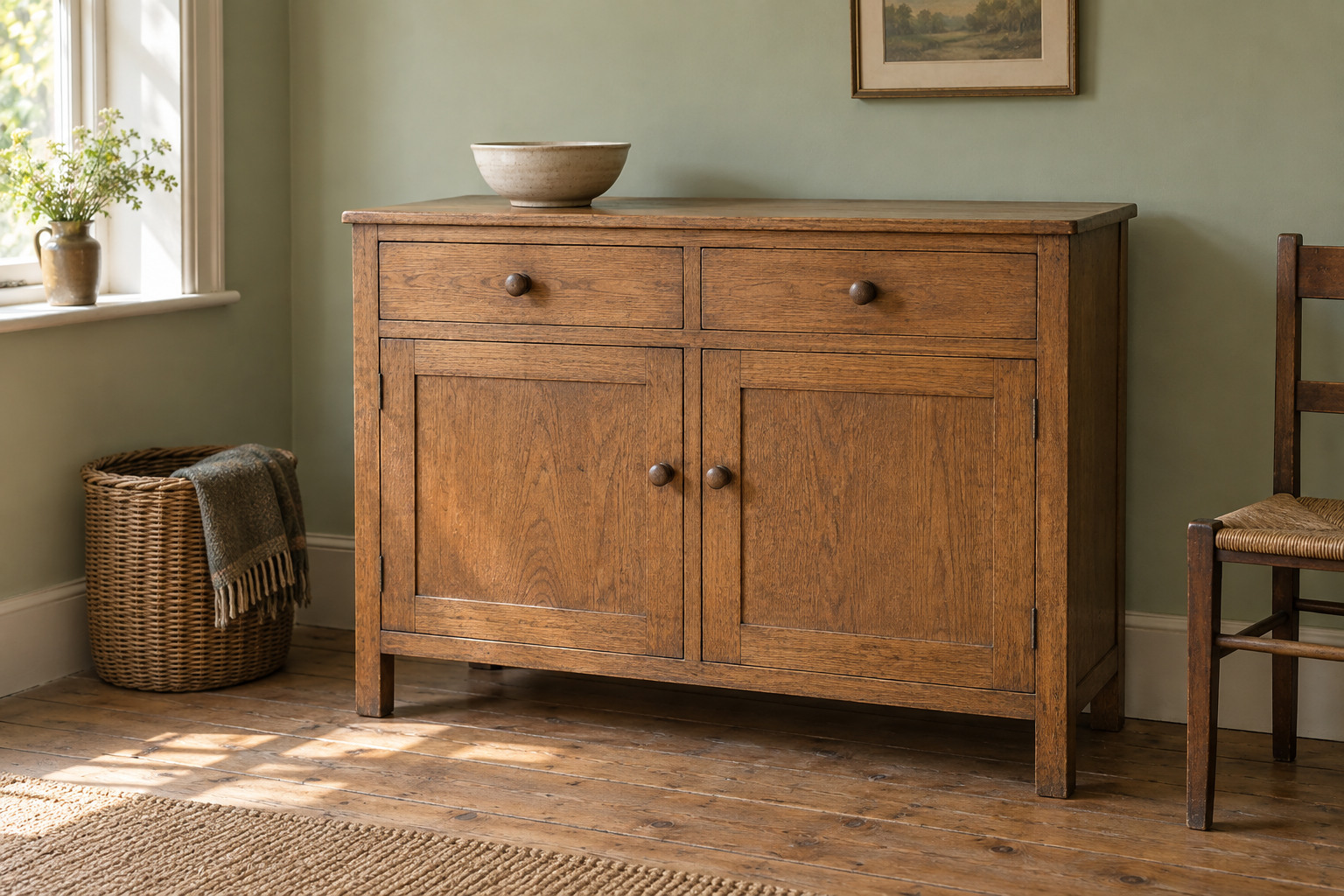
A limited range still required design
The Utility scheme offered a comparatively small range of straightforward furniture. Museum Wales relates its forms to modern design and Arts and Crafts traditions, and identifies the CC41 mark associated with the programme.1
Gordon Russell’s archive records his appointment to the Utility Furniture Design Advisory Committee in 1942. The following year’s catalogue was therefore the result of organised design work within a national manufacturing problem.2
Restricting ornament did not eliminate decisions about proportions, construction and use. A cupboard still needed accessible storage. A chair still needed a convincing relationship between seat, back and frame. Scarce material made those decisions consequential rather than optional.
The catalogue could arrive before the furniture
In February 1943, questions in Parliament challenged the gap between the published range and the public’s ability to inspect actual pieces. The minister’s response described demand exceeding available supplies and priority being given to deliveries.3
It is a wonderfully ordinary frustration inside a large historical programme. A person asked to choose furniture would prefer to see the thing, not merely its illustration. Production targets and distribution priorities did not remove that wish.
The exchange reminds us that a catalogue records an offer under particular conditions. It is not a guarantee that every listed object was waiting in a nearby shop.
Shortages continued shaping the room
The end of the war did not instantly restore plentiful materials. The V&A’s account of Britain Can Make It in 1946 describes designers responding to shortages of timber and upholstery materials, including experiments that redirected available aluminium towards furniture.4
The material of a chair can therefore record conditions outside the designer’s studio. Supply, regulations and factory capacity all help determine which forms reach a home.
Return to the thirty-unit allowance. It turns a broad history of wartime scarcity into a decision someone had to make at a table: another chair, a place for clothes, or somewhere to put the dishes. The furniture carries the arithmetic of starting again.