The edge is made before the final fabric arrives
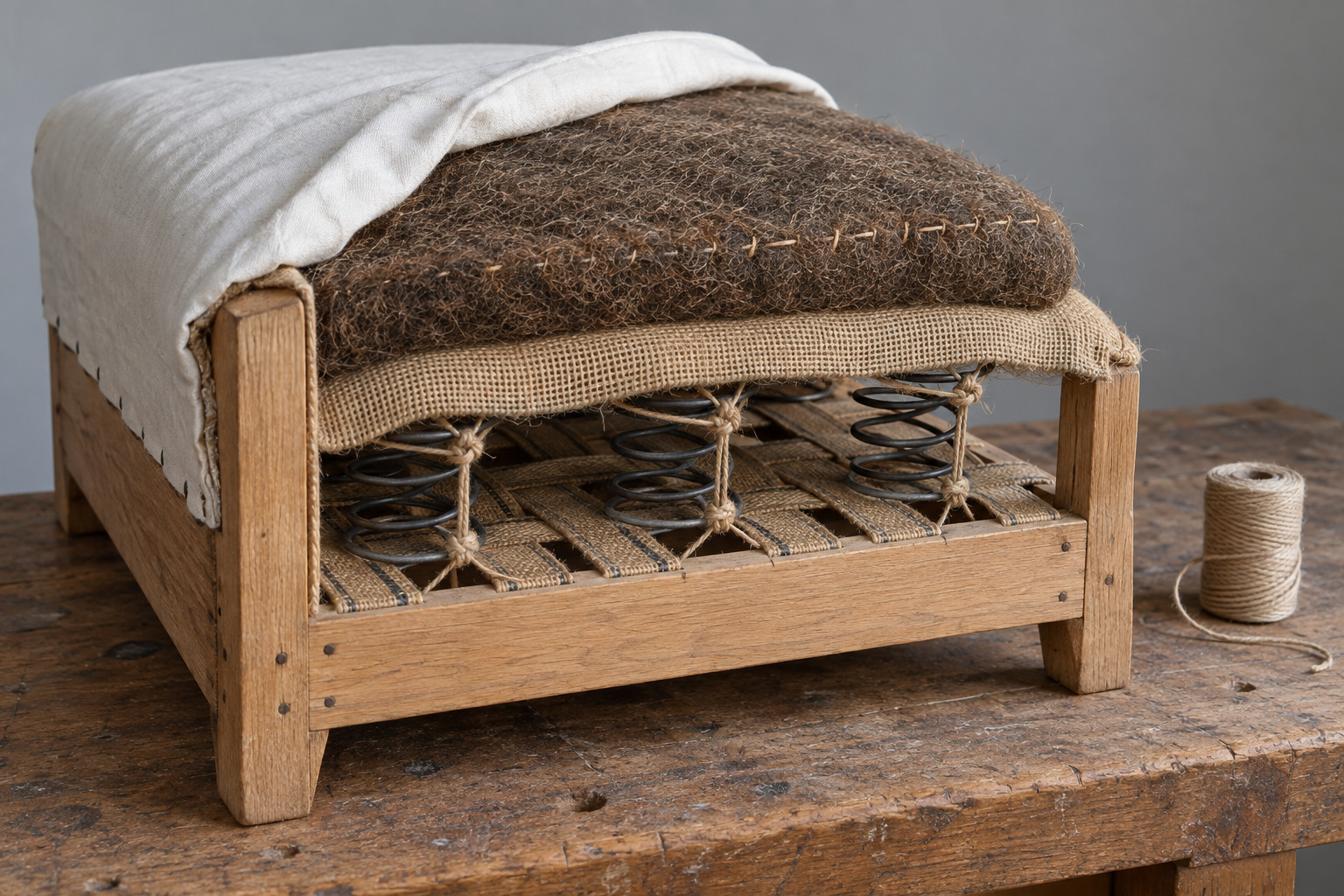
A smooth cover can hide a considerable amount of shaping. In a V&A conservation account of a spring stool, webbing supports compressed steel springs beneath coarse cloth. Hair padding and stitched edges establish the seat’s profile before finer coverings and leather complete the surface.1
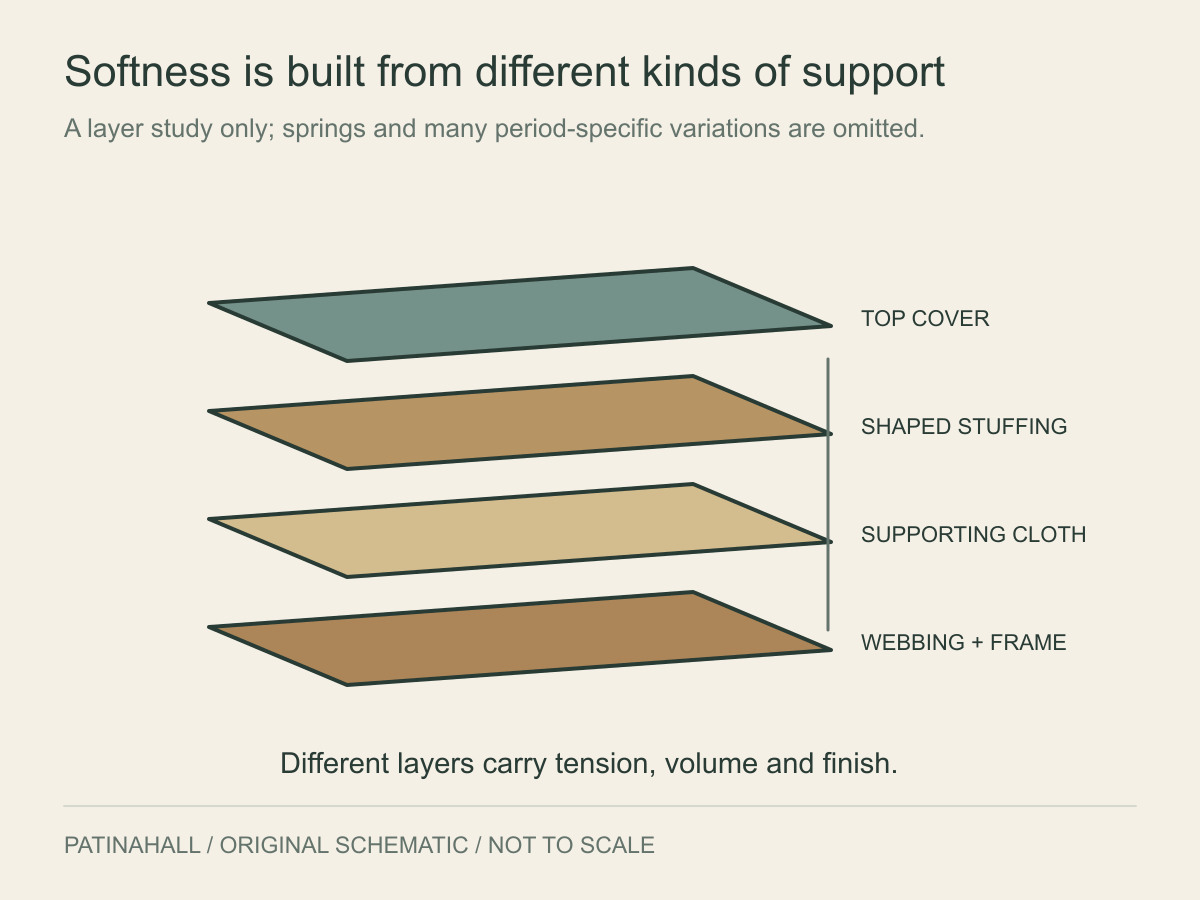
Each layer has a different job. The webbing spans the frame. The springs provide movement. The stuffing fills and shapes the contact surface, while stitching restrains it where a firmer edge is needed.
The result is closer to a small built structure than a loose cushion dropped into a wooden box. Its softness depends on materials held under control.
When one layer gives way
The same stool illustrates how the parts depend on one another. Failed webbing and covering allowed the springs to expand, changing the shape of the seat even though the wooden frame remained sound.1
An uneven profile can therefore have a cause hidden well below the visible fabric. Replacing only the surface would not necessarily address the failed relationship underneath.
This is also why upholstered furniture can be difficult to understand from photographs. A handsome frame may surround damaged support; a worn cover may conceal older material of considerable interest. The outside and inside do not always tell the same story.
A tack hole can change the interpretation
The V&A’s investigation of a seventeenth-century settee from Hampton Court House began with doubts about its upholstery. Colours and trimmings seemed not to agree. Examining layers, tacks, holes and stitching helped establish that much of the upholstery was original, despite repairs and alterations.2
Hidden areas also preserved stronger colours than the exposed surfaces. A fabric that looked subdued had once participated in a much brighter arrangement.
Those findings explain why removal is a consequential decision. A fixing is not merely an obstacle between the upholsterer and a clean frame. Its position may preserve evidence about which layer came first and how the seat was assembled.
Making a new seat without another generation of holes
Conserving an armchair made for Marie Antoinette presented another problem. Repeated upholstery work had damaged the wooden structure, so the V&A developed removable supports that could carry new upholstery without driving more nails into the original frame.3
This was a carefully adapted museum treatment, not a universal replacement for ordinary upholstery practice. Its interest lies in separating two needs: recovering a convincing upholstered form and protecting the historic structure that would carry it.
The hidden construction deserves that attention. Sit beside an old chair and look at the edge of its seat. The neat line may be the final visible result of stretched webbing, shaped stuffing and many small stitches. The fabric supplies the colour; the work underneath gives that colour a form.