The small details that change its age
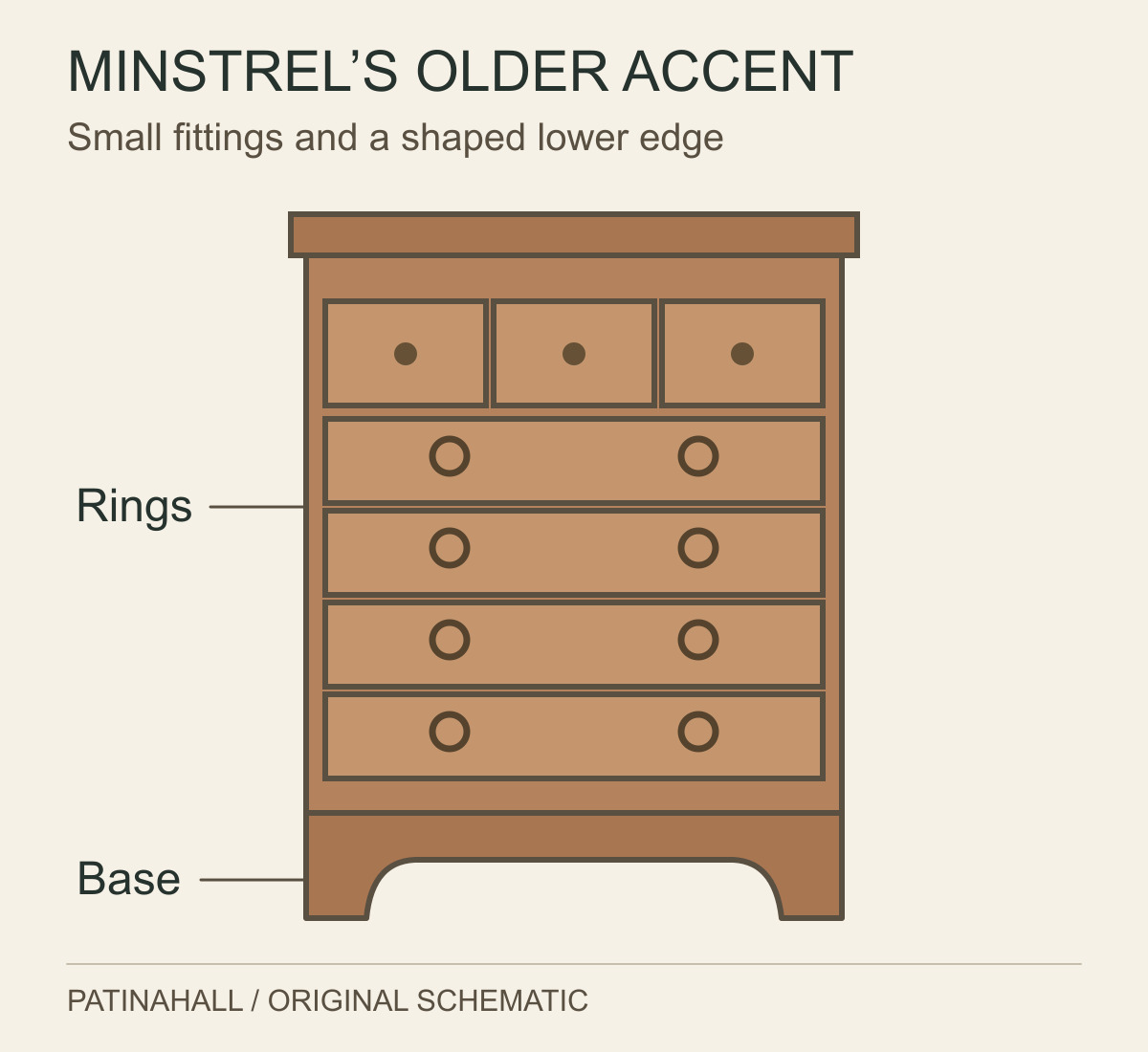
Imagine a chest as a simple rectangular box. Give its drawers plain recessed grips and let the base end in a straight line. Then substitute hanging rings, smaller knobs and a shaped lower edge. The storage can remain straightforward while the apparent age of the furniture changes.
Stag Minstrel works in that space between familiar historical details and modern bedroom use. A recorded tallboy at Design by Davies shows the effect particularly clearly: four larger drawers, three smaller ones, loop handles and knobs above a shaped bracket-style base. The decorative vocabulary occupies only a small part of the front, yet it changes how the whole chest reads.4
That makes Minstrel an approachable subject. Its interest is not hidden in a museum accession number. It sits in details many people remember seeing in an ordinary bedroom.
Designers who could speak more than one language
Steven Braggs's history of Stag attributes Minstrel to John and Sylvia Reid and dates its introduction to 1964. He describes it as a development of the earlier Madrigal range, using makore in solid and veneered forms. His account also describes the Reids' much plainer earlier work for Stag. Traditional-looking furniture was a choice within their practice, not its only available language.1
There is useful independent context for that versatility. Historic England's account of the Reids, within its listing for The Wheatsheaf, discusses their architectural and industrial-design work and their treatment of older pub interiors. It notes the Victorian revival character of their 1955 remodelling of The Champion.3
A pub interior does not explain a bedroom chest's commission. It does, however, make a broader point visible: these designers could work thoughtfully with an inherited visual language as well as a modern one. Minstrel becomes more interesting once “traditional” stops meaning “undesigned”.
A bedroom in several sizes
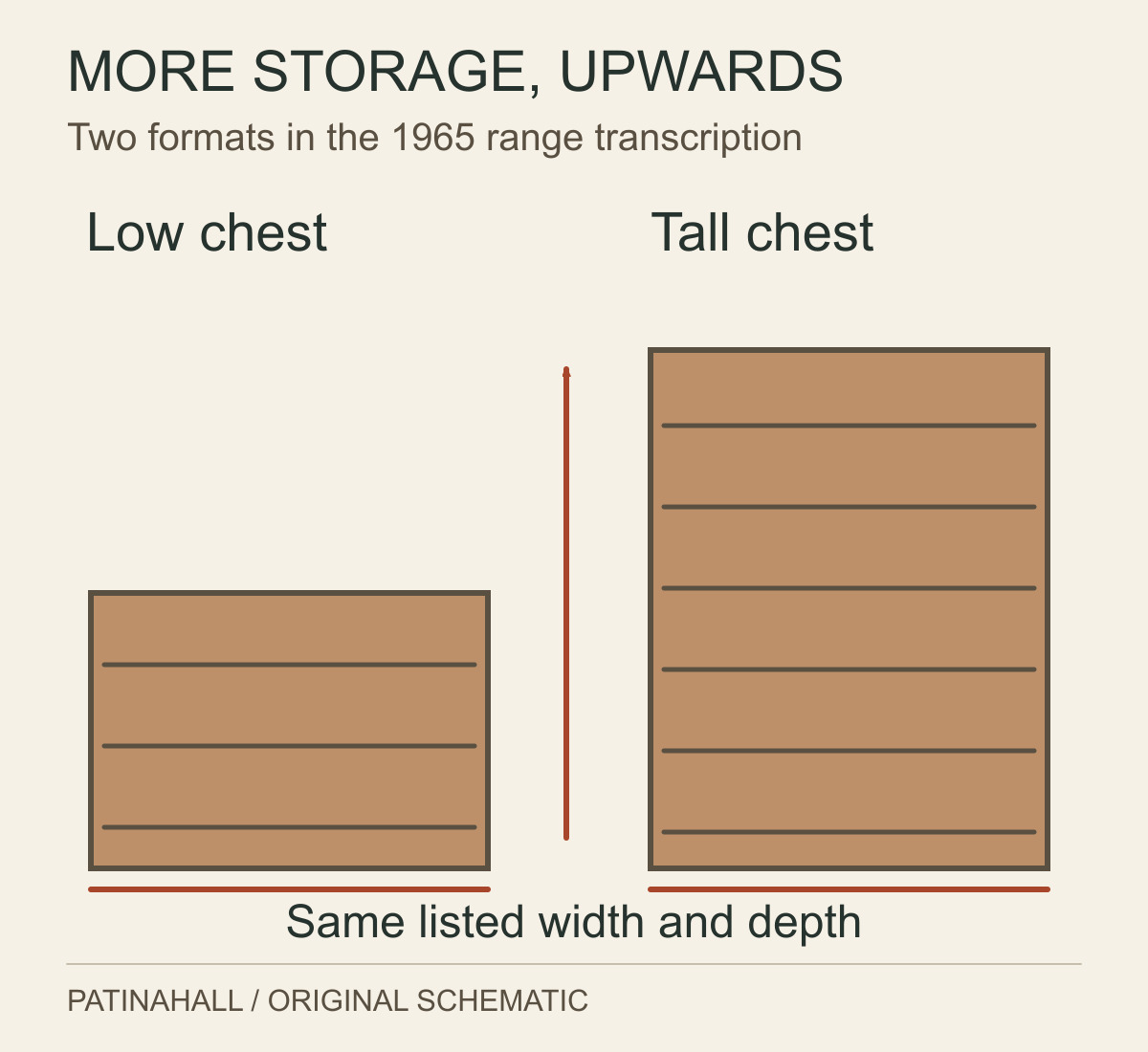
The range was bigger than the tall chest that often represents it in memory. Braggs's transcription of a 1965 Stag brochure includes low, tall and longer chests, alongside wardrobes, dressing furniture, headboards and bedside pieces. The low and tall chests share the listed width and depth; extra storage rises vertically.2
That is a revealing domestic decision. A low chest leaves room above for a mirror or an open stretch of wall. A taller one uses more of the wall's height without claiming a wider strip of floor. A longer chest offers another arrangement again.
The same recognisable details could hold those different proportions together. A coordinated bedroom did not have to consist of identical boxes. Its furniture could repeat a visual vocabulary while meeting separate needs.
Familiarity is part of the story
The appeal of Minstrel is easy to miss if every piece of vintage furniture is judged by how radically it breaks with the past. Here, the interesting move is the use of recognisable older-looking details on an ordinary, repeatable storage family.
It also rewards looking at the whole chest rather than its colour alone. Notice the relationship between the broad drawer fronts and the small handles, then the change of outline at the floor. The upper part remains calm and box-like; the base supplies a little movement.
None of that requires a room furnished as a historical set. One chest can still make its argument beside quite different furniture. Minstrel's older accent is concentrated in a few small places, leaving the rest of the object free to get on with being a chest.