Design story

Stag C Range: a chest with nothing sticking out

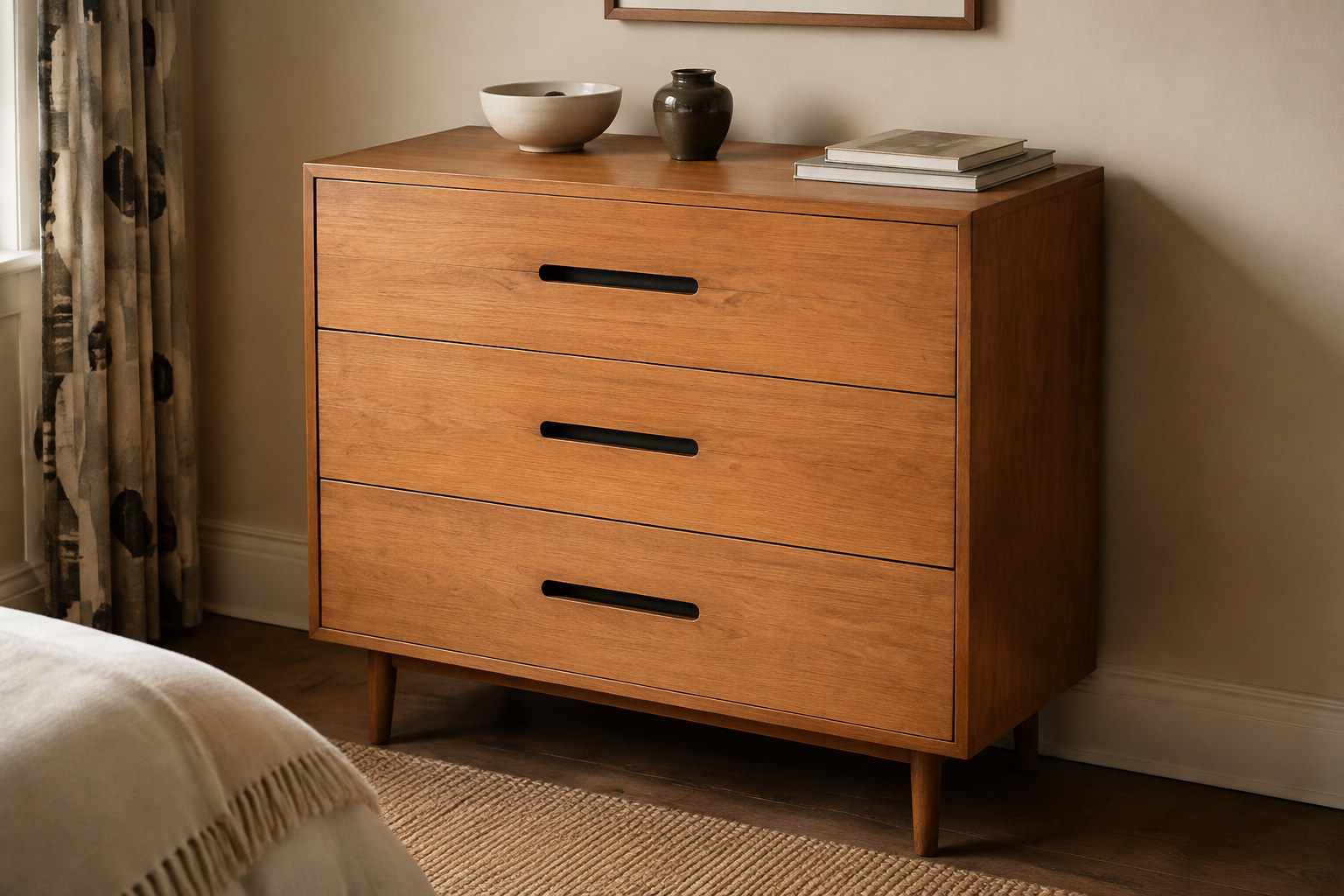
A Stag C Range chest asks you to notice something that is missing: the usual row of knobs. Its recessed handgrips leave the drawers almost uninterrupted, giving a modest bedroom chest a surprisingly composed face.

Reconstruction: A light-brown three-drawer chest with recessed horizontal handgrips, flat fronts and short tapered wooden legs.
PatinaHall editorial reconstruction. It is not a documentary photograph. This C Range-inspired chest brings the recessed grips and lifted case into a domestic setting. It is not a measured reproduction of a Stag model.
On this page
Key facts & takeaways

At a glance

Subject
Stag C Range chests
Entry
Design story
Last reviewed
7 September 2026

Three things to remember

  1. A recessed handgrip changes the whole drawer front.
  2. C Range belongs to an earlier Stag story than Minstrel.
  3. The range included different units, heights and finishes.

A handle made from a hollow

A chest of drawers usually announces each compartment with a projecting handle. On the three-drawer C Range example recorded by Mid-Century Finds, the handgrip sits within the front. From across the room, the drawers read as broad wooden bands. Up close, the recess supplies the small shadow that tells your hand where to go.2

That is a useful way to understand the chest’s restraint. The front still has a job to do; the opening simply does it without becoming a separate ornament. The space between a raised case and the floor provides another strong horizontal line. There is little else competing for attention.

A bedroom made from neighbouring pieces

The C Range was more than a single chest. In February 1958, The Architects’ Journal described a new version of its wardrobe and credited John and Sylvia Reid. The report specifically noted that the wardrobes, like other units in the range, could be placed alongside one another.1

That small observation gives the plain case a larger purpose. A piece designed to meet its neighbour needs a different outline from a cabinet whose top and side mouldings project in every direction. Several quiet boxes can make a long, coherent arrangement while retaining separate compartments and uses.

Imagine a bedroom wall with a chest beside a taller wardrobe. Their sizes differ, but the straight boundaries let the eye read them together. This is an interpretation of the range’s visual logic, rather than a claim that any two surviving units share the same dimensions.
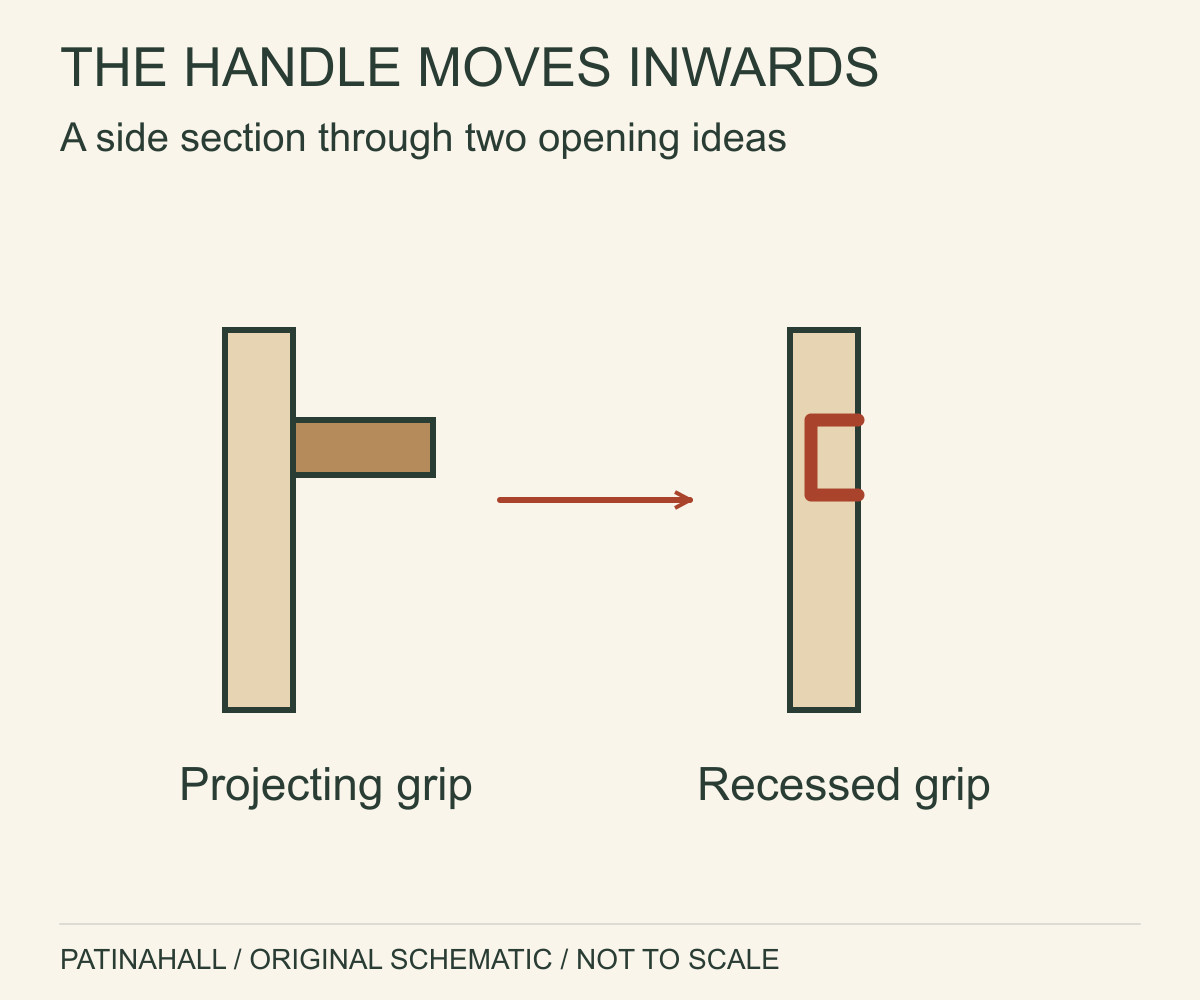
A conceptual section compares a projecting drawer pull with a handgrip recessed into the front.
The comparison explains a change in the location of the handgrip. The recess is diagrammatic and is not a manufacturing section of a Stag drawer. Original PatinaHall schematic, not to scale.

Wood has more than one role

The recorded three-drawer chest has an oak-veneered case and turned legs. The period wardrobe report describes veneered chipboard and several finish options. Those are two different pieces of evidence: the wardrobe’s hidden construction cannot simply be assigned to the chest.21

What they do show is that the range’s modern appearance was compatible with a visible wood surface. Grain could supply variation while the cabinet kept a regular outline. A plain front makes changes in colour, grain direction and reflected light more noticeable, because there is less applied decoration to distract from them.

Before the familiar Minstrel chest

For readers who associate Stag with Minstrel, C Range offers another way to recognise the maker’s work. Start with the inset grips, broad fronts and lifted case. They tell a more useful story than treating every old Stag chest as one interchangeable style.

The object also remains easy to imagine in an ordinary home. A chest can hold clothes, linen or work materials without needing the rest of its original bedroom. Its present use may be different, but the central idea survives: accessible drawers, a calm surface and a shape that can live beside other furniture.

Research notesEvidence, connections and limits

The 1958 period record establishes the Reid-designed range and adjoining units, but describes a wardrobe. The three-drawer chest’s visible features come from a named seller record; no chest launch year or hidden material specification is inferred.

Evidence map

Connected subjects and evidence

Reviewed connections

  • Stag C Range chestsdesigned byJohn Reiddocumented

    The 1958 period record establishes the Reid-designed range and adjoining units, but describes a wardrobe. The three-drawer chest’s visible features come from a named seller record; no chest launch year or hidden material specification is inferred.

    Reviewed 7 September 2026 by PatinaHall editorial.
  • Stag C Range chestsdesigned bySylvia Reiddocumented

    The 1958 period record establishes the Reid-designed range and adjoining units, but describes a wardrobe. The three-drawer chest’s visible features come from a named seller record; no chest launch year or hidden material specification is inferred.

    Reviewed 7 September 2026 by PatinaHall editorial.
  • Stag C Range chestsmanufactured byStag Furnituredocumented

    The 1958 period record establishes the Reid-designed range and adjoining units, but describes a wardrobe. The three-drawer chest’s visible features come from a named seller record; no chest launch year or hidden material specification is inferred.

    Reviewed 7 September 2026 by PatinaHall editorial.

Research trail

Sources and further reading

  1. Storage furniture: Stag C Range, page 225The Architects’ Journal / USModernistAccessed 7 September 2026
  2. Stag C range chest of drawers, reference S18071: seller object recordMid-Century FindsAccessed 7 September 2026

Last reviewed 7 September 2026. Found an error or a stronger primary source? Contact PatinaHall.