A plain desk gives the surface room
Cooper Hewitt’s account of a Jean-Michel Frank desk from about 1935 identifies its covering as skate skin. The desk belonged to the furnishings of Villa Bontoc, where restrained forms met unusually rich materials.2
That pairing makes the surface unusually active. A complicated outline would compete with the small granular pattern. On a broad, simple plane, the texture becomes one of the first things the eye notices.
The effect is different from applying a recognisable floral motif. The interest is distributed across the material rather than concentrated in a single picture. Light catches many small irregularities while the desk’s overall geometry remains calm.
The name has changed its reach
CAMEO, the Museum of Fine Arts’ materials reference, explains that shagreen originally included rough leather made from animals such as horses and donkeys. One historical process impressed seeds into the hide to produce an artificial grain. Later usage also embraced the naturally textured skins of rays and sharks.1
That history prevents a tempting shortcut. Seeing the word in a catalogue does not automatically identify the animal, the preparation or the exact surface treatment.
The distinction also changes how we imagine the work. An impressed texture and a natural granular surface arrive at a similar descriptive category by different routes. The word groups appearances that need closer examination to understand their making.
A small case makes the layers clear
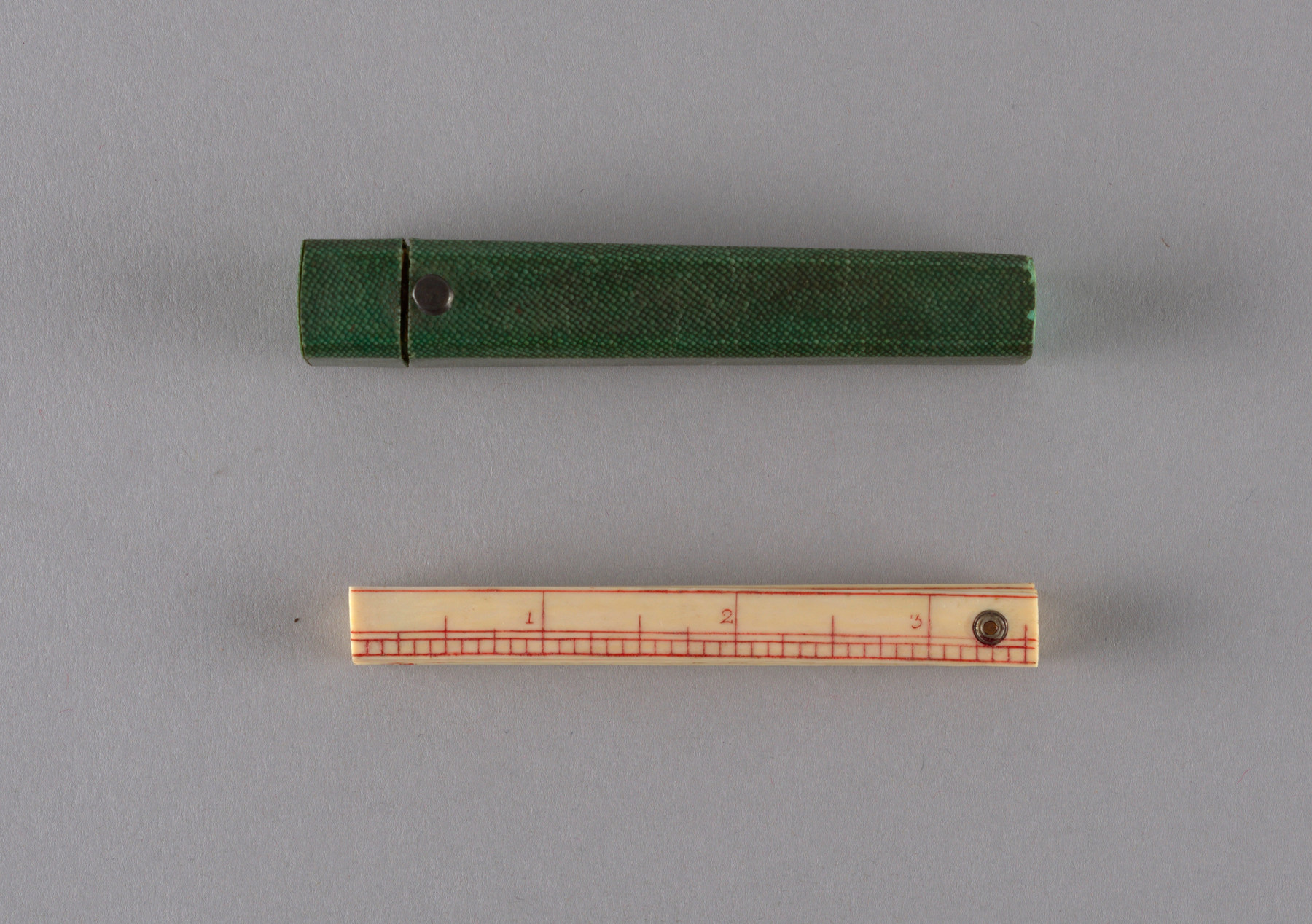
The opening photograph shows a folding ruler and its case in Cooper Hewitt’s collection. The late-eighteenth-century object is catalogued as an ivory ruler with shagreen over a wooden case. The closed container is only ten centimetres high.3
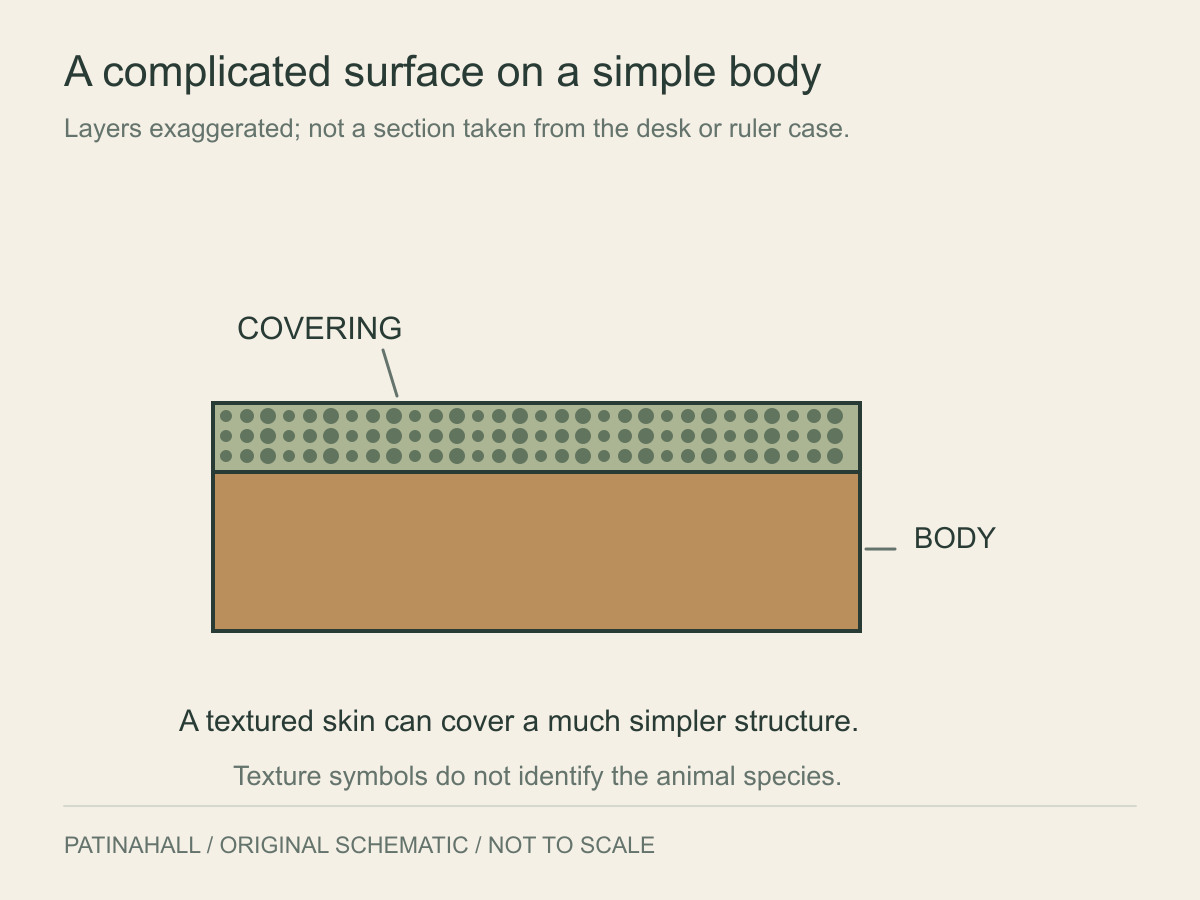
At that scale, the material relationship is easy to grasp. Wood supplies the body and its fitted volume. The covering supplies the outer surface. The contents have yet another material identity and a separate folding action.
A case also gives texture a practical setting. The object is picked up, opened, closed and put away. Its outside belongs to that repeated handling, while the interior protects something more delicate and precisely arranged.
The case and the desk use different scales, but both let a covering contribute strongly to the finished object. The furniture need not grow more elaborate in outline for the material to become more expressive.
This is the pleasure of looking at a simple piece slowly. The first impression may be a rectangle or a plain fitted box. The second encounter belongs to the surface and to the work of applying it over another body.
Frank’s desk offers that second encounter generously. Its lines leave the skin enough room to become the main event.