The part becomes the whole
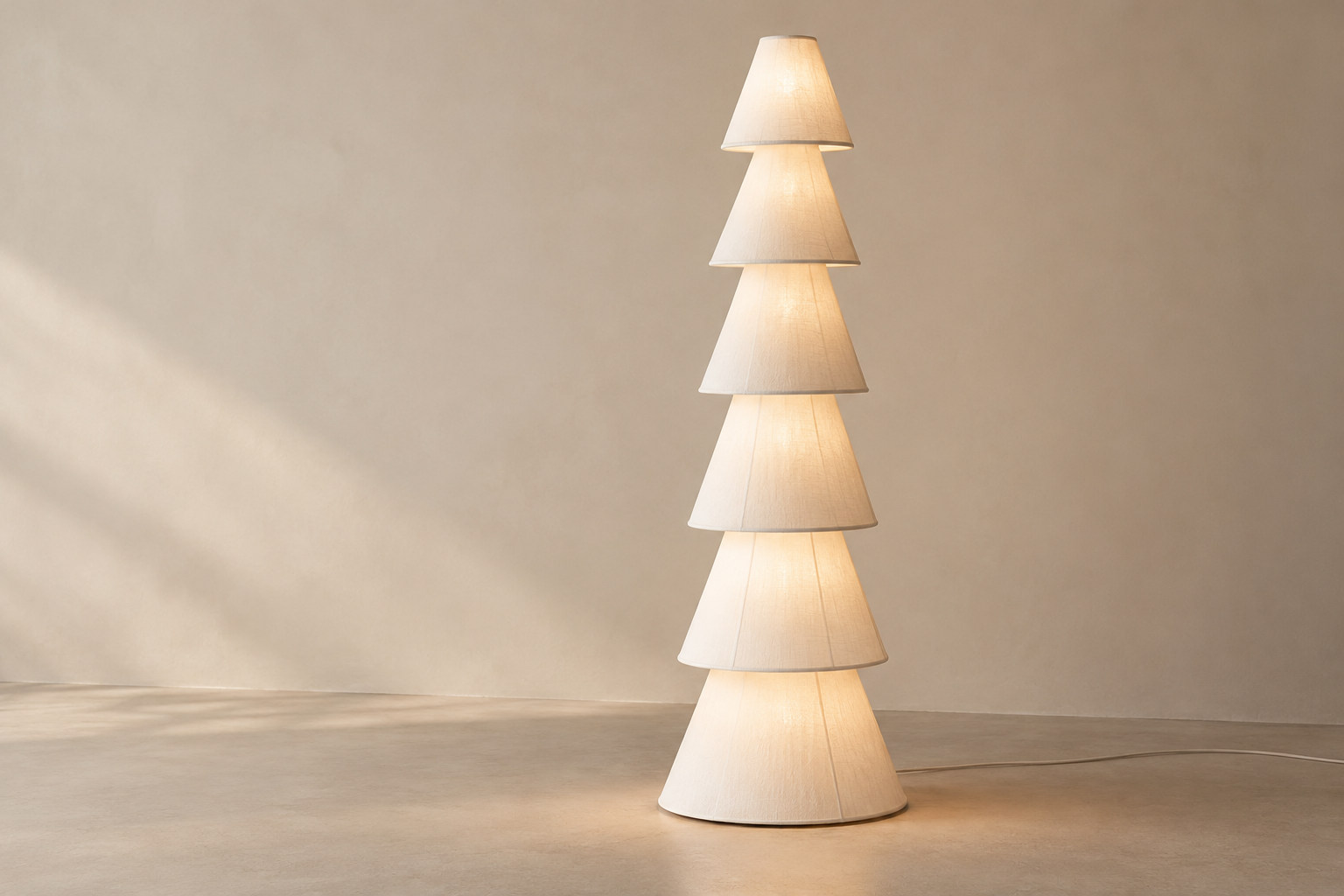
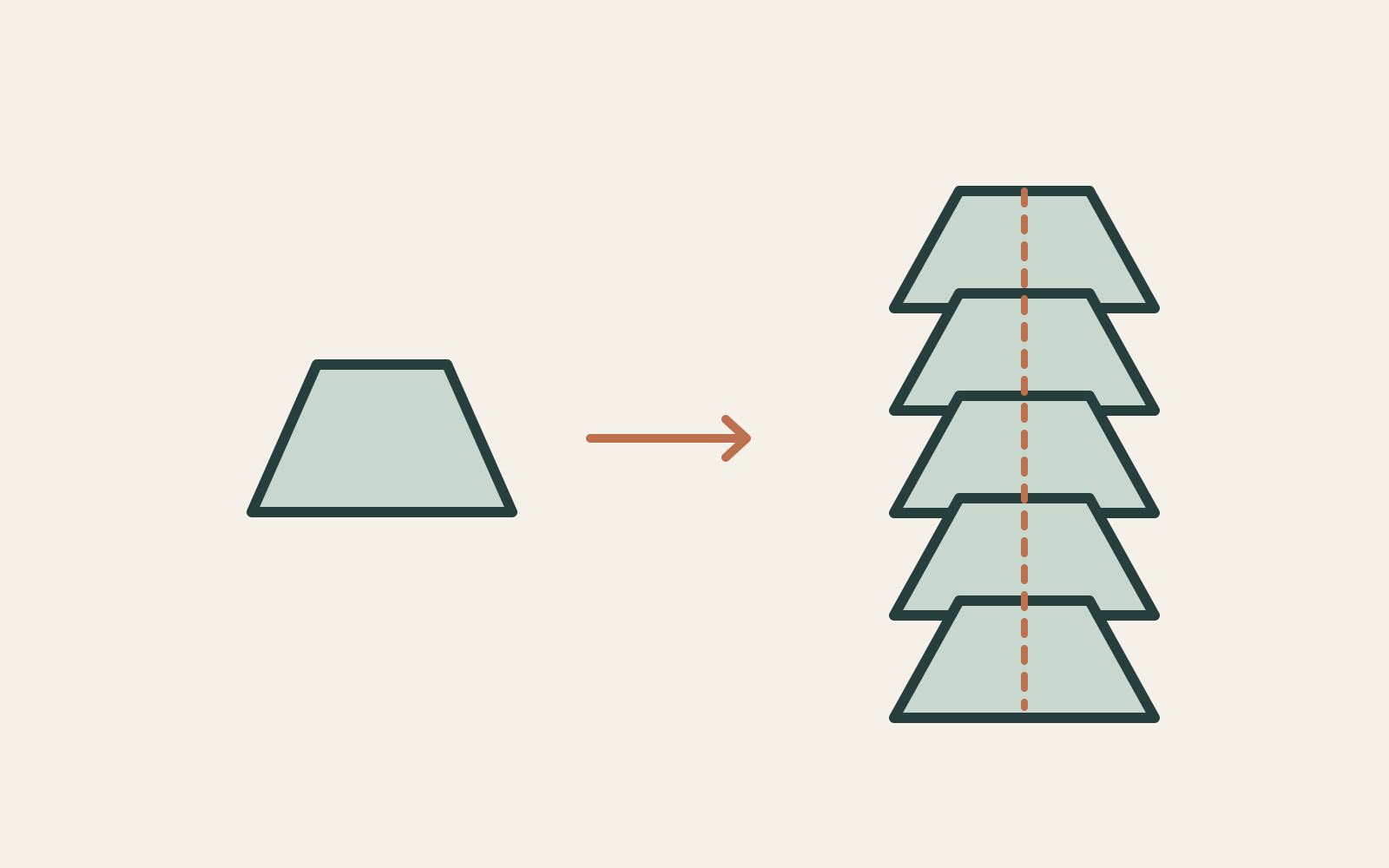
A conical shade is a small piece of visual shorthand. It suggests a lamp before the base, stem or bulb comes into view. Marcel Wanders takes that recognisable outline and repeats it, so a whole lamp seems to be made of the part normally found at its top.1
The effect depends on repetition. Each widening and narrowing interrupts the vertical outline, encouraging the eye to read another shade. The lamp acquires a rhythm through a shape the viewer already knows.
That familiarity makes the arrangement playful without needing an elaborate explanation. The question arrives quickly: are these separate things balanced on each other?
A stack held together
Moooi answers that question in its account of the current product. The apparent stack is a solid construction. The specified materials are PVC/viscose laminate on a metal frame, a description also carried by its product sheet.12
The apparent stack is an integrated construction, with a frame beneath its covering. The repeated silhouette belongs to that assembled arrangement.
The joke therefore survives ordinary use. The viewer can enjoy an apparently precarious pile while the manufacturer's description explains an integrated lamp. Its outline supplies the illusion; its construction lets that outline occupy the room.
Earlier examples, their own records
The family also appears in museum collections. Centraal Museum records a Set up shades lamp dated 1989, while SFMOMA dates its Set Up Shade to 1988 and lists fabric, metal and plastic. Those are records for distinct objects, rather than interchangeable specifications for the current Moooi version.34
The difference helps keep attention on what continues across the family: the repeated idea of a shade. Materials and particular examples need their own descriptions, while the visual proposition remains easy to grasp.
Return to the outline and the whole lamp can be read in a few alternating slopes. Wanders has taken a familiar ending and used it to build the entire sentence.