A face becomes the centre
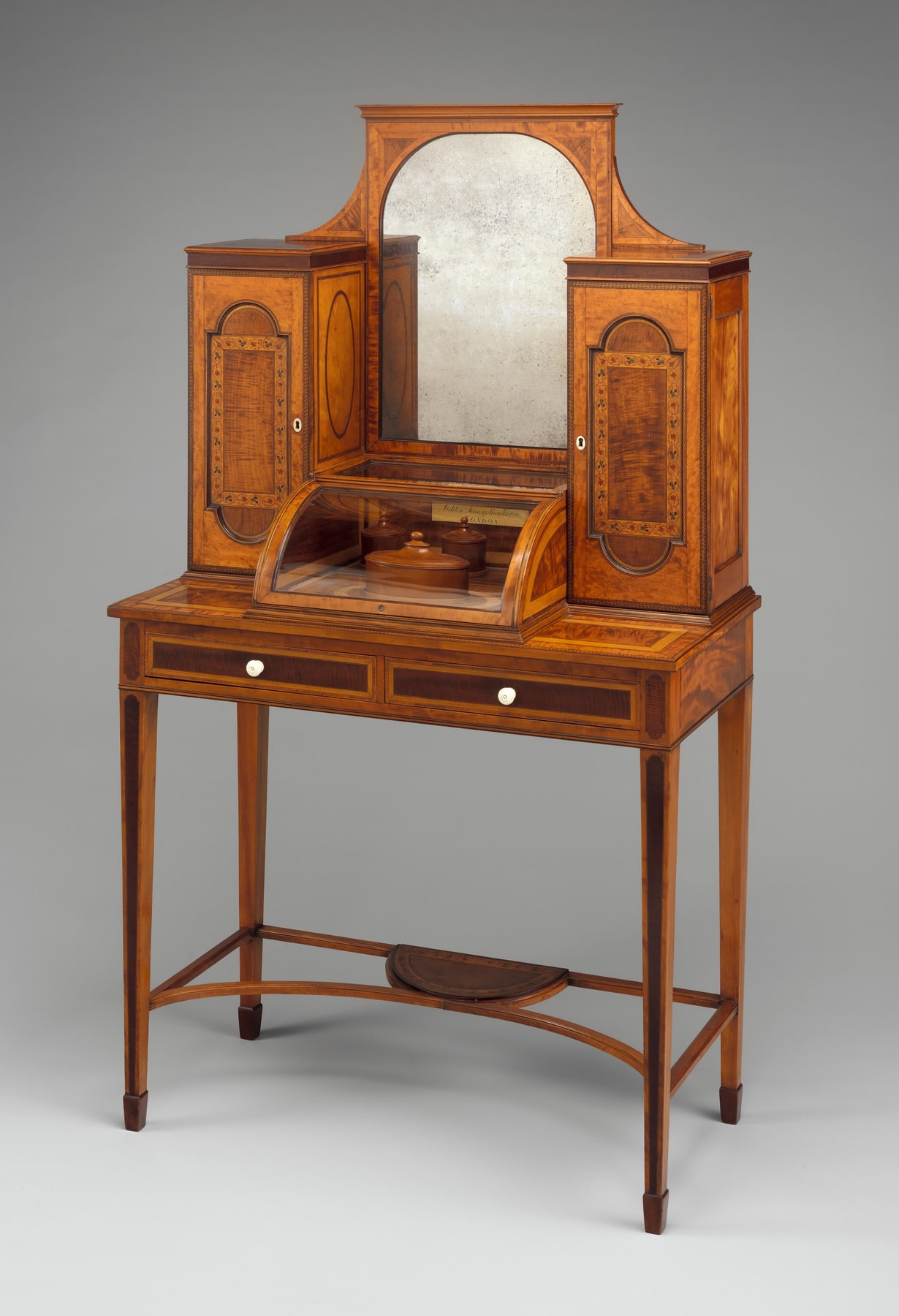
The mirror is the still point of the composition. Cupboards rise on either side, while the working recess sits below. Rather than spreading toiletries across a broad horizontal surface, the design stacks storage around the place where a person would look.
The Met dates the piece to about 1790–95 and identifies its maker as Seddon, Sons and Shackleton. At roughly 83 centimetres wide and 41 centimetres deep, it is a comparatively shallow piece with a conspicuously tall upper section.1
Open storage changes the outline
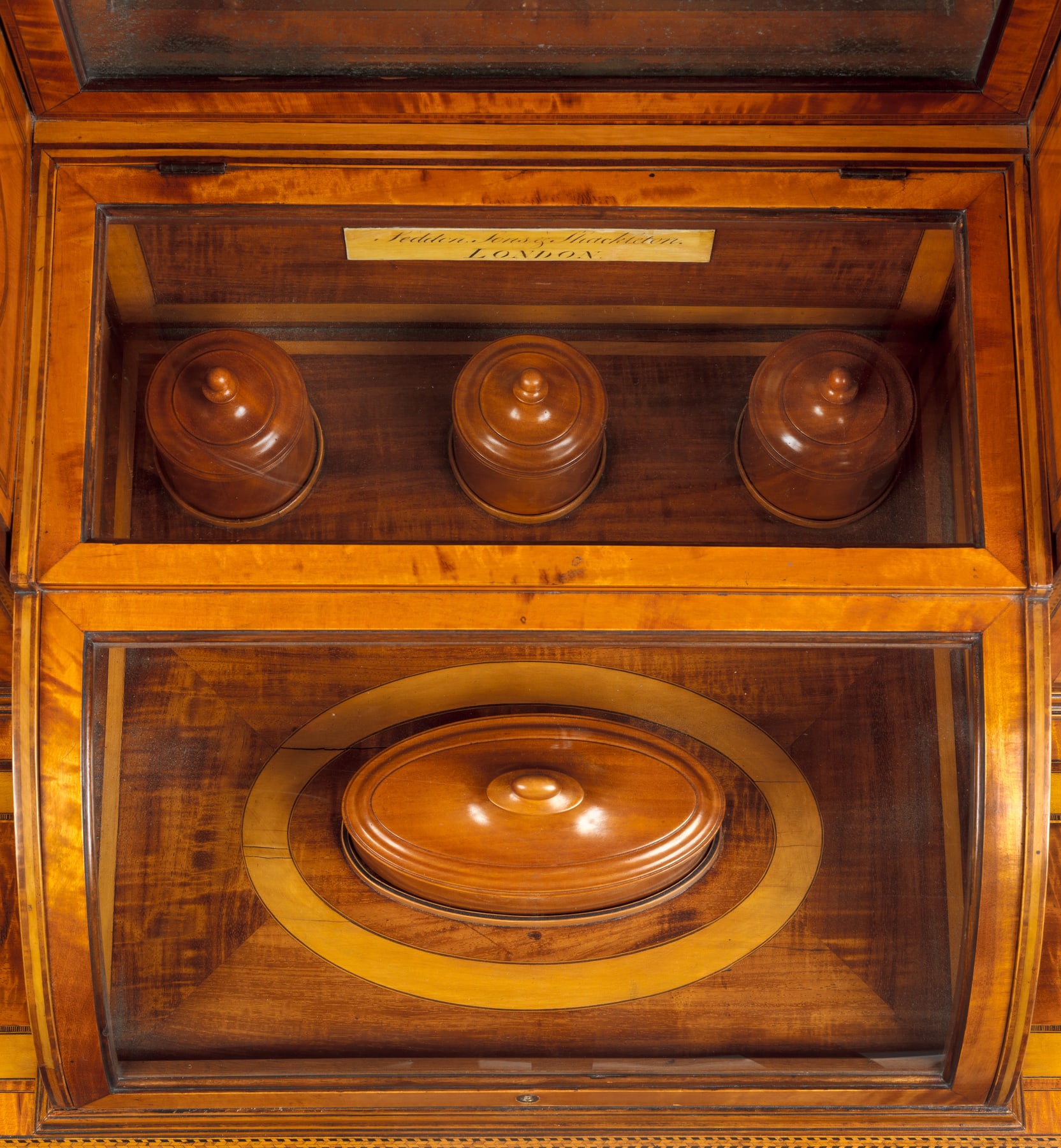
In the detail photograph, the lower compartment is open. Several lidded wooden containers become visible, nested within the recess. The view is more informative than a list of drawers: it shows how a small piece can make a collection of little things orderly.
The open flap also creates an edge between the person and the fitted interior. Its position makes the compartment easier to see, but the photograph does not tell us how every object was handled. The containers are evidence of organisation, without supplying a biography of the person who once used them.
The space underneath does work
Look below the storage. Two slender front legs frame a clear opening. Low stretchers and an oval platform sit near floor level, leaving the main space available to the seated body. This emptiness is as purposeful as the cupboards.
A cabinet could have filled that area with more shelves. A dressing table cannot be understood only by counting storage capacity: it must bring the user close enough to the mirror and keep the working area reachable. The narrow case, raised mirror and knee opening form one arrangement.
A daily ritual gains its own furniture
The Met’s history of the dressing table places the development of specialised examples in late seventeenth-century England and France. Older cosmetic boxes are part of the longer story of personal preparation, but a box alone does not organise a sitter, reflection and working surface in this way.2
Seddon’s table makes that distinction concrete. Closed, it presents a neat architectural façade; opened, it reveals a place structured around repeated small actions. Its interest lies in the relationship between those two states, and in how much of a room’s daily routine can be gathered around a single mirror.