The soft part is storage
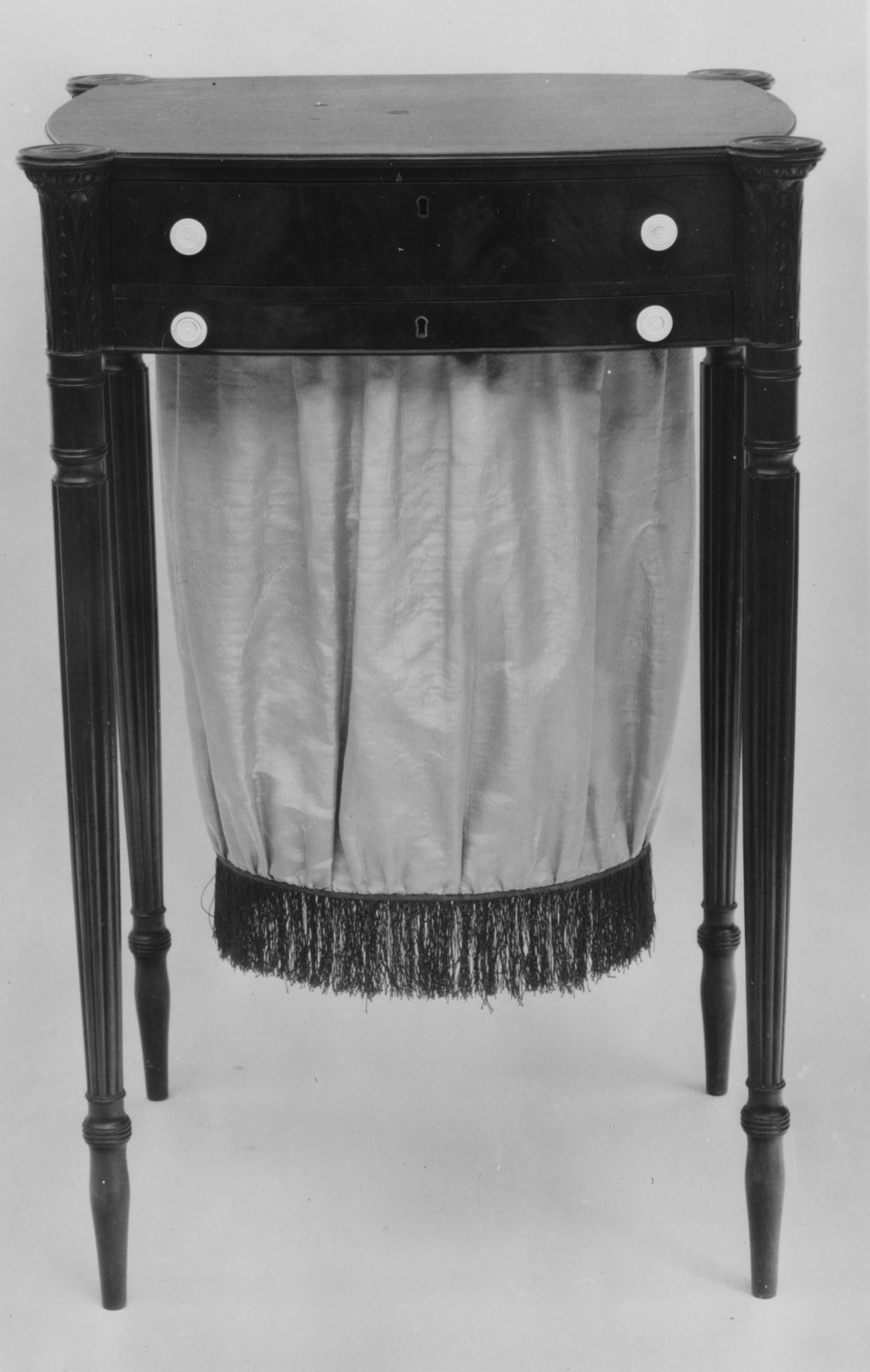
The table presents a disciplined wooden outline: a shallow case, a shaped top and four slender legs. Beneath it hangs a deep fabric bag. The contrast is immediate. One part holds a precise edge; the other falls into folds.
The Met describes the silk bag, finished with fringe, as storage for sewing materials. Its capacity does not need to be enclosed by a full wooden cupboard. The fabric can occupy the interval between the legs while leaving the table’s light outline visible.1
Look at the transition just below the case. A familiar piece of cabinet furniture becomes something closer to a container for work in progress. The softness is useful, and it changes the appearance of the whole object.
A drawer makes room for writing
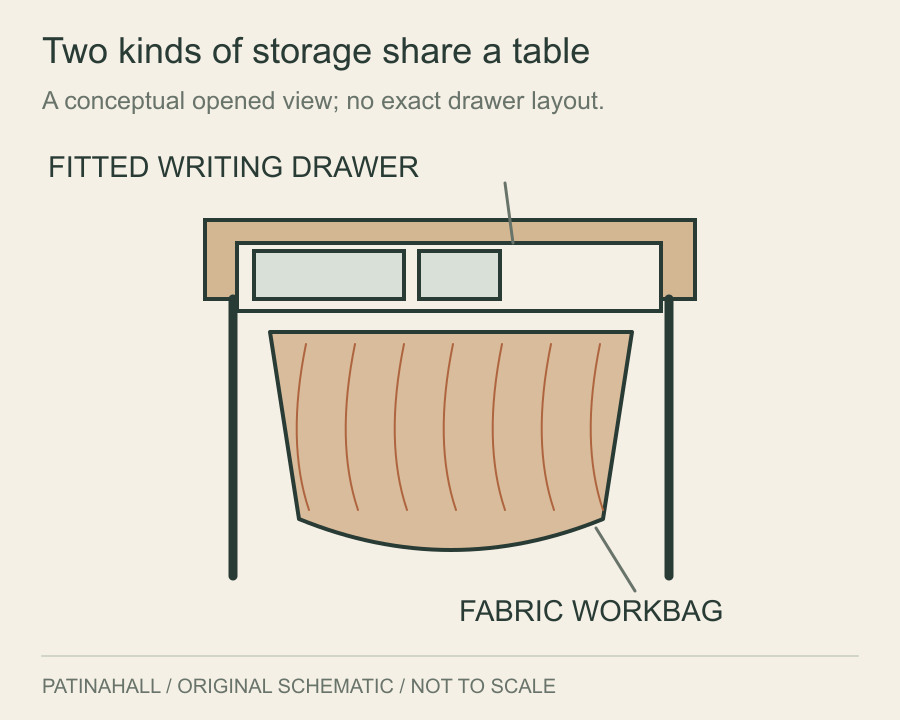
The upper drawer was fitted for writing. That second use gives the table a different scope from a basket on a stand. Papers and writing equipment could belong to the same small working place as needlework, organised in another part of the object.1
The arrangement separates kinds of contents. A fitted wooden compartment offers a different form of order from a hanging bag. One defines boundaries; the other can accommodate material that does not remain neatly rectangular.
The top supplies the visible pause between those activities. When the working parts are closed, the table can resume its place in the room. Its usefulness depends partly on being able to hold unfinished tasks out of view.
The work belongs inside a social room
The Museum of Fine Arts, Houston preserves a comparable worktable dated 1800–20, associated with Salem or Boston. It is a separate object, but the shared combination of a small case and fabric storage makes the family resemblance clear.2
Houston’s room guide explains worktables as places for needlework and handwork, sometimes fitted to serve as small desks. It also places them within the history of women having designated working spaces in the home.3
That context helps the object escape a purely decorative reading. A fine finish does not mean that no work happened here. It may instead mean that the tools and unfinished materials needed to coexist with the room’s more public life.
The legs deserve a second look
The reeding down the legs breaks each narrow support into still finer vertical lines. The Met relates this feature to documented carving work in Salem, including a payment to Samuel McIntire. It does not name him as the maker of this table.1
Follow those lines down from the case, then return to the folds of the bag. Both create a vertical rhythm, but one is cut into hard wood and the other falls through gravity. The table’s two materials remain visibly different while sharing the same small space.