Familiar enough to disappear
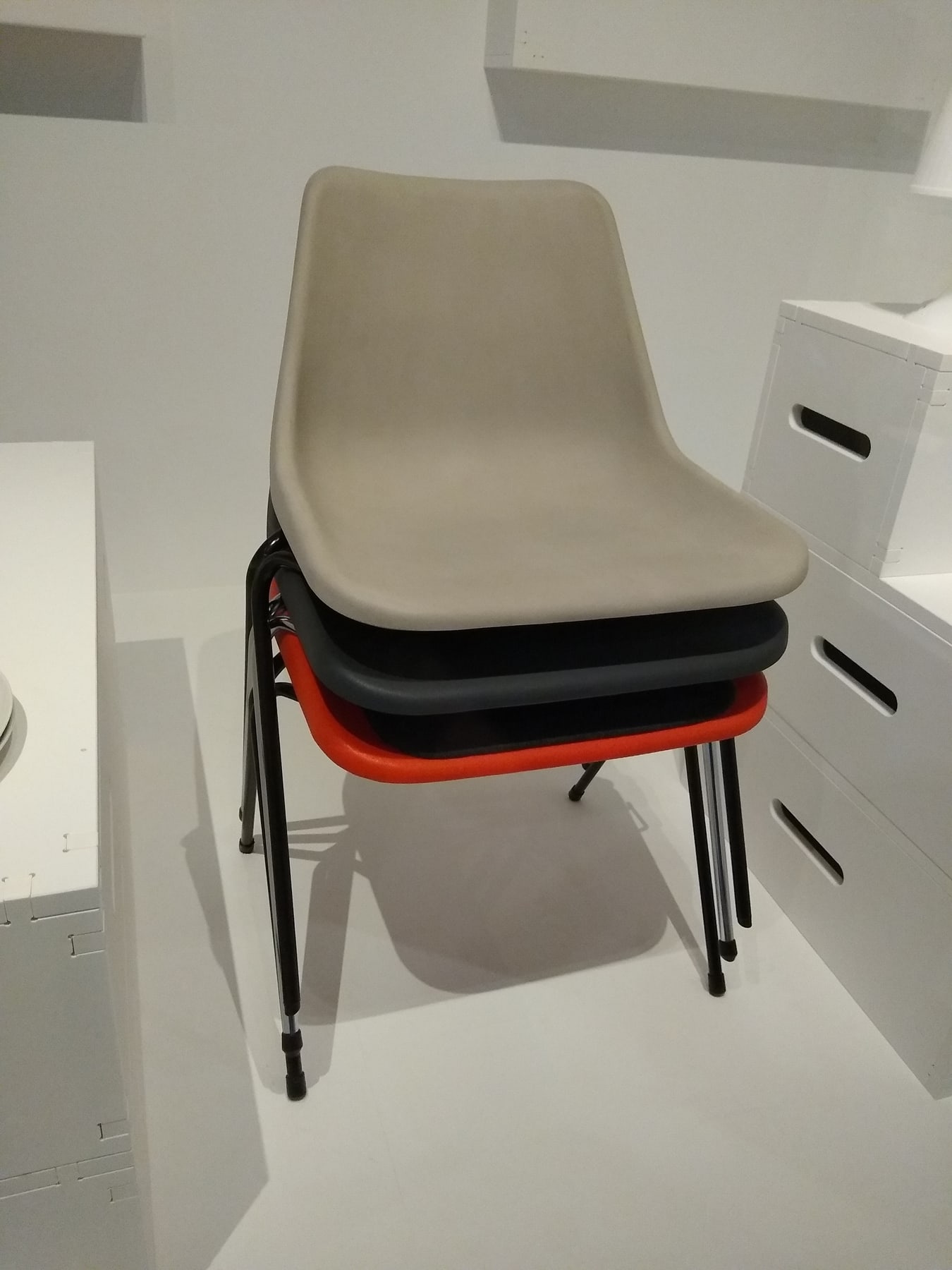
A polypropylene chair in a hall or classroom rarely asks to be studied. It is there to provide a seat, move out of the way and take its place in a row. Robin Day’s design makes that apparent simplicity interesting: one moulded sitting surface contains more decisions than its plain face suggests.
The Robin and Lucienne Day Foundation records the chair’s introduction in 1963, a Mark II in 1964 that became the standard version, and an armchair in 1967. The familiar outline belongs to a developing family, rather than a single chair repeated without alteration.1
A moulding with useful edges
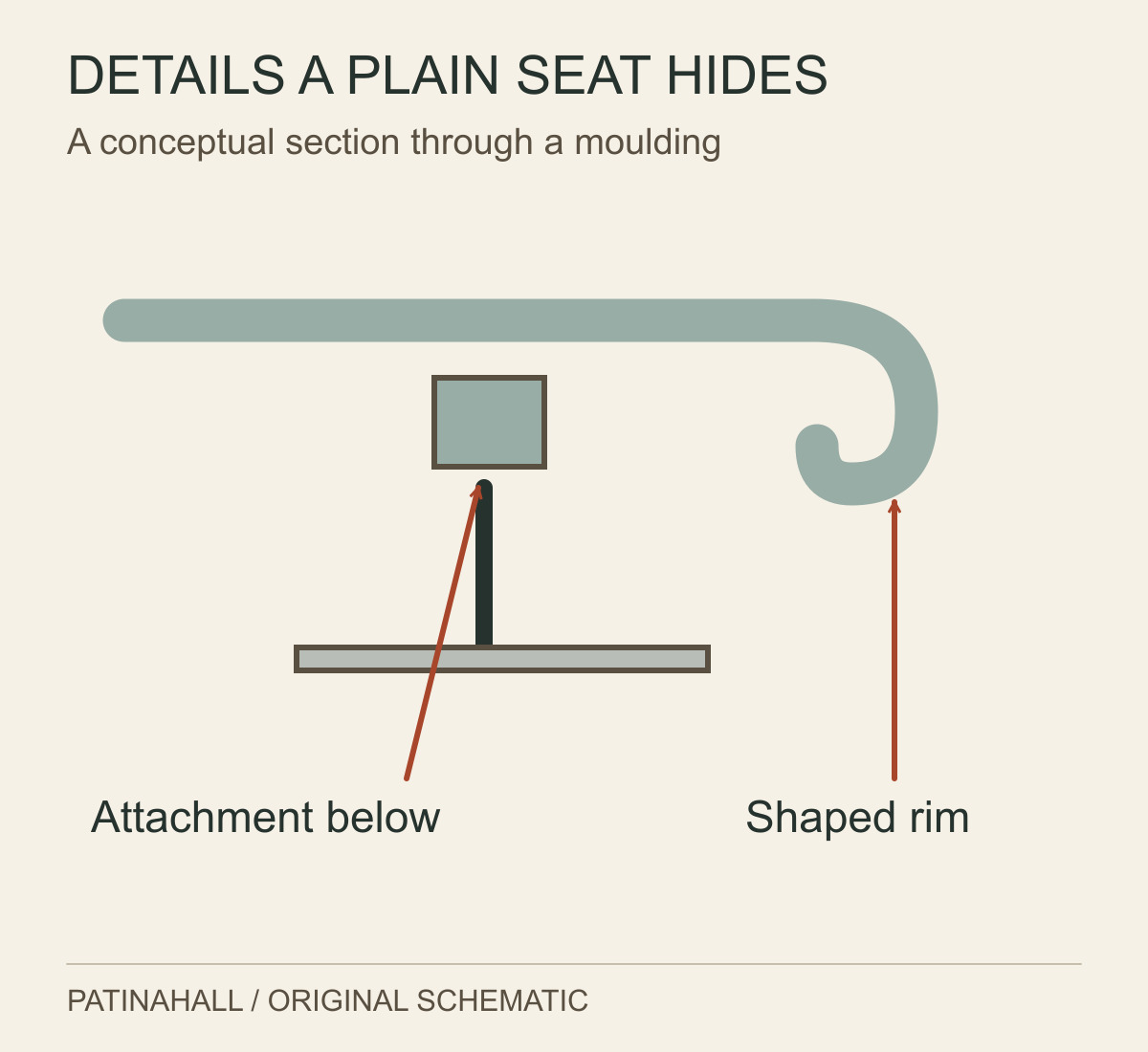
Hille’s account describes three years of development and work with the petrochemical industry. The resulting shell used a fully rolled edge for strength and integral fixing bosses beneath it. Those bosses allowed the shell to be attached without leaving the fastenings conspicuous on the sitting surface.2
The rim deserves a second look. A thin material with a flat cut edge would behave and feel differently from one shaped around its perimeter. Here the boundary of the shell is part of its construction. It helps the surface become an object with a finished edge, rather than merely a curved piece of plastic.
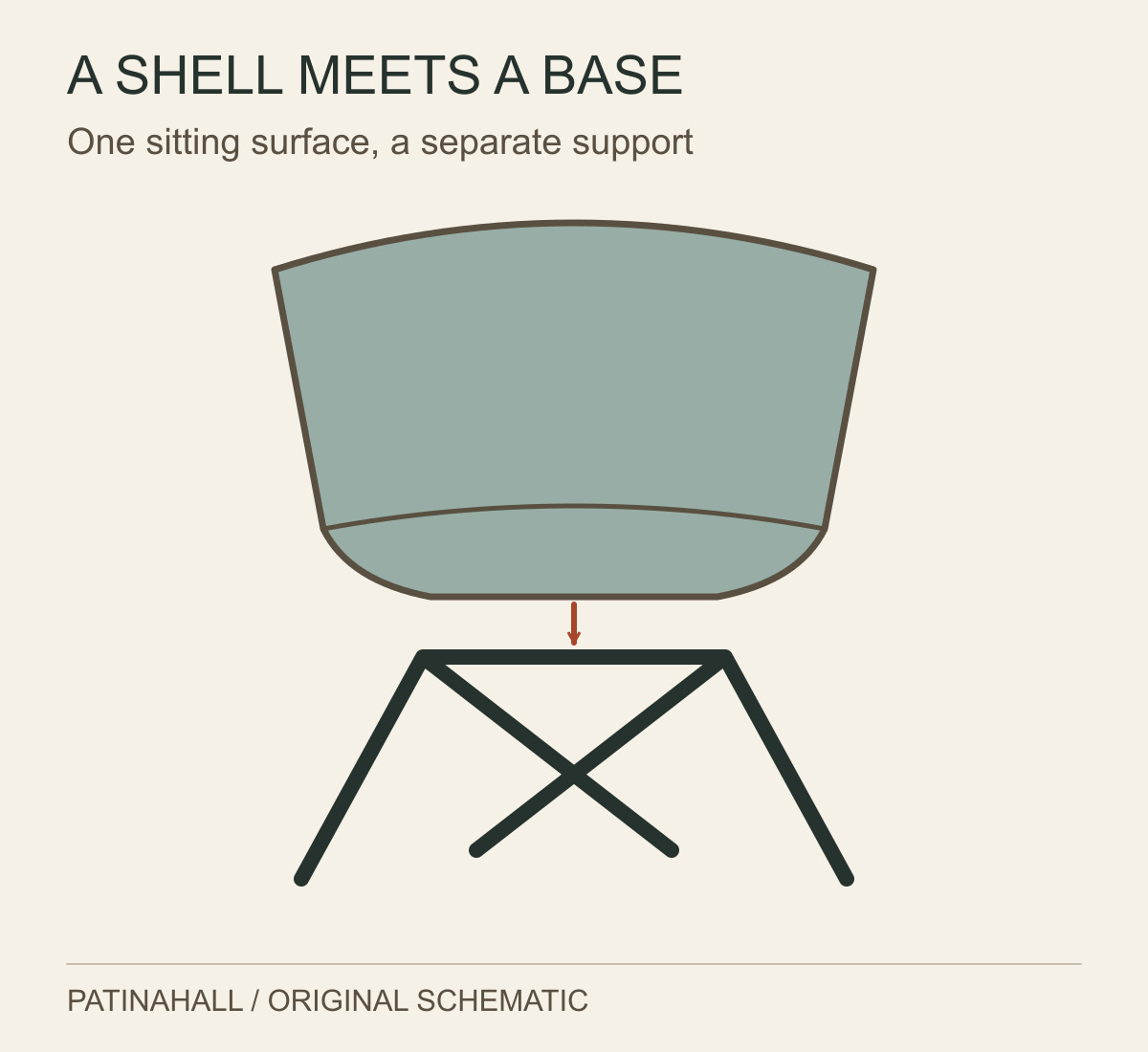
The attachments solve another problem. A chair needs to transfer the sitter’s load from a broad surface into a much narrower support. The underside is where the continuous shell meets the separate frame. Hiding that meeting point visually does not make it structurally unimportant.
One shell, several settings
Hille describes the shell working with different base options. That division makes the chair adaptable: the upper component addresses sitting, while the lower one can respond to how a particular room uses its chairs.2
A row of public seating is a different spatial problem from a chair pulled up to a small table. The repeated shell can supply a shared appearance while the supporting arrangement changes. The idea is economical in design terms as well as in material ones: not every new use requires a wholly new sitting surface.
This gives the plain shell a surprisingly rich role. It has to welcome the sitter above and meet its support below. The front can remain visually simple because some of the most useful shaping is concentrated around the edge and underneath.
An ordinary chair can have a long afterlife
The Foundation’s Hille licensing account describes a later company chapter and work together from 2015, including a P5 stacking-frame version and a selected colour range. The continuing chair therefore has a production history as well as a design history.3
The most rewarding place to return is the object itself. Follow the edge with your eyes, then look beneath the seat. The parts that usually escape attention explain why this modest chair could work in so many everyday settings. Familiarity is not the absence of design; sometimes it is what a well-resolved component makes possible.
