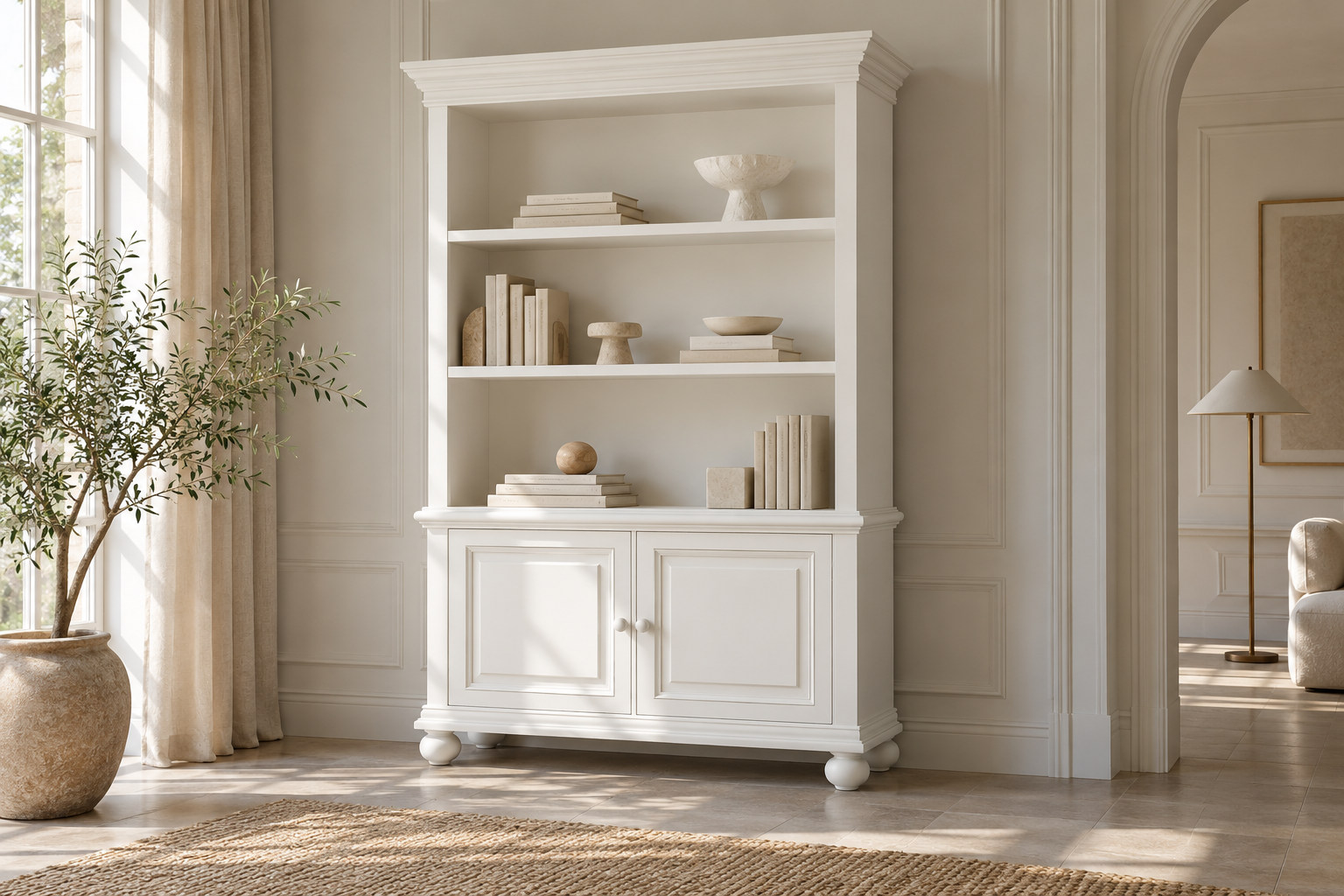
Recognise the outline first
A crown, upright body and emphatic feet give Paper Cabinet the presence of traditional grand furniture. The open shelves make that presence useful: the outline frames books and objects instead of simply presenting a closed ornamental front.
The exact model matters. Moooi’s Paper Cabinet sheet concerns the open-shelf cabinet; Paper Cupboard and Paper Buffet are other products.2 Reading one as another would miss how much of this cabinet’s effect comes from the empty spaces inside its outline.
A different kind of substance
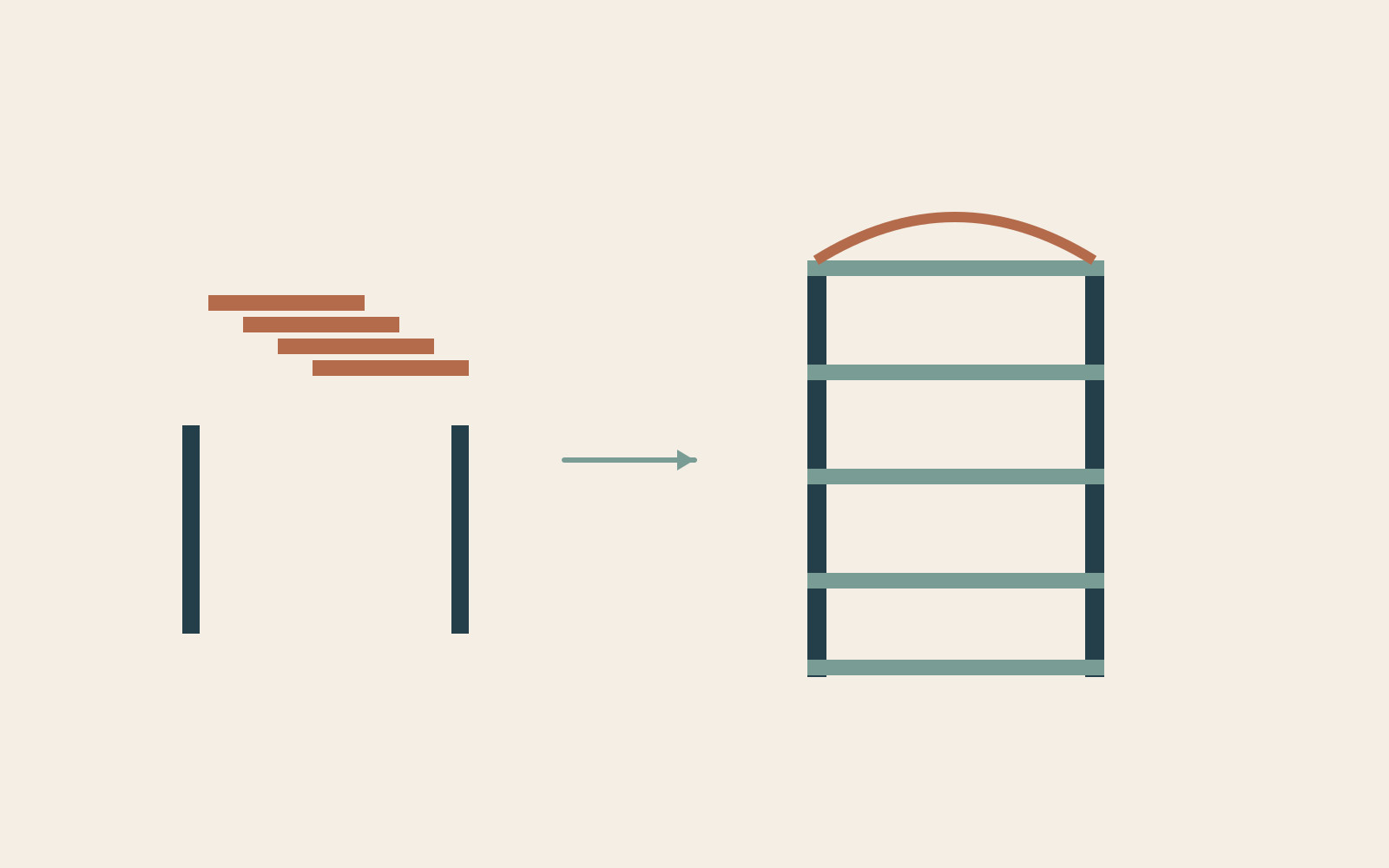
Studio Job’s Paper Furniture account describes paper, cardboard, wood and polyurethane coating, together with a slotted assembly concept.1 The surprise comes from their meeting with a silhouette associated with more imposing material mass.
Calling it simply “made of paper” would flatten that material story. Wood and coating also have roles. The project invites a useful distinction between looking substantial and being assembled in the way a traditional cabinet might lead us to expect.
Keep the partnership visible
The studio archive gives 2005 for Paper Furniture.1 This places the project within the historical partnership of Job Smeets and Nynke Tynagel, which the Museum of Arts and Design describes in its account of Studio Job.3
Their cabinet makes a familiar furniture type available for a fresh encounter. Its delight depends on recognition: we notice the traditional outline, then discover that material and assembly can tell a different story inside it.