Oak boards and an iron lock
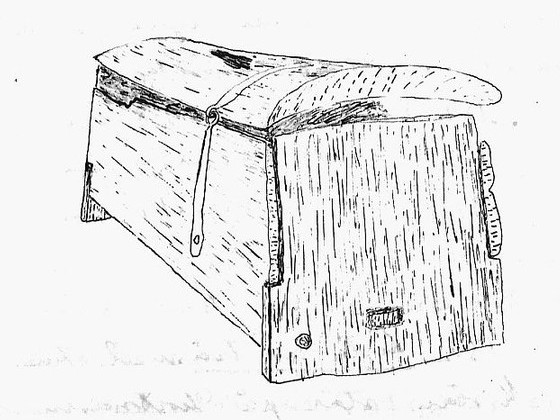
The Mästermyr chest is about ninety centimetres long and thirty centimetres high. Oak boards form the body, joined at the corners and nailed together; an iron mechanism locks it. The lid has a slight arch. Woodworking and metalworking meet in the container before we even reach its contents.1
Inside was equipment for both crafts. The chest came to light during farm work on Gotland in 1936, with an iron chain wrapped around it. The Swedish History Museum dates the find to the Viking Age.23
The opening illustration comes from the museum’s August 1937 documentation sheet. Its long outline and small feet help explain how substantial this tool chest was: closer to a low piece of furniture than a bag of hand tools.4
Saw, shave, grip, strike
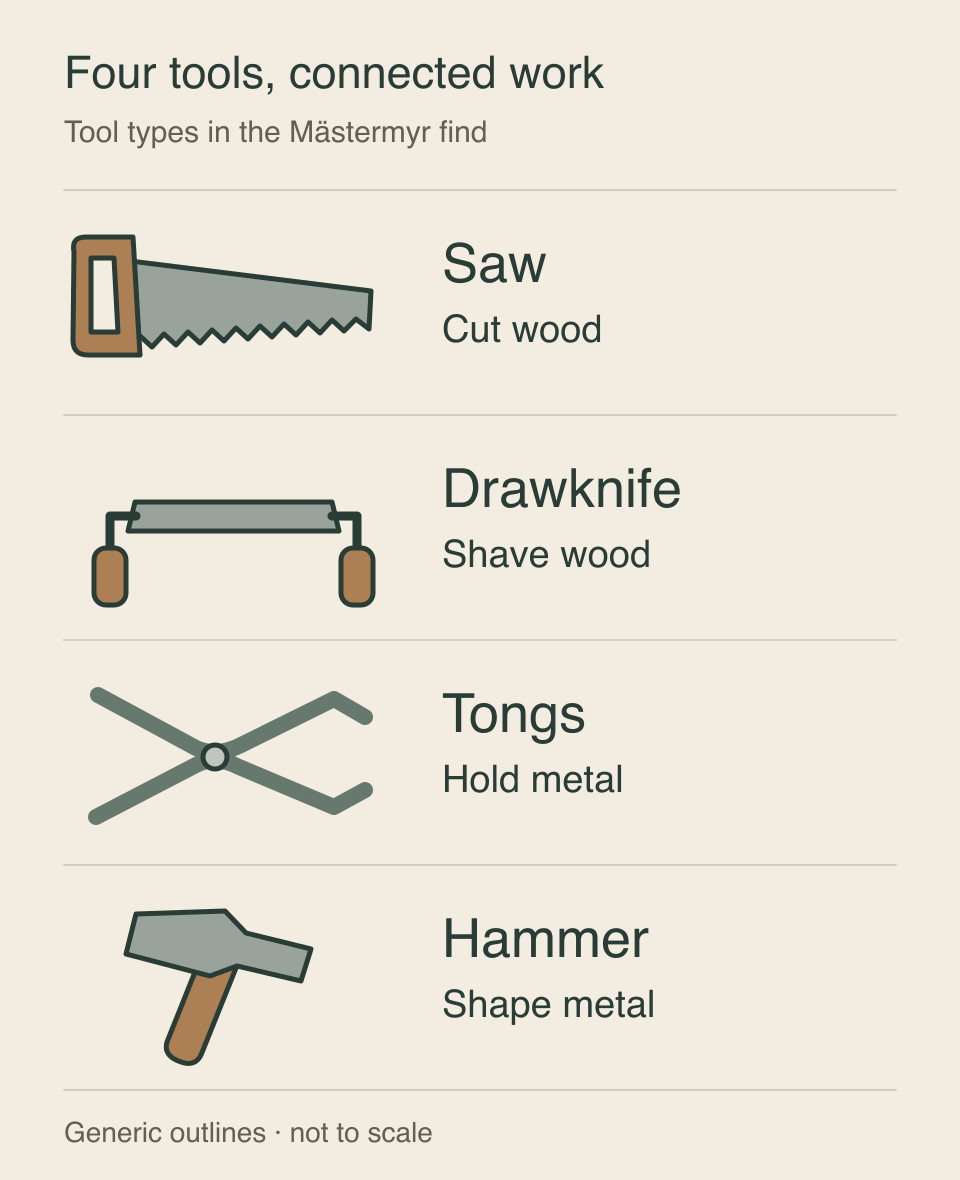
The collection includes saws, drawknives, rasps and axes, alongside tongs, hammers and sledgehammers for metalwork.2 These names describe different actions. A saw divides wood. A drawknife, held by a handle at each end, shaves it towards the worker. A rasp removes smaller amounts to shape a surface. Tongs hold metal while a hammer changes its form.
Think of the chest’s own wooden sides and iron fittings. Work of that kind needs both sets of skills: shaping boards is one task; making a working lock is another. The contents make the connection between the trades unusually easy to picture.
The familiar tool types also shorten the distance between this find and a workshop today. The museum points out that many could look at home in a modern smith’s or carpenter’s kit with new handles. What survives is a recognisable vocabulary of cutting, holding and striking.2
Broken iron still had a job to do
Fragments of iron were kept with the tools. The museum identifies them as material that could be repaired or forged into new objects.2
That is the telling part of the collection. A broken piece could still be useful to someone with the means to reshape it. The chest gathered equipment and material for future work in the same place.
We do not know whether it served one craftsperson or several, or why it remained in the wetland. But the combination is clear enough: tools to make an object, tools to mend it and metal that could begin again. The box carried possibilities as well as possessions.
