Start at the edge of the desk
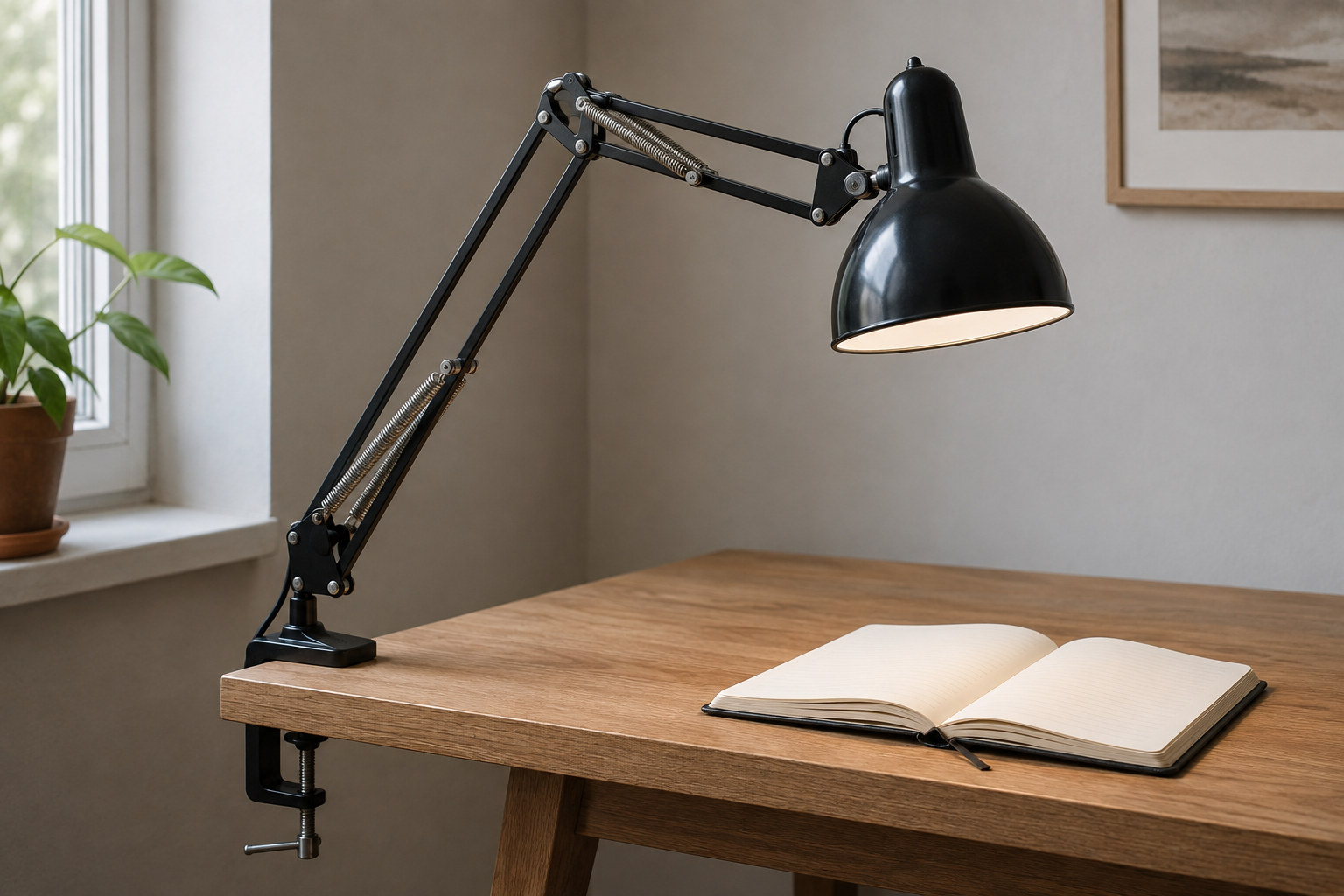
A lamp base occupies some of the surface it helps illuminate. A clamp changes that relationship. Attached at an edge, it lets the arm begin outside the main working area and reach inwards towards paper or a book.
Glamox’s L-1 material presents the lamp through this combination of reach and spring balance, with its mount and articulated arm treated as parts of the task-lighting arrangement.2
The clamp affects where the whole lamp begins. A base-mounted example and a clamped one can share the recognisable arm while organising a desk differently.
Jac Jacobsen’s 1937 design
Glamox identifies the L-1 as Jac Jacobsen’s 1937 design and places it within Luxo’s continuing task-lighting history. The company still describes the model as part of its workstation-lighting range.12
The manufacturer’s brochure gives the beginning a more unexpected setting: a delivery of sewing machines from England. Jacobsen noticed the crane-like work lights supplied with them and saw room to develop the overall design. The adjustable light arrived with another working object before becoming the subject of his own improvements.2
That connection makes the lamp’s reach feel less abstract. A sewing machine gives the hands a concentrated task and leaves little reason to fill the surrounding surface with a bulky light. The desk lamp belongs to the same everyday need to bring illumination close to detailed work.
Balance makes the reach useful
A long arm is only helpful if the lamp can hold a practical position. Springs participate in balancing the moving parts as the arm extends or folds. The head can then be directed towards a changing area of work instead of remaining fixed above one point.1
The visible arrangement makes the design unusually readable. The arm gives distance, the joints allow a change of angle and the shade directs the light. The springs help those movements coexist with a position that can be maintained.
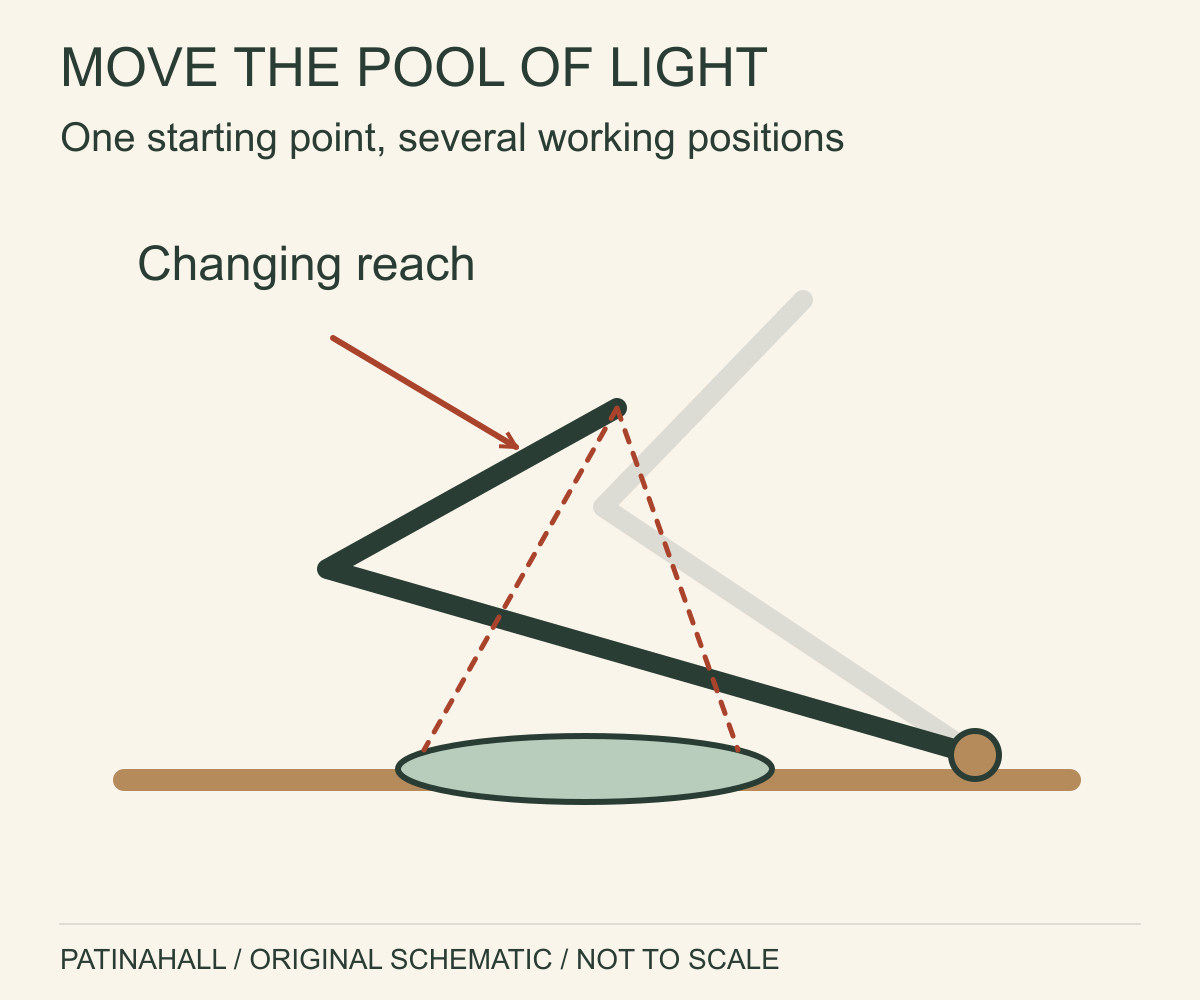
Our schematic follows those separate jobs. It does not show an exact spring specification, predict the behaviour of a worn lamp or provide a repair procedure.
The working surface keeps changing
The L-1 makes particular sense when a desk is imagined over the course of a day. The useful light may need to move from a keyboard to a notebook, or from one end of a workpiece to another. The lamp has a place in the room, but its shade need not have only one place above the table.
That is the detail worth remembering when an ordinary used L-1 appears in a listing. Its long arm is a way of sharing one light across a changing workspace. A small clamp and a visible set of springs explain more about the object than calling it simply a vintage desk lamp.