Follow a line through several materials
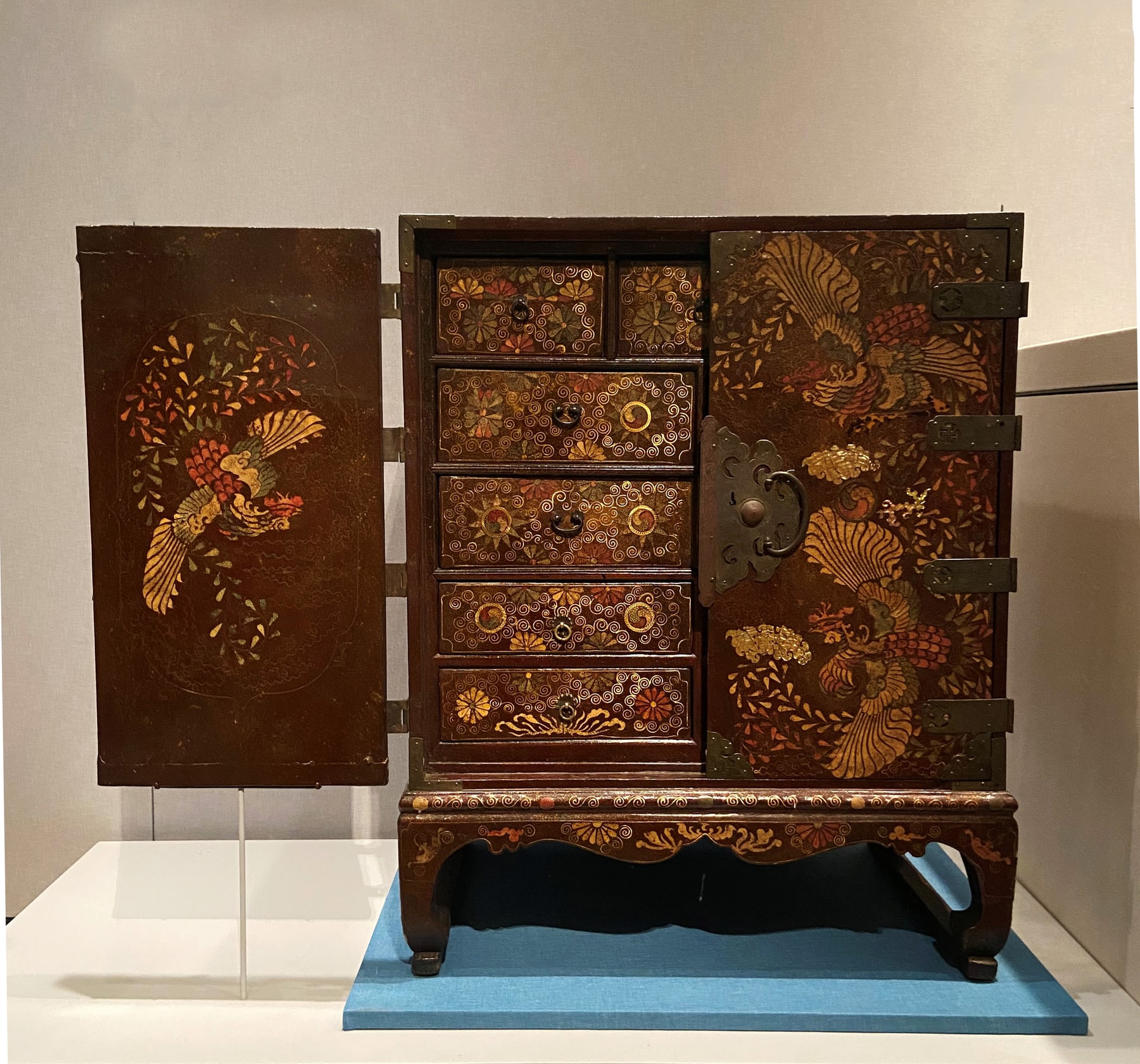
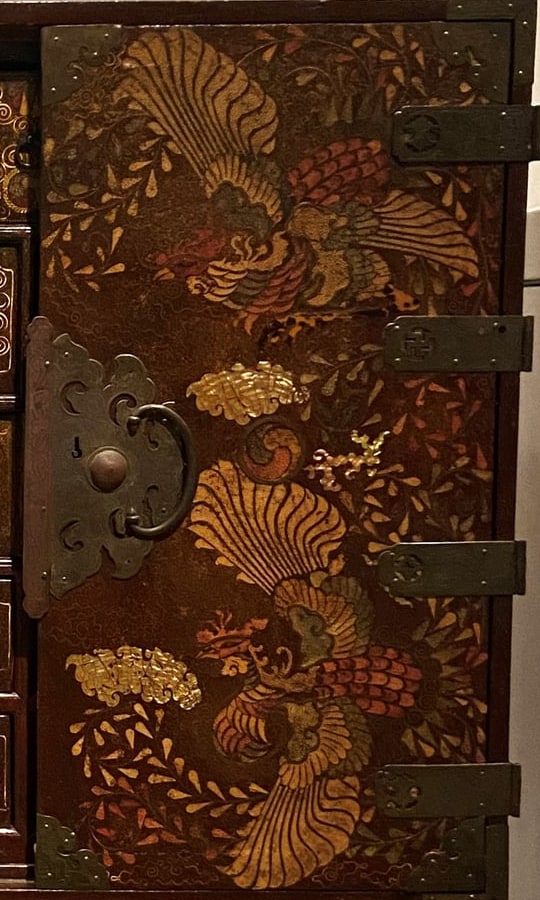
Start with the outline of the phoenix on the closed door. Its body and surrounding flowers stand out against a dark field, but the bright areas do not all look alike. Some passages flash; others read as a warmer or more textured surface.
The museum lists mother-of-pearl, tortoiseshell, rayskin, brass wire and brass fittings alongside the wooden chest. That variety explains why “inlaid decoration” is only a starting description: each material contributes something different to the image.1
The door is both picture and opening
The gallery photograph catches one door open and the other closed. This is a particularly helpful state. It places the decorative exterior and the storage interior in the same view, making their relationship easy to grasp.
The closed leaf presents a complete field of ornament; its open partner interrupts the façade and reveals depth. The chest does not lose its practical divisions beneath the pattern. Fittings and door edges remain part of the composition.
A closer crop brings the inlay back to the scale of individual pieces. The whole bird is still recognisable, but attention can move from its outline to the changes in surface that create it.
Motifs suggest a household setting
The Met interprets the phoenix and flower decoration in relation to an elite household, probably its women’s quarters, and suggests the chest may have belonged to a set. These are carefully framed readings of the object rather than a named ownership history.1
That distinction preserves the interest of the motifs. Decoration can help a museum reconstruct likely social meanings while leaving the exact room unknown. The picture tells us more than a bare box would, without supplying every missing detail of its use.
Similar chests still need separate records
A larger chest in the same collection, accession 63.121.2, includes coloured roundels and motifs that the museum connects with the Korean Empire period. It provides a comparison for how inlay can carry political and auspicious meanings, but its dating argument belongs to that different object.2
The smaller chest remains dated broadly to the early twentieth century. Its strongest immediate lesson is visual: a decorative surface can be assembled from things that respond differently to light. Move between the whole view and the crop, and the image alternates between a phoenix and the patient arrangement of its materials.