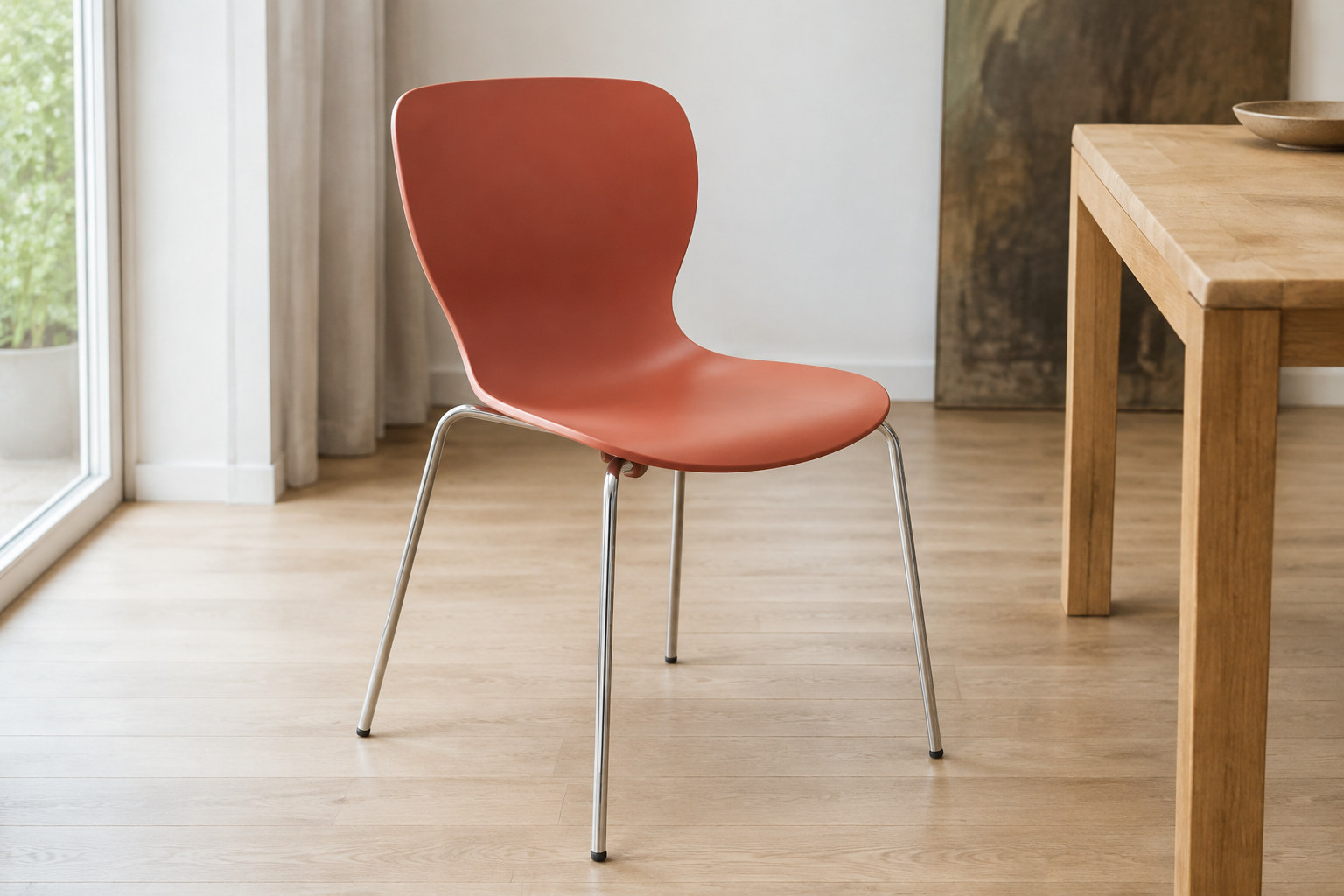
A smooth underside is a clue
Plastic chairs often reveal a network of reinforcing ribs when viewed from below. Maui takes a different approach. The Magistretti archive explains that the shell’s curved form was developed to provide resistance without those additional ribs.1
That gives the chair an unusually clear body. The seat narrows into the back, and the curves remain readable as one continuous surface. There is no need to understand a calculation to appreciate the result: the shape that meets the sitter is also part of what makes the shell work.
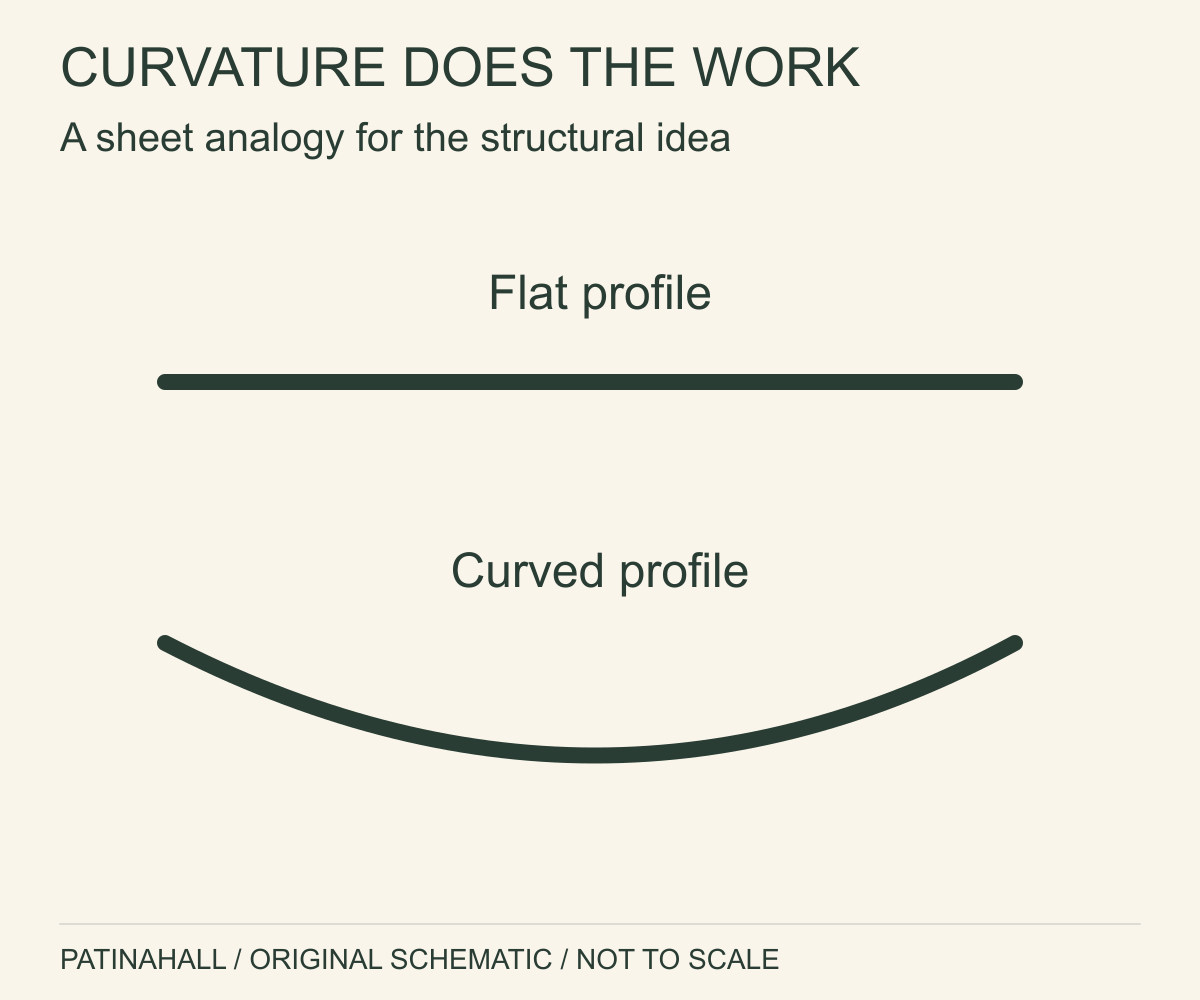
A familiar comparison is the difference between a loose sheet and the same sheet curved in your hands. The material has not simply become thicker; its geometry has changed. This is an explanatory analogy, not a model of Maui’s tested strength.
An intuitive shape, refined at the factory
The archive dates Maui’s realisation to 1996. It records an early plaster-cloth model whose outline already resembled the eventual chair, followed by extensive structural and production refinement. It also identifies Arne Jacobsen’s curved plywood seating as a reference in developing the shell.1
The connection is more interesting than a claim that one chair copied another. It shows a designer carrying a question across materials: how can a thin, shaped surface become a convincing place to sit?
The answer still required industrial development. An appealing study model and a repeatable moulded object are different stages, even when their silhouettes look closely related.
A chair that knows its neighbours
Kartell describes the basic Maui as stackable and able to connect to neighbouring chairs with a linking device. These features make sense in waiting areas and meeting rooms, where seats must sometimes form rows and sometimes leave the floor clear.2
They also help explain Maui’s quiet domestic presence. A chair designed to cooperate with others does not need a large visual footprint. The thin metal frame keeps the space beneath the shell open, while colour can distinguish the seat without changing its basic construction.
The later family includes other configurations. Arms, upholstery and different bases should be read as particular versions, rather than assumed to belong to every chair carrying the Maui name.
The useful detail in a plain chair
Maui offers a good reason to look again at unassuming furniture. Its story is not concentrated in a dramatic leg or a conspicuous mechanism. Much of the work is in a curve that looks inevitable once it has been made.
An ordinary used chair can therefore carry an interesting design question. Turn attention from the colour to the shell, and the apparently simple object becomes an encounter between a designer’s first shape and the factory work needed to make it repeatable.