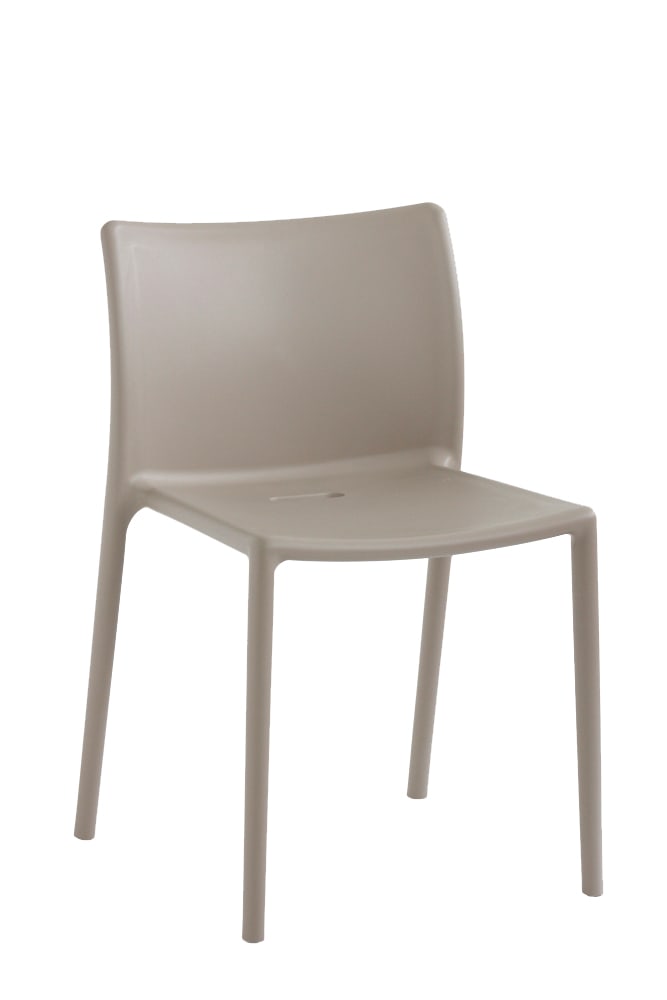

The sample that started a chair
A piece of moulded plastic tube arrived before the chair. In Jasper Morrison’s account, Magis founder Eugenio Perazza offered the sample as evidence of a gas-injection process and suggested making furniture with it. Morrison began from the legs and worked upwards.1
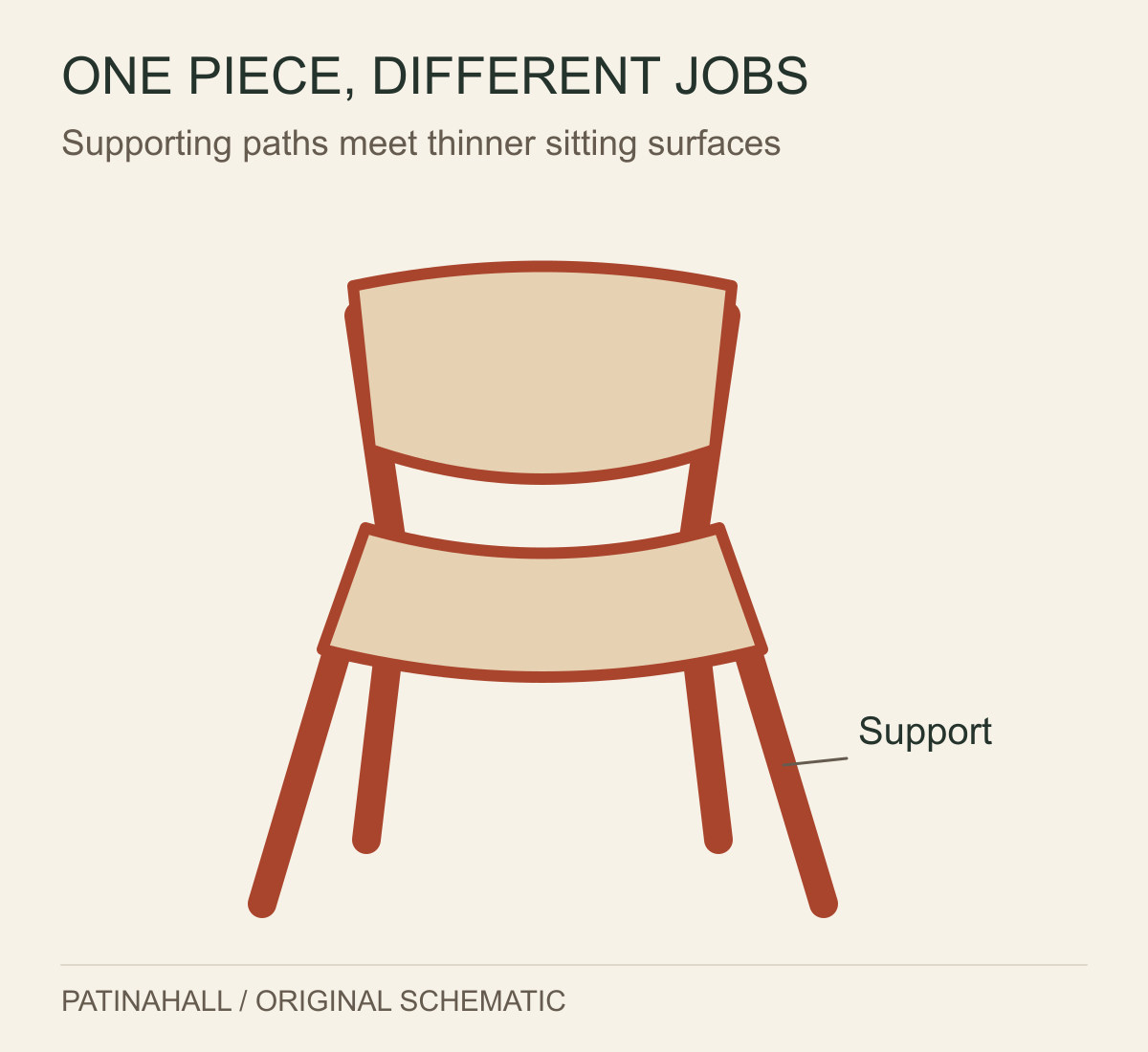
That starting point makes Air-Chair unusually easy to read. Its more substantial structural paths lead towards thinner surfaces where the body sits and leans. The chair is one piece, but the material is doing different jobs in different places.
An ordinary-looking plastic seat contains an argument about where substance is useful and where a thin surface will do.
A frame hiding inside one piece
Morrison describes the design as a tubular structure with a thin skin forming the seat and back. He compares the approach with an earlier plywood chair that used thicker material for support and thinner panels for sitting.1
The distinction survives even when separate components have disappeared. Follow the outline up a leg and around the back: the visual path suggests support. Look across the seat and the broad surface suggests contact with the body.
This is a helpful way to see a moulded object. “One piece” describes how the finished chair holds together; it does not mean that every part needs the same thickness or shape. The designer can organise different functions inside a continuous form.
What the air is doing
Magis’s technical sheet identifies air moulding and polypropylene reinforced with glass fibre. Its current product page describes a stacking chair suitable for outdoor use.32
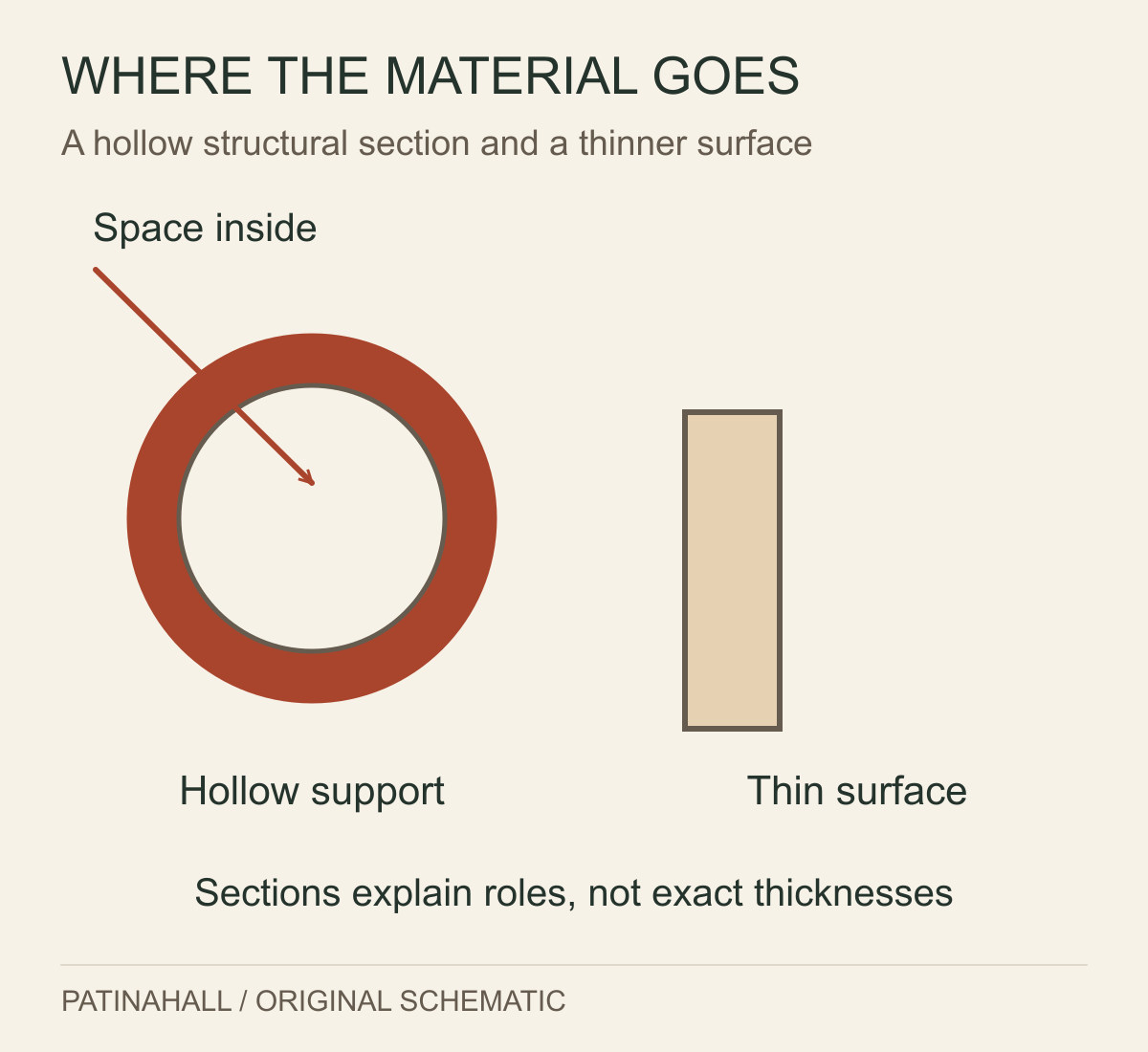
The hollow tube sample in Morrison’s story offers a visual clue to the manufacturing idea. Space inside a structural path can be part of the design, while the outside still supplies a coherent outline. The name refers to a production approach, not an inflatable seat.
A cutaway sketch helps make that distinction visible. A hollow section is still material arranged around an opening; the sitting surface is a different part of the same whole. Understanding those roles makes the unassuming chair more interesting to look at.
A familiar object, a careful set of curves
Morrison’s project page carries the year 1999; Magis labels Air-Chair 2000. The two source labels are useful to retain when tracing the design’s appearance, without turning either into the production date of a used chair.12
The finished form brings the manufacturing experiment back to everyday life. It can join a table, stand beside a doorway or enter a stack when extra seats are put away.
What began with a small sample became a place to sit. The path between those two things is visible in the object: follow the legs upwards, then notice how the material spreads out to meet the body.