A surface the size of the task
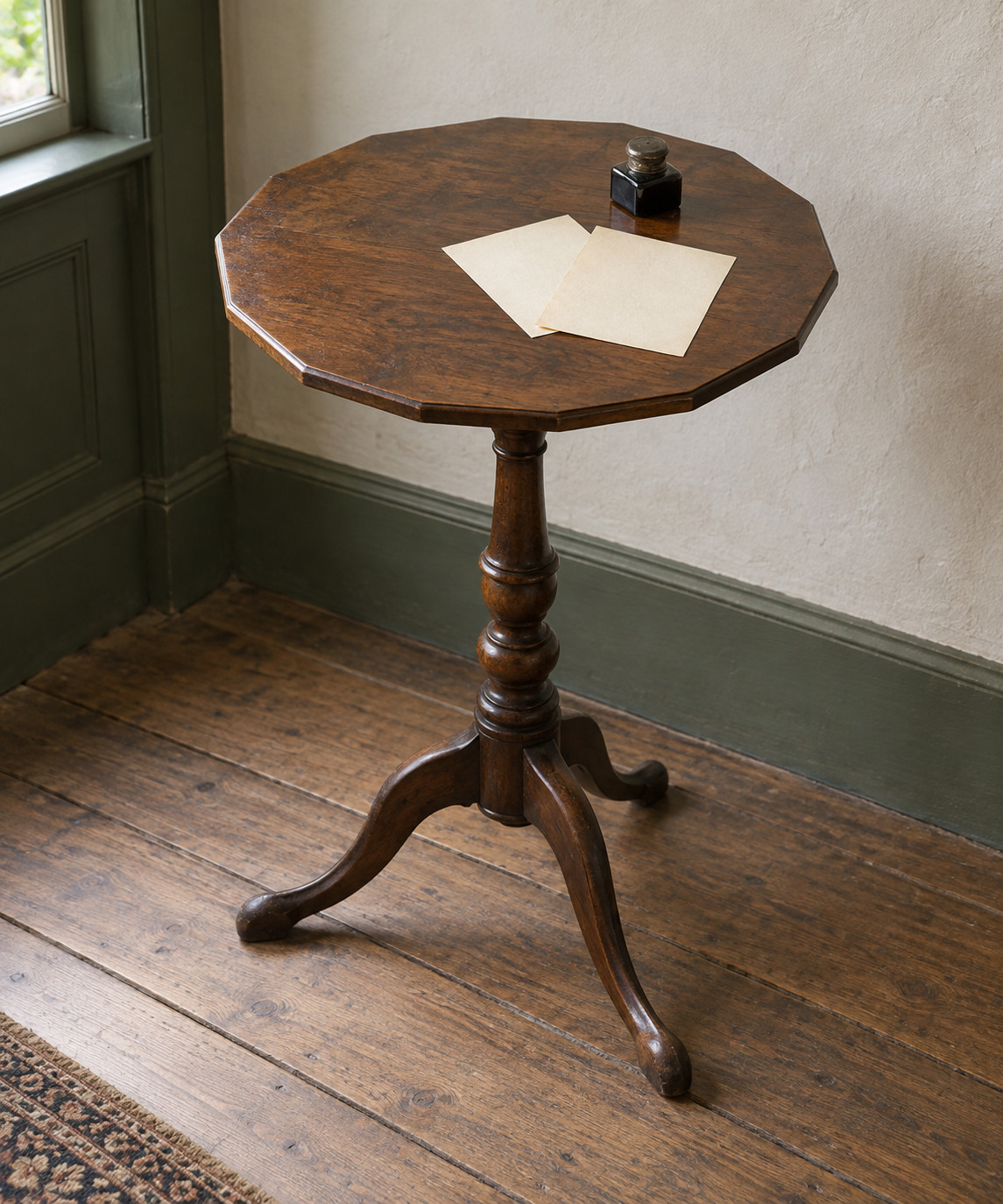
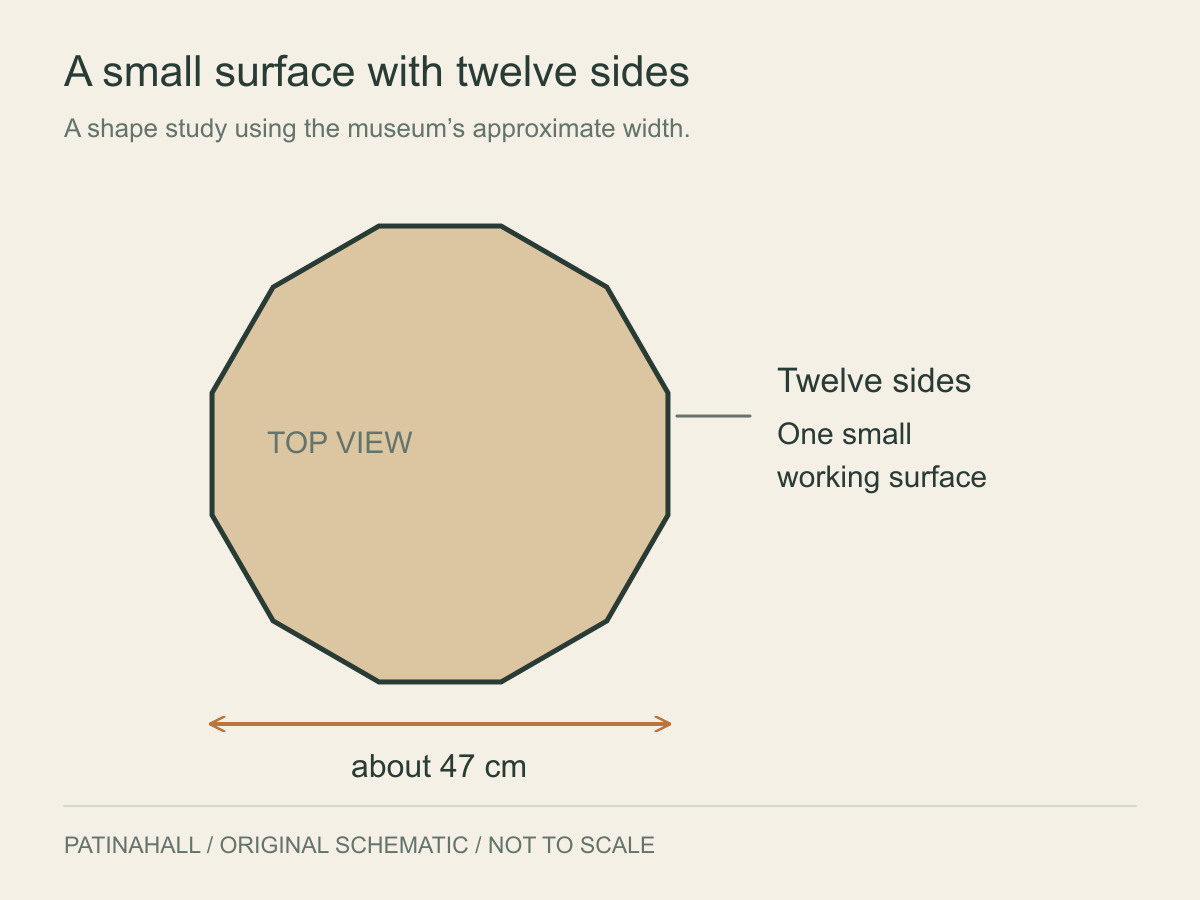
The first surprise is how little room the table offers. The top is a small polygon, not the broad territory of an imposing library desk. There are no banks of drawers or raised shelves to make the act of writing look monumental.
Jane Austen’s House identifies the top as walnut and dates it to the early eighteenth century. The base is less certain and may be older. Together they form the table now associated with her writing at Chawton, although their histories are not identical.1
The small surface directs attention towards the working materials that could fit on it. A sheet, an ink supply and the hand moving between them are enough to begin imagining the activity. They do not tell us why Austen preferred this particular arrangement. That question remains larger than the object’s dimensions.
The story written underneath
A provenance note beneath the top recounts a purchase by Montagu Knight from a grandson of James Goodchild, who had lived in Chawton during Austen’s lifetime. It preserves testimony about her using the table and specifically distinguishes the original top from the rest of it.1
The underside therefore does a different job from the polished surface above. One side supported an activity; the other supports a historical association. Without that chain of family recollection, the table would be much harder to distinguish from many other small domestic pieces.
The table’s literary identity travels with that note. Its outline is an ordinary domestic one; the testimony attaches a particular writer to it.
Chawton was also a place for revision
Austen moved to Chawton in 1809. Her years there included returning to earlier manuscripts and writing new novels. The Jane Austen Society’s account distinguishes the earlier forms of Sense and Sensibility and Pride and Prejudice from the later work on Mansfield Park, Emma and Persuasion.3
That history is more interesting than imagining six complete books arriving on an empty table. Writing includes reworking, comparing and deciding what to remove. The small piece of furniture belongs beside a long process, rather than explaining that process on its own.
A letter to Cassandra dated 24 January 1813 gives a much closer glimpse of the work. Austen refers to a correction involving Gibraltar and makes playful connections between the social gathering she has attended and events in Mansfield Park. The museum reads the letter as evidence of the novel’s progress.2
The writer in that letter is alert, practical and amused. She is checking a detail and seeing fiction in the behaviour around her. That is a livelier encounter than any claim that a particular scratch in the table must have accompanied a famous sentence.
The space a reader supplies
The table’s size makes it easy to lean imaginatively towards the work. There is so little furniture between the observer and the idea of a page.
Its history still requires two kinds of attention. Read the note beneath the top to understand the association. Read Austen’s letters to hear the person working. The table supplies a place; the writing supplies the life.