Artefact story

Georges Jacob’s bed: a room hanging from the ceiling

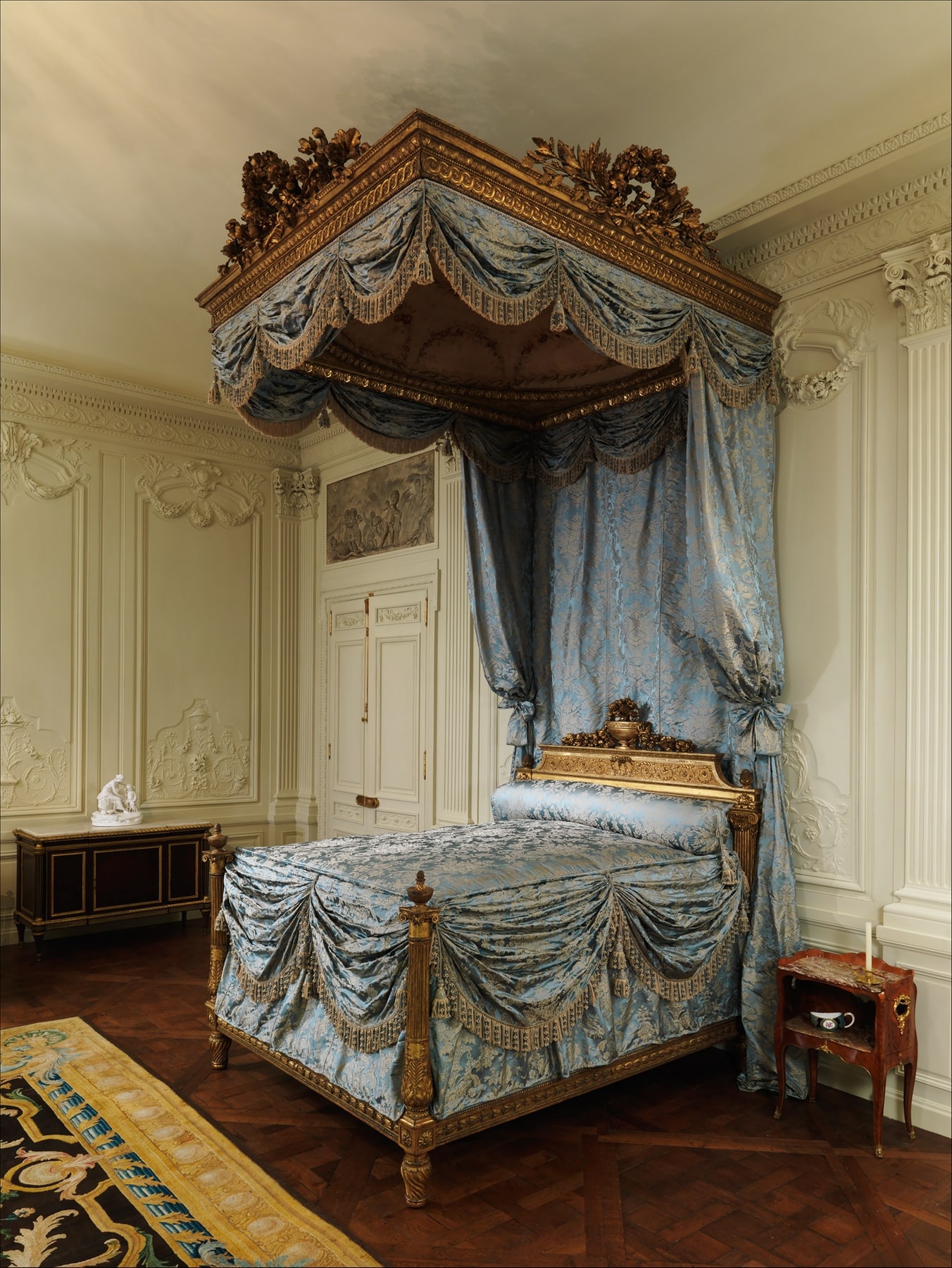
Georges Jacob’s bed has a full canopy without four tall posts because the canopy hangs from the ceiling. The frame below and the dome above make an enclosure together, while the open sides keep the bed connected to the room. Its architecture depends as much on the building as on the furniture.

Jacob’s tester bed in a museum installation, with its domed canopy suspended above the open-sided frame.
Jacob’s tester bed in a museum installation, with its domed canopy suspended above the open-sided frame. Accession 23.235a. The Metropolitan Museum of Art. Public domain (CC0).
On this page
Key facts & takeaways

At a glance

Subject
Tester bed (lit à la duchesse en impériale) 23.235a
Entry
Artefact story
Last reviewed
6 September 2026

Three things to remember

  1. The domed canopy is suspended from the ceiling, rather than supported by four bedposts.
  2. Jacob’s stamp does not mean he personally produced every carved or woven component.
  3. The present museum installation includes replacement hangings.

Look for the missing posts

Trace the space between the bed’s corners and the canopy. There is no continuous wooden column joining them. The dome belongs overhead, suspended independently; the bed occupies the floor below. Curtains provide the visual connection that a four-poster would make with timber.1

That gap changes the bed’s presence. The sides remain open to the surrounding room, while the canopy establishes a distinct place within it. Seen from across the gallery, the ensemble reads almost like a small interior inserted into a larger one.

A bedroom could receive company

The Met records the bed in the Paris bedchamber of the duchesse de Choiseul-Praslin in 1791. In the social setting described by the museum, an aristocratic bedchamber could receive visitors; the bed therefore participated in a room’s public appearance as well as its private use.1

The broad front and high canopy make that dual role easy to imagine without inventing a particular gathering. A visitor would encounter an arrangement of fabric and carved form at room scale. The headboard alone could not produce the same effect.
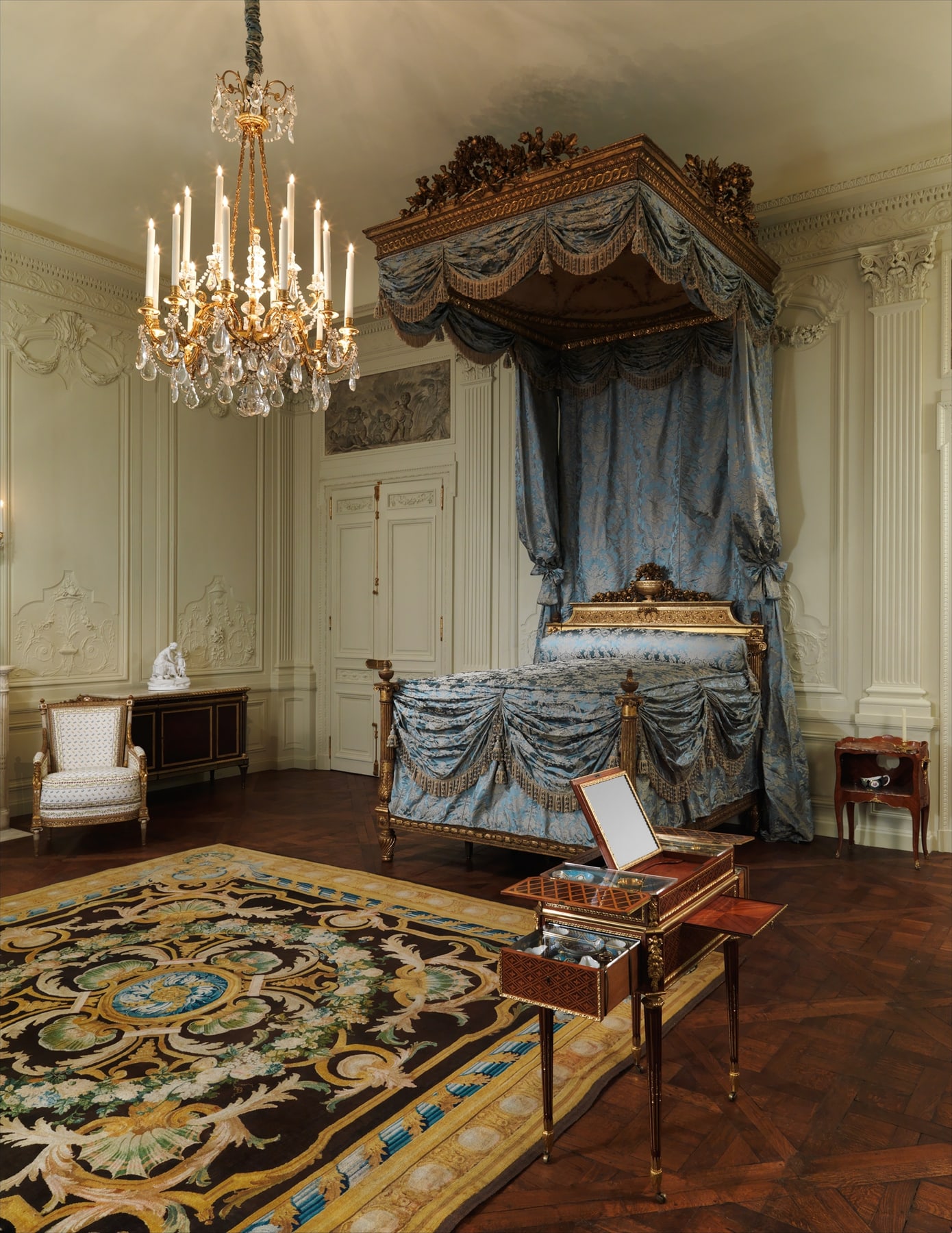
Wider museum installation of Jacob’s bed, showing the canopy in relation to the surrounding room; most hangings are modern.
Wider museum installation of Jacob’s bed, showing the canopy in relation to the surrounding room; most hangings are modern. Accession 23.235a. The Metropolitan Museum of Art. Public domain (CC0).

One stamp, several trades

Jacob’s stamp is a valuable connection to the maker, but a furnished bed demanded several kinds of expertise. The Met’s account of eighteenth-century French furniture distinguishes the joiners who made beds and chairs from the cabinetmakers associated with veneered case furniture. Carvers, gilders and textile workers also contributed to finished interiors.2

Here, the carving is anonymous. The Beauvais tapestry was woven after designs by Jean-Baptiste Huet. Naming Jacob should help us locate the object in a network of making, rather than erase everyone whose work has a less convenient signature.1

The dome holds a different survival

Most of the present hangings are modern silk damask. The tapestry lining within the dome survives from the earlier ensemble. Those fabrics cannot all be used as equal evidence for the bed’s eighteenth-century appearance.1

The wider photograph is useful precisely because it reveals a museum arrangement: wall decoration, lighting and neighbouring furniture help visitors read the scale. Look back from that room view to the suspended dome. The bed’s central spatial idea is still legible even when the textiles through which we experience it have different histories.

Research notesEvidence, connections and limits

The museum records the bed in the duchesse de Choiseul-Praslin’s bedchamber in 1791. Today’s gallery photographs show a museum installation, not that room, and most of the visible hanging fabric is modern silk damask.

Evidence map

Connected subjects and evidence

Reviewed connections

  • Tester bed (lit à la duchesse en impériale) 23.235auses materialCarved walnut, pine and linden with tapestry and damaskdocumented

    The primary record lists these materials for this subject. The full material list and object dating remain in the cited accession record; listed replacement or uncertain materials retain their qualifiers.

    Reviewed 6 September 2026 by PatinaHall editorial.
  • Tester bed (lit à la duchesse en impériale) 23.235amade byGeorges Jacobdocumented

    The primary record identifies Georges Jacob for this subject.

    Reviewed 6 September 2026 by PatinaHall editorial.

Research trail

Sources and further reading

  1. Tester bed (lit à la duchesse en impériale) — 23.235aThe Metropolitan Museum of ArtAccessed 6 September 2026
  2. The Golden Age of French Furniture in the Eighteenth CenturyThe Metropolitan Museum of ArtAccessed 6 September 2026

Last reviewed 6 September 2026. Found an error or a stronger primary source? Contact PatinaHall.