A locker laid out for a living room
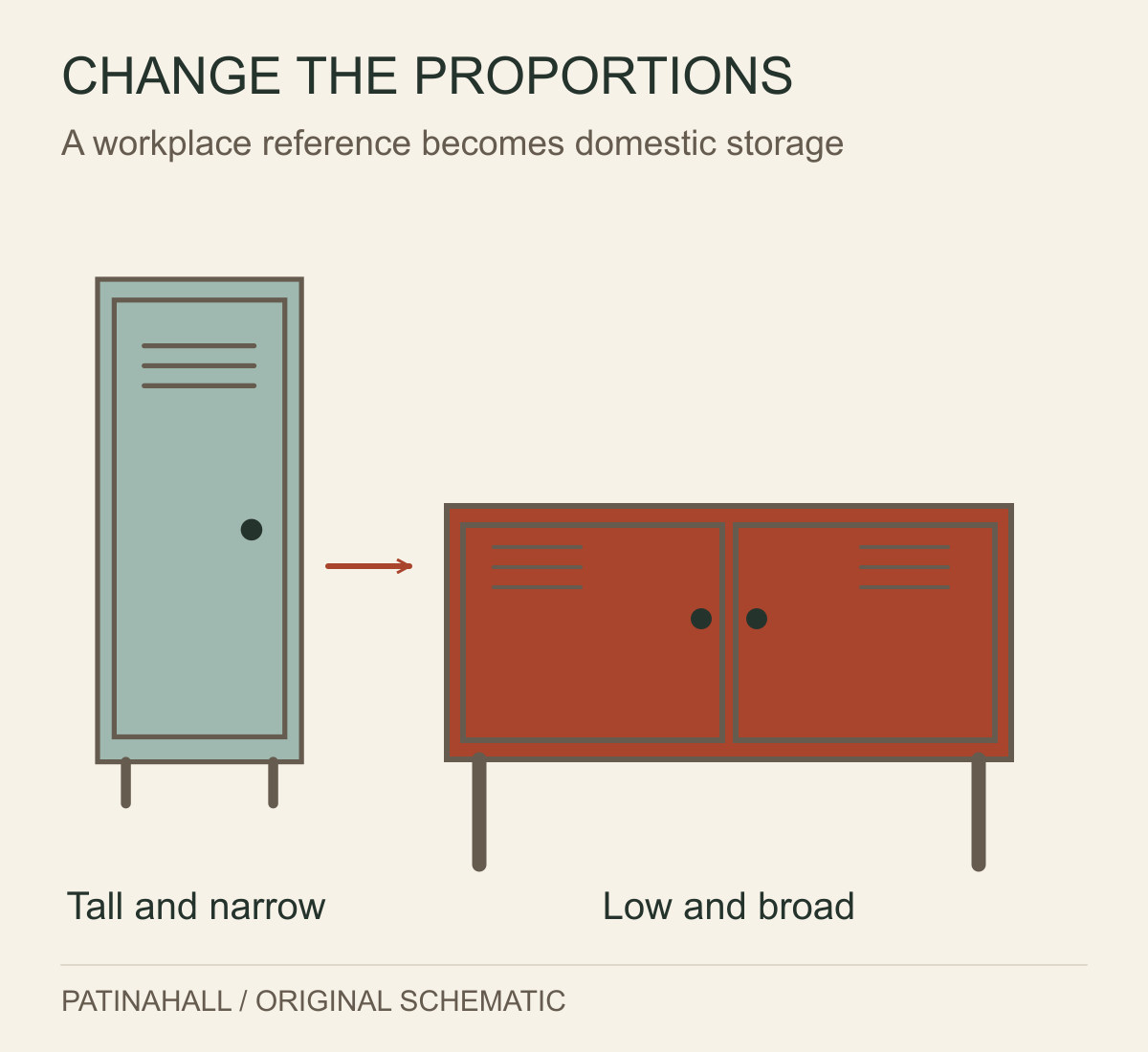
A changing-room locker is designed around a person’s temporary belongings. A sideboard serves a room. IKEA PS brings those two storage ideas together: metal doors and locks retain the first association, while its low, broad shape belongs comfortably to the second.
The IKEA Museum account starts with Nicholai Wiig Hansen’s friends in Copenhagen using old metal lockers at home. He liked the idea but found the lockers too narrow. A Danish sideboard suggested a more useful set of proportions.1
This is why the cabinet feels familiar in two ways at once. It carries the visual language of communal, practical furniture into a form that can sit beneath a picture or beside a sofa.
The DJ’s contribution
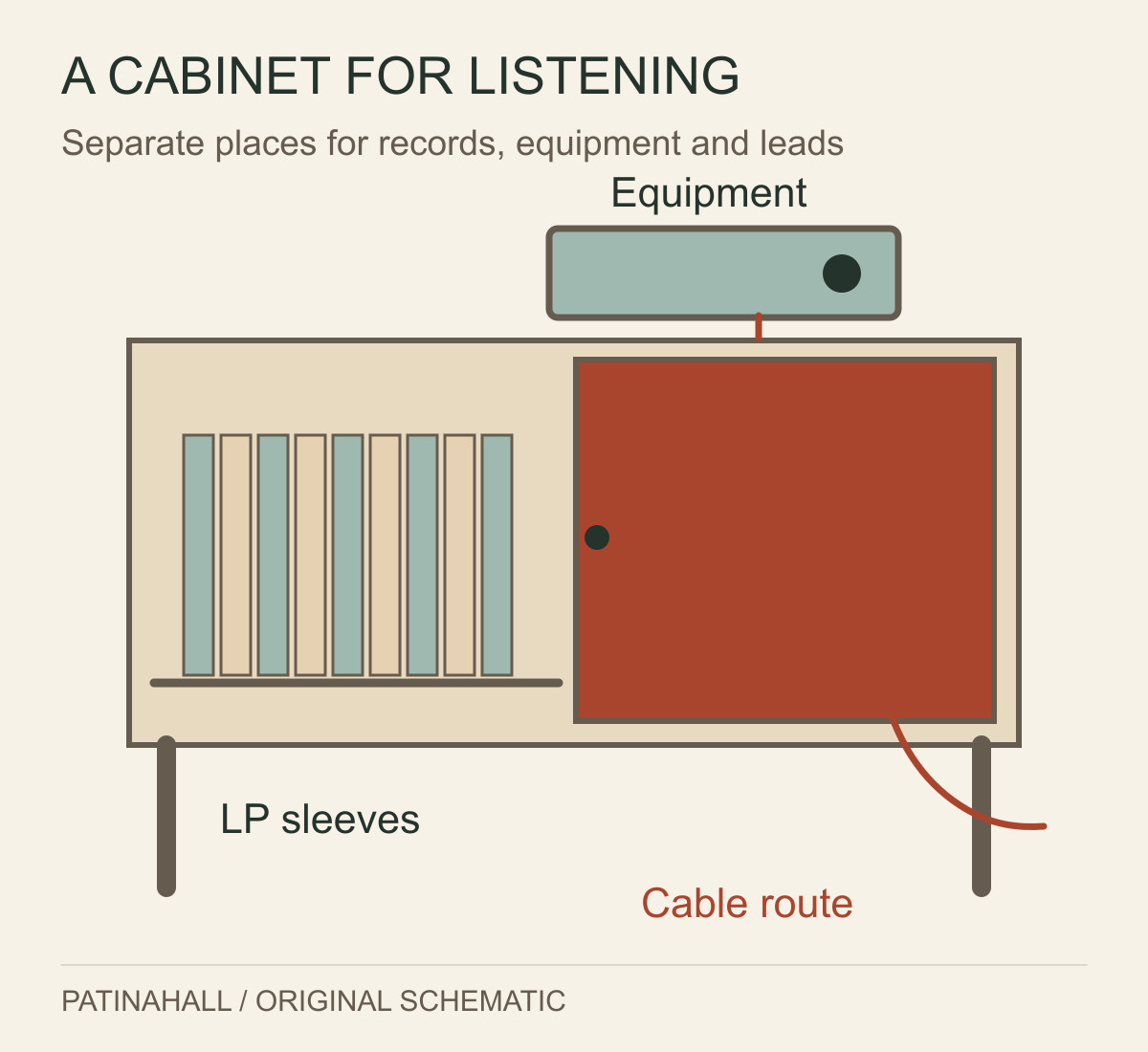
The prototype involved a Polish factory accustomed to making military metal cabinets. Hansen wanted to improve its assembly and finish. A DJ friend added another direction: provide room for stereo equipment and LPs, with openings for cables. The museum also credits Hansen with insisting on red despite initial resistance at IKEA.1
Music makes the change in proportions easier to understand. Records need a usable compartment; equipment needs access to connections. The cabinet’s interior therefore matters as much as the red rectangle visible from the doorway.
Think of the top and the space behind the doors as different parts of one small arrangement. Some things can remain on display, while the practical clutter is collected below. The industrial appearance earns a place in the home by doing ordinary domestic work.
Why 1995 is only the beginning
IKEA launched the first PS collection in 1995 and presented it in Milan under its Democratic Design theme. The low metal cabinet belongs to the second collection, released in 1999. That later collection put further emphasis on making design available at lower prices.2
The distinction is useful because a collection name can outlive its first edition. Seeing “PS” in an advertisement does not place every object in the inaugural year. The cabinet’s own story belongs to the later moment when the programme developed beyond its opening statement.
The useful space below the doors
The current white version retains a broad 119-centimetre body, raised legs and lockable doors. IKEA describes the clearance below as helpful for cleaning. Its present cable outlet is in the bottom, a detail of this version rather than a drawing of the original prototype.3
The gap under the cabinet contributes visually too. A box on legs leaves floor visible beneath it; the same box continued to the floor would read as a heavier block. Together, the width, clearance and cable provision explain the transformation. The workplace locker became living-room furniture through a series of small, useful changes to what a metal box could do.