Design story

IVAR: the storeroom shelf that moved into the house

IVAR leaves its workings in view: pine uprights, rows of holes and shelves that can move. That practical appearance explains how a storeroom shelf became furniture people were happy to live beside.

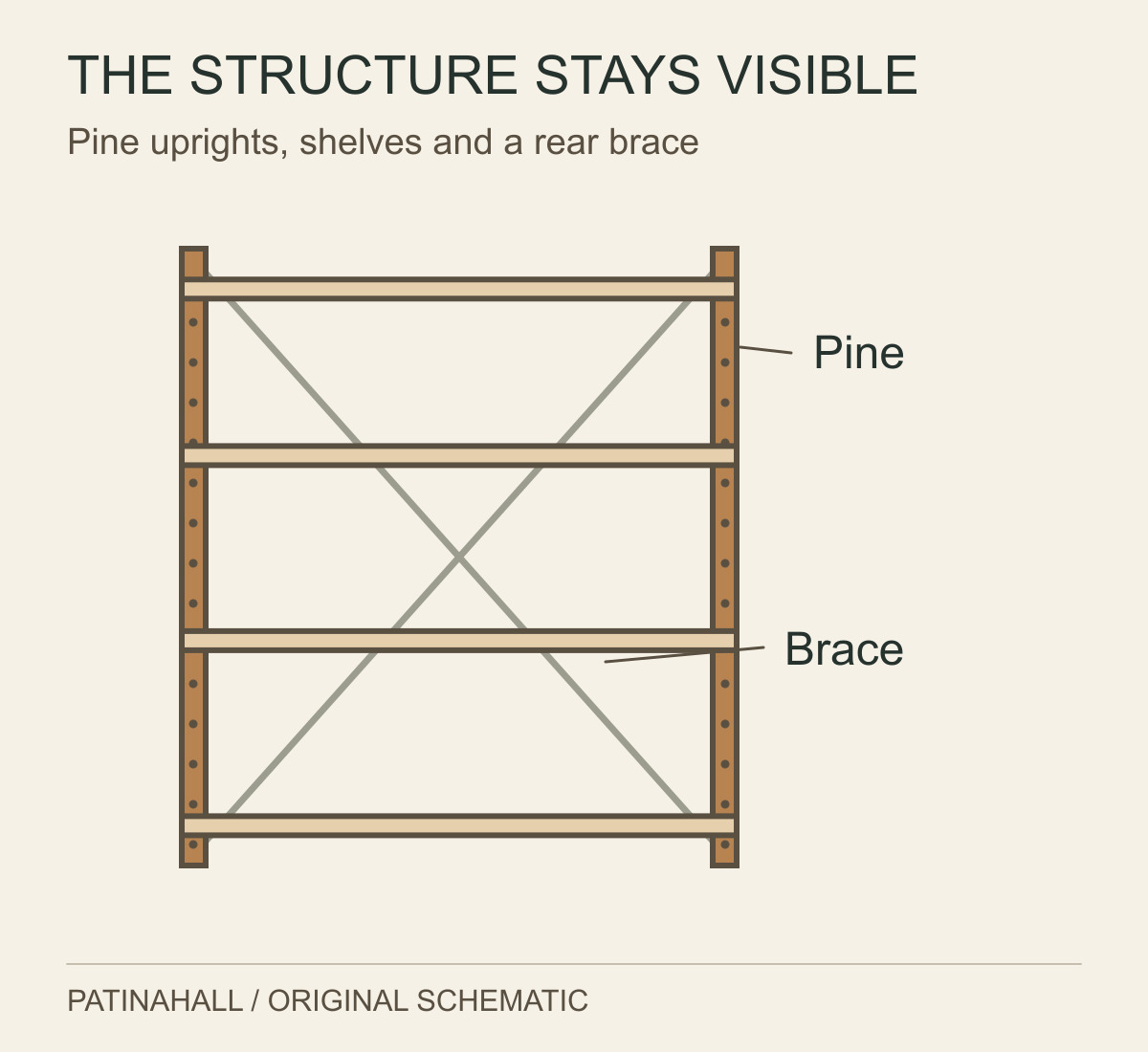
An open shelving frame shows pine uprights, horizontal shelves and crossed diagonal bracing behind the storage space.
The open frame and rear brace explain IVAR’s visible construction; attachment hardware, installation requirements and exact bay proportions are omitted. Original PatinaHall schematic, not to scale.
On this page
Key facts & takeaways

At a glance

Subject
IKEA IVAR shelving
Entry
Design story
Last reviewed
6 September 2026

Three things to remember

  1. BOSSE is an ancestor of IVAR, not proof of an unchanged product since 1967.
  2. Visible adjustment points make changing shelf gaps part of the design.
  3. Side units, shelves and bracing work together; the open look does not remove structural requirements.

A shelf that does not disguise its job

IVAR makes storage look straightforward. The sides are open frames, the shelves are plain boards, and the repeated holes advertise that their positions can change. Nothing resembling a cabinet door conceals the contents. You can see both the things being stored and the structure making space for them.

That appearance has a history. IKEA Museum traces the family to BOSSE, introduced in 1967 after storage shelving attracted the attention of buyer Lasse Olsson. The account describes stylist Lennart Ekmark helping present an apparently utilitarian product in a domestic setting. The interesting move was to recognise that useful storage could already have an appearance worth keeping.1
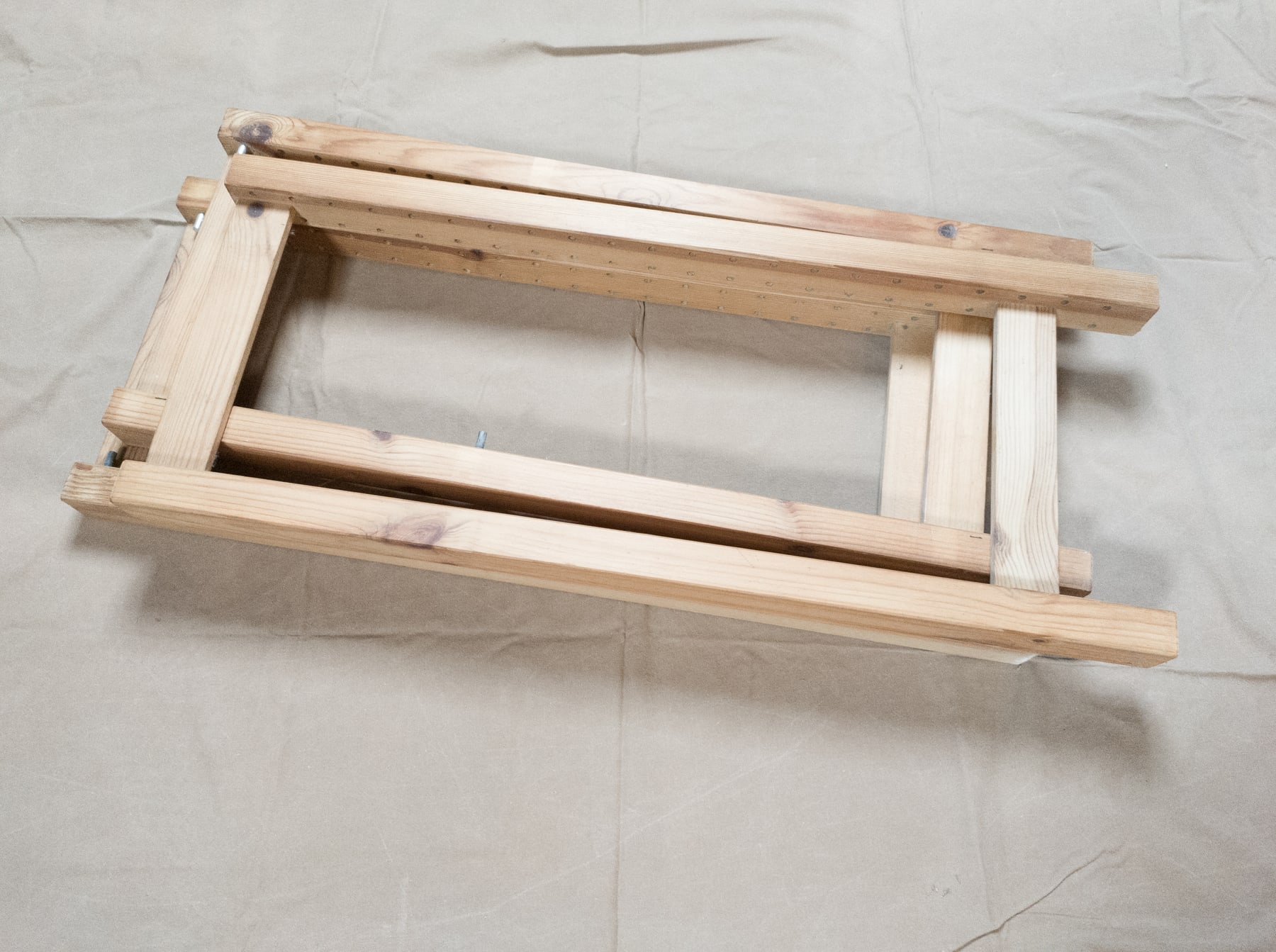
Several unassembled pine IVAR side frames stacked beside a wall, with repeated shelf-pin holes visible along the uprights.
Unassembled IVAR side frames make the repeated shelf positions visible. This is a component photograph, not a complete shelving arrangement. Matti Blume, CC BY-SA 4.0. Resized; metadata removed. Source: Ikea Ivar (LRM 20200521 180507).

IVAR was not always called IVAR

The museum records several names as the shelving developed: INGO appeared in the 1975 catalogue, UFFE in the 1979 catalogue, and the IVAR name arrived in 1983 before the 1984 catalogue. The long family history is real, but the familiar name belongs to a later part of it.1

This makes IVAR different from a single chair recorded at one design date. It is a sequence of decisions about a system: how to make it, identify it and arrange it into useful combinations. An older shelf can belong to that story without having precisely the fittings found on a new one.

The frame is the appearance

On today’s pine shelving unit, the solid-wood side frames and shelves remain plainly visible. IKEA lists the cross-brace as a separate component. Its diagonal lines help explain why the apparently minimal frame is a complete assembly, rather than simply boards balanced between uprights.2

The 2022 buying guide presents combinations assembled from side units, shelves and braces. It invites thinking in bays and heights instead of selecting one closed box of a fixed size. A low run and a tall run can share a visual language while serving different walls.3

Move one shelf and the effect is immediate: a narrow space for shallow objects becomes a taller opening. The rows of holes turn adjustment into something visible and understandable. The wood is the background to this activity, with grain and knots interrupting the otherwise regular pattern. The structure is practical without becoming visually anonymous.
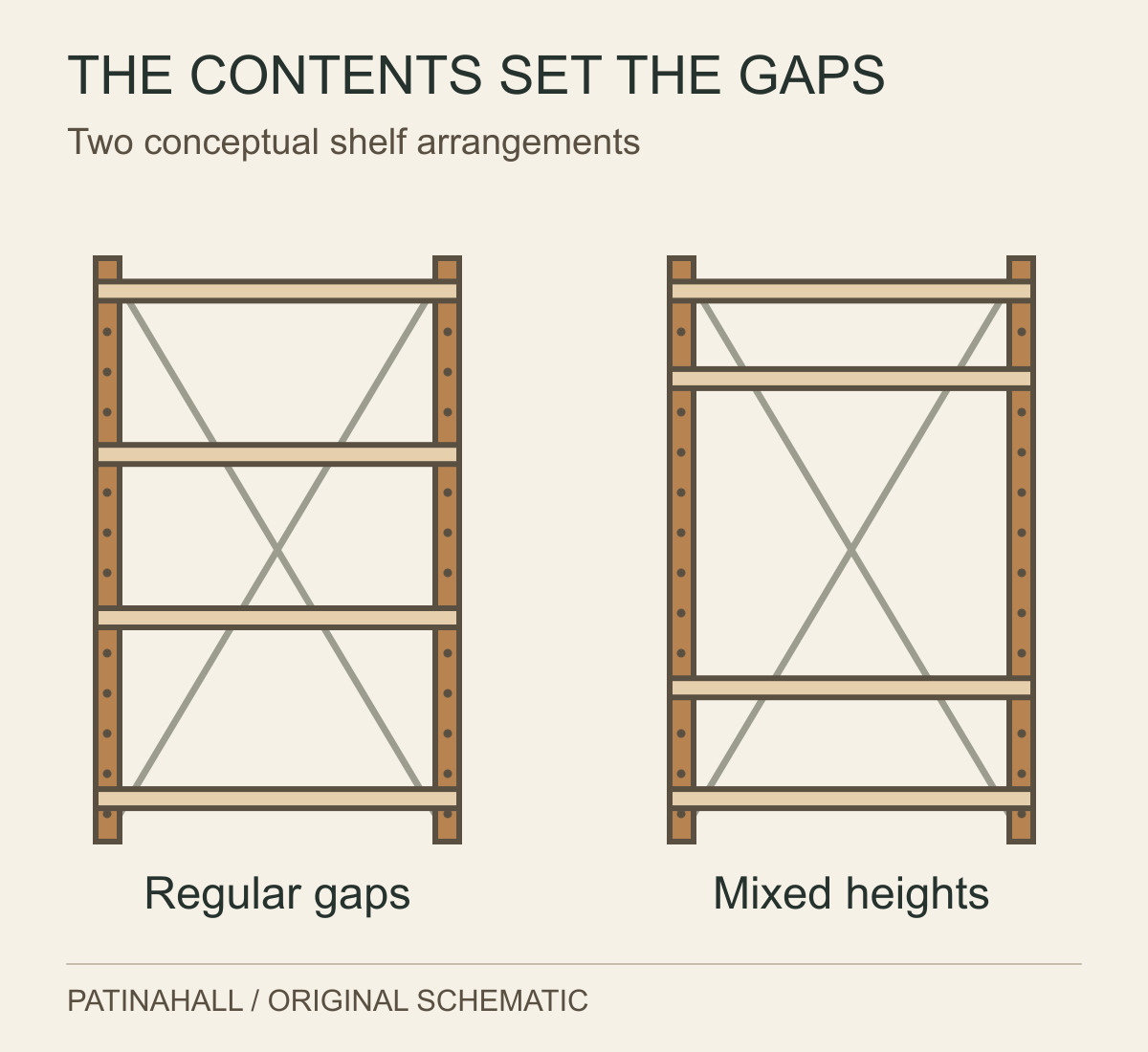
Two open shelf bays show evenly spaced shelves on the left and a larger central opening with smaller gaps on the right.
Changing shelf positions changes the available openings while the side frame keeps its form. Braces remain shown; the drawing is not a component or load plan. Original PatinaHall schematic, not to scale.

A room can remain unfinished

Consider the difference between furnishing around an elaborate cabinet and living with an open shelf. The cabinet arrives with a strong idea of its finished appearance. IVAR leaves more of that appearance to a changing collection of books, baskets, equipment and plants.

That openness is part of its appeal in an ordinary home. It can look orderly when the contents line up and busy when they do not; the furniture does not make either condition disappear. The storeroom ancestry remains visible, but it becomes a way of accepting that a lived-in room keeps acquiring new things.

Research notesEvidence, connections and limits

The museum documents the sequence of names; current product information and the 2022 buying guide describe particular components. They do not establish unrestricted interchangeability of old and new parts, a universal load rating or a date for an unlabelled unit.

Evidence map

Connected subjects and evidence

Reviewed connections

  • IKEA IVAR shelvingmanufactured byIKEAdocumented

    IKEA Museum documents IKEA in the manufactured by role for IKEA IVAR shelving. This relation describes the design family, not the origin of an individual secondhand object.

    Reviewed 6 September 2026 by PatinaHall editorial.
    • Source 1Design, material or production account; scope described in the evidence note
  • IKEA IVAR shelvinguses techniqueAdjustable shelf supportsdocumented

    IKEA documents Adjustable shelf supports in this design’s construction. The relation is scoped to the source specification; it does not assign a sole designer or date an individual object.

    Reviewed 6 September 2026 by PatinaHall editorial.
    • Source 2Design, material or production account; scope described in the evidence note

Research trail

Sources and further reading

  1. IVAR shelving unit: museum product storyIKEA MuseumAccessed 6 September 2026
  2. IVAR shelving unit, pine, 89 × 30 × 179 cmIKEAAccessed 6 September 2026
  3. IVAR buying guide, February 2022IKEAAccessed 6 September 2026
  4. Ikea Ivar (LRM 20200521 180507).jpgWikimedia CommonsAccessed 6 September 2026

Last reviewed 6 September 2026. Found an error or a stronger primary source? Contact PatinaHall.