Two factories meet in a bookshelf
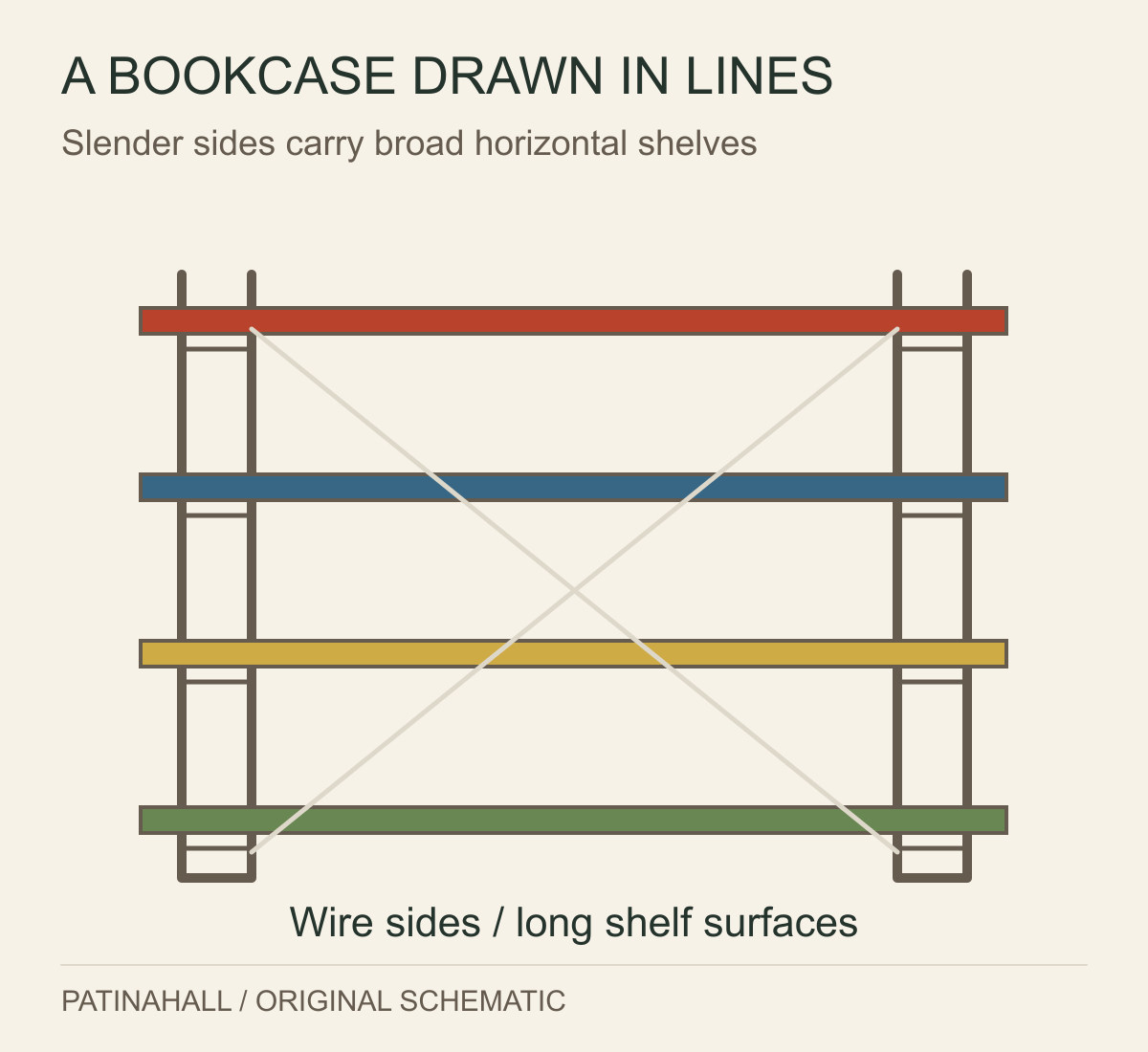
GUIDE looks almost like a drawing of a bookcase: slender wire sides outline the structure, while broad shelves supply the useful horizontal surfaces. Niels Gammelgaard developed it alongside IKEA’s MOMENT furniture, drawing on related metalworking techniques.
IKEA Museum dates GUIDE to 1984 and its catalogue appearance to 1985. The wire sides came from the same factory as the MOMENT sofa; the shelves came from an automated laminate-board producer.1
The result brought two kinds of industrial knowledge into one ordinary storage object. Even its colour had a connection to the production line.
The colour was waiting in the factory
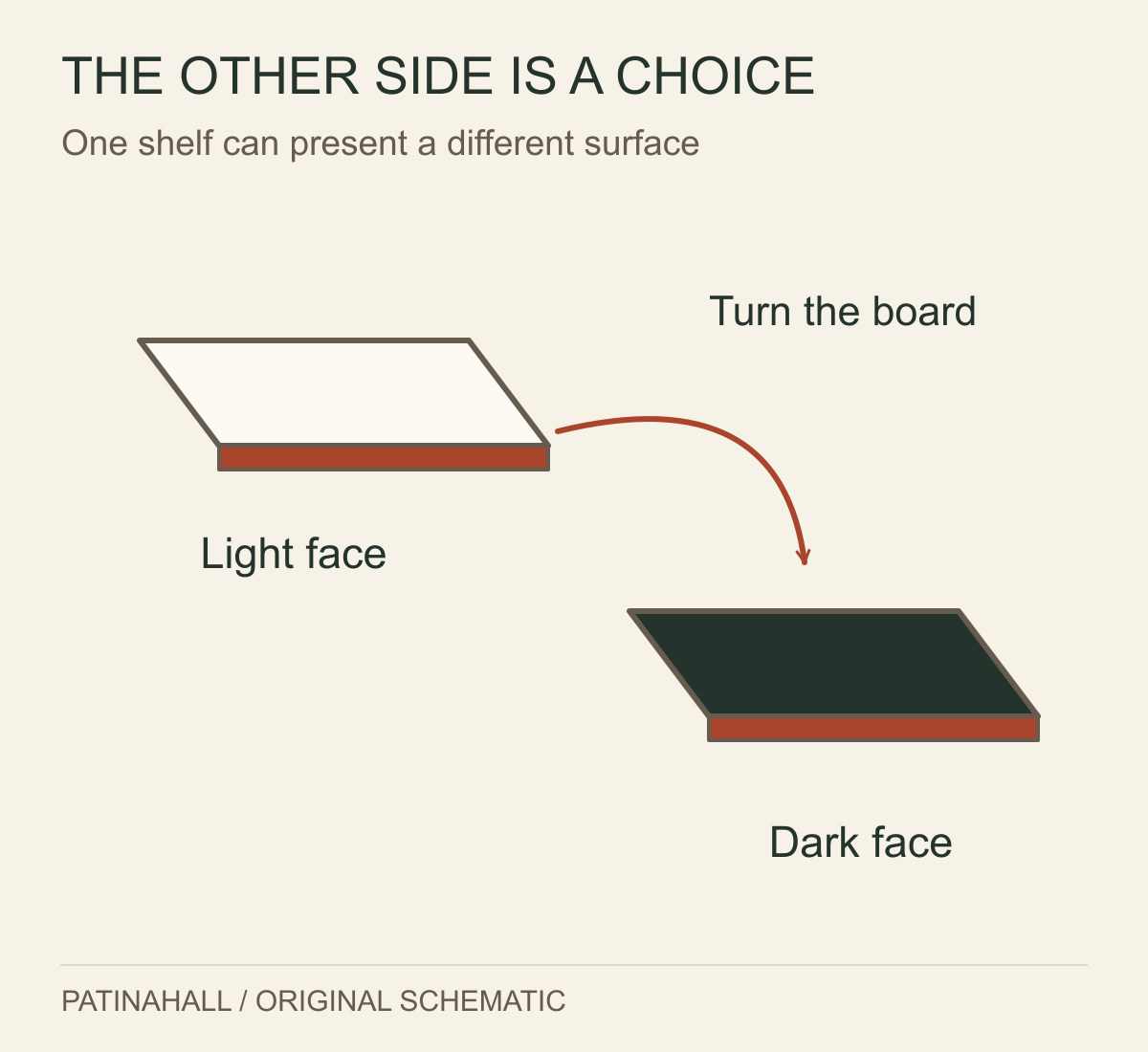
The museum recounts Gammelgaard discovering that a change of laminate colour could be made when the production machinery was replenished for a new batch, without adding cost. GUIDE’s shelves had a white face and an anthracite face, with edges in red, blue, yellow and green.1
A reversible board offers a small but satisfying kind of choice. Its function remains the same, while the surface facing the room changes. An edge can become a line of colour across an otherwise restrained structure.
It is also a useful reminder that a playful detail need not begin as decoration added after the practical work is finished. Sometimes the factory presents the opportunity. The designer notices what a process can already do and makes that possibility part of the object.
The name that came back with the colour
IKEA announced the return of the design as BYAKORRE in its 2025 Nytillverkad collection. Its Dutch announcement emphasised the choice of shelf faces and edges as a way to vary the appearance.3
The current BYAKORRE page explicitly credits Gammelgaard and connects the shelving to GUIDE. It preserves the open structure and the contrast between dark or light surfaces and coloured details.2
That documented return gives the history a present-day point of contact. A recently bought shelf can carry an older design idea while belonging to a new manufacturing chapter.
Where ENETRI enters the search
ENETRI is another name that appears when people look for IKEA’s broad, open shelving. The indexed Swedish 2005 catalogue records it as a 170-centimetre-wide unit with silver-coloured steel, adjustable feet and oak-patterned or dark-brown shelves.4
That record is useful on its own terms. It documents a named shelf in a particular catalogue; the sources reviewed here directly establish the GUIDE-to-BYAKORRE return rather than a complete sequence connecting every similar-looking IKEA unit.
For GUIDE, the memorable story remains visible at the shelf edge. Two industrial processes produced a practical open bookcase, and a small opportunity for changing colour became something its owner could enjoy every day. The line across the front was part of the production story all along.