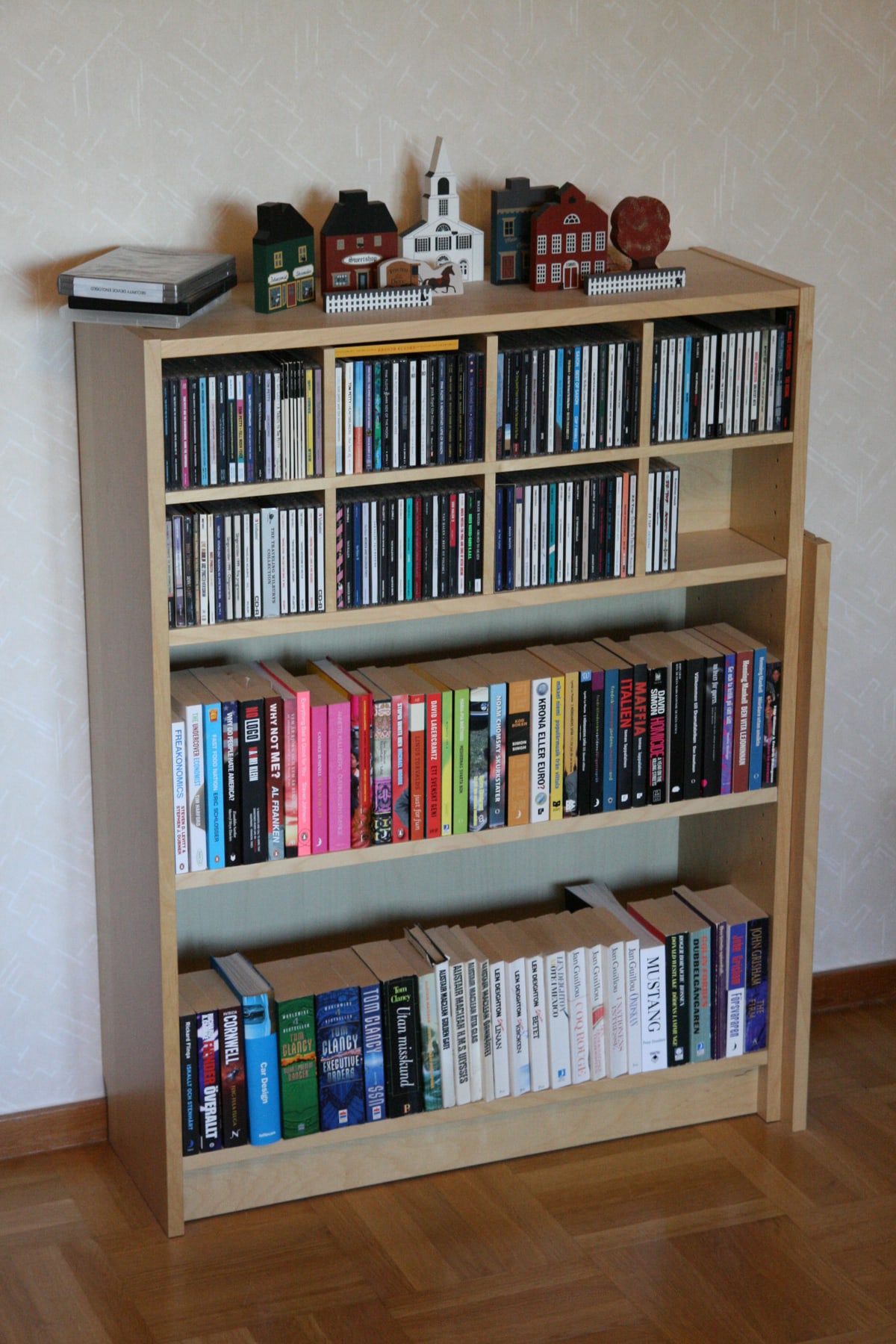
A wall of books begins with one box
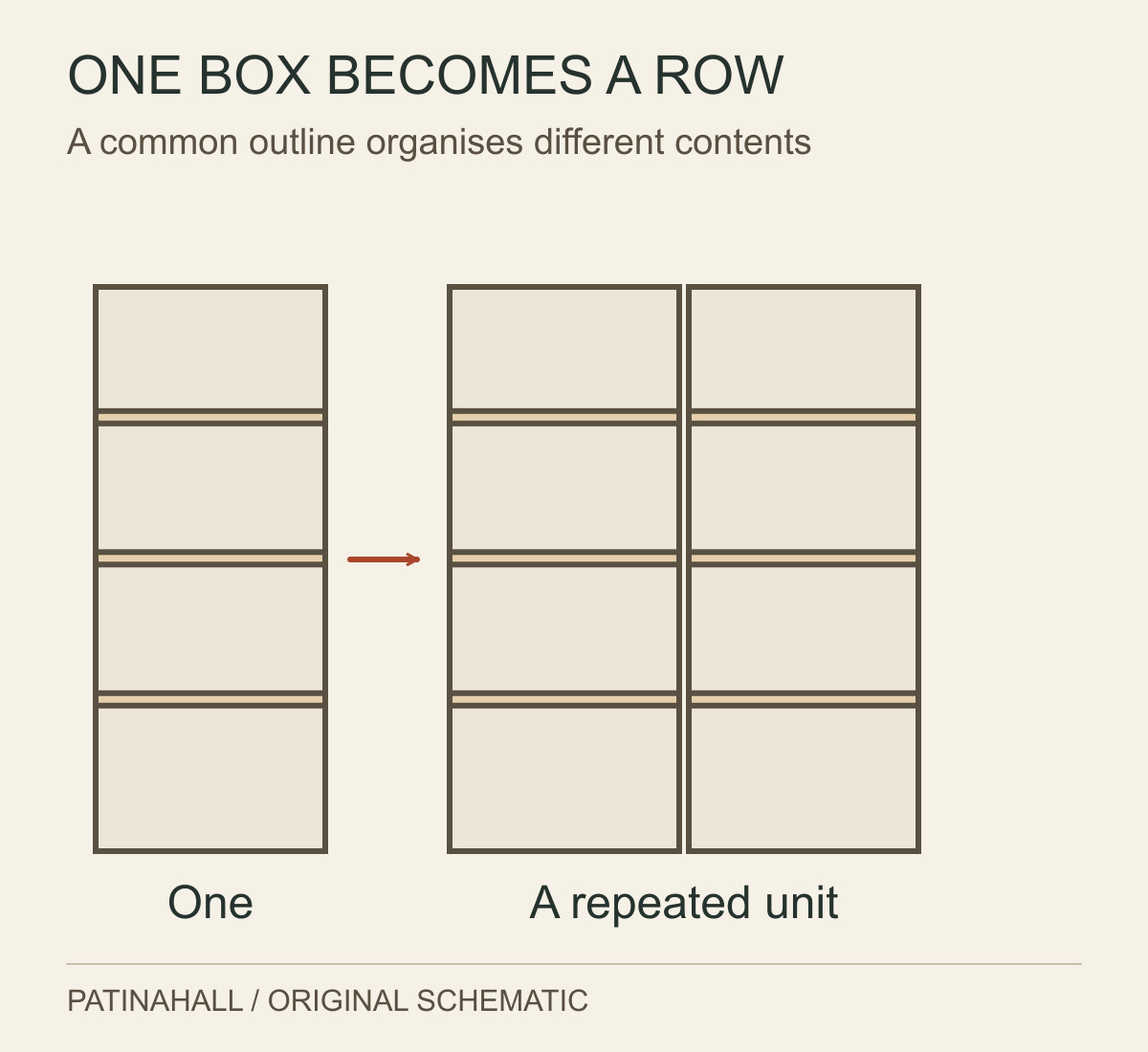
A BILLY bookcase has an unusually modest face. Two straight sides, a top and a row of shelves create a rectangle around whatever the owner puts inside. Its character grows clearer when another one stands alongside it. Repeat the box and the scattered contents of a room acquire a common boundary.
That repetition was part of the original problem. IKEA Museum describes earlier bookcases, including VIRA and REGAL, that looked related but could not be combined. In the mid-1970s, buyer Arne Hall pushed for a common solution. BILLY was a way of making separate decisions agree: the range, the factory and the shelf in somebody’s home.1
Two dates, and several people
The museum lists 1978 as BILLY’s product year and identifies its appearance in the 1979 catalogue. Those dates are easy to compress into a single birthday, but they describe successive stages. A product can exist in development and in the range before a catalogue arrives on a kitchen table.
The authorship is similarly interesting. Gillis Lundgren made sketches drawing on Hall’s thinking, yet the museum says the protocol records no single designer. Its credit is IKEA of Sweden. That account gives BILLY a more useful history than a lone flash of inspiration: somebody recognised the problem, somebody gave it shape, and a repeatable product emerged.1
The box and the moving shelves
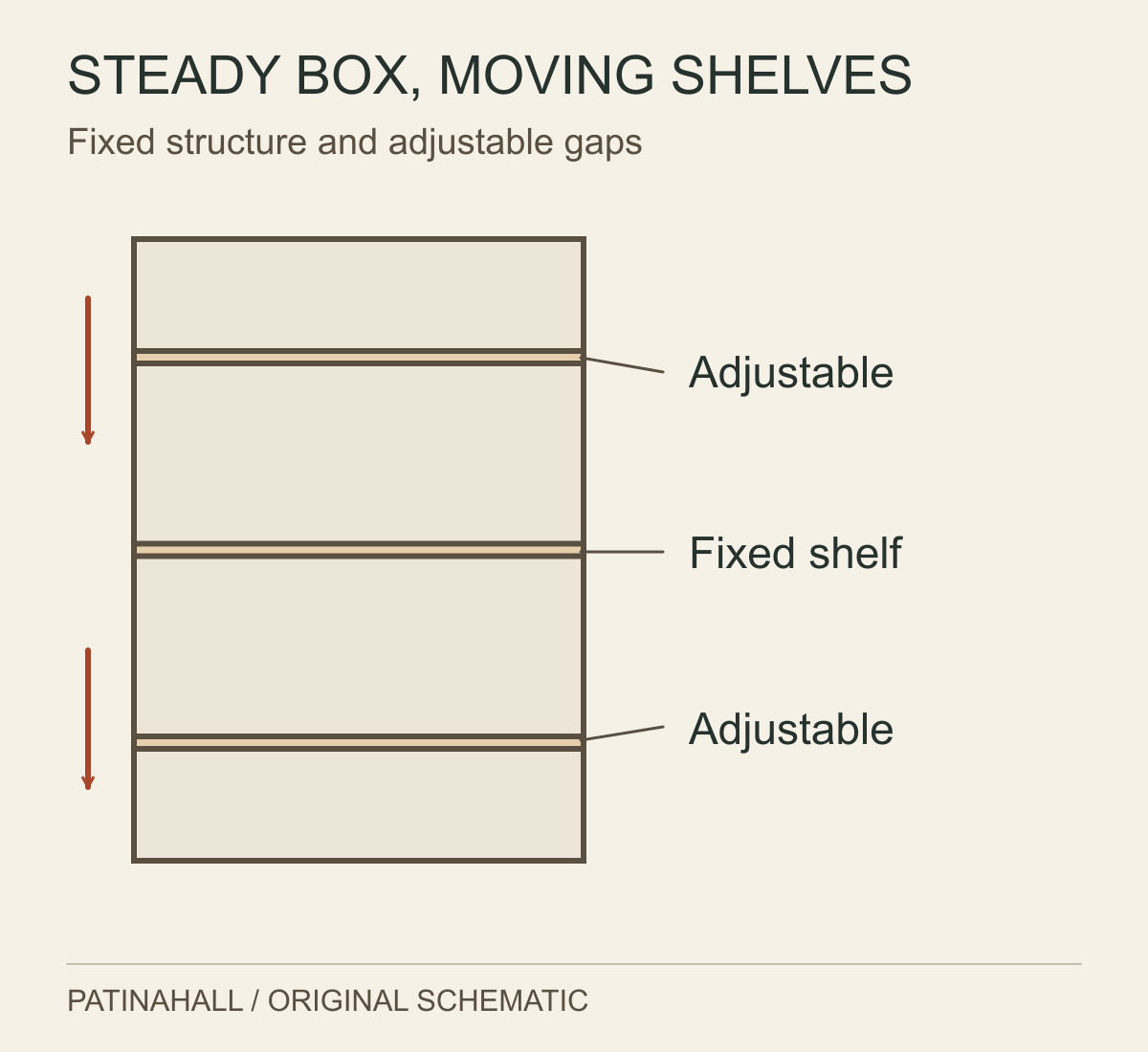
The current white 80 × 28 × 202 cm model makes the division of labour easy to see. It has one fixed shelf and four adjustable shelves. The outside keeps its familiar proportions while the spaces inside can accommodate different heights of books and objects. IKEA specifies particleboard for the main panels and fibreboard for the back.2
Imagine a row containing paperbacks, large cookbooks and a tall vase. Equal gaps would leave wasted space over some objects and too little over others. Moving a shelf changes the room available to the contents without changing the entire piece of furniture. The adjustment is useful precisely because the enclosing box stays visually steady.
The tall bookcase also depends on installation: IKEA requires wall anchoring. The freestanding appearance is not an instruction to leave it unsecured.2
Furniture that lets the contents speak
A plain bookcase gives its owner considerable influence over its appearance. A crowded run of novels makes a textured wall; a few objects make the same structure look spare. The furniture supplies the rhythm, and the things on the shelves supply most of the colour.
This is why BILLY’s ordinary outline is worth looking at. There is little demand that a room be arranged around a sculptural object. Instead, one box becomes two or three, and the books that previously occupied several awkward corners find a shared address. The design becomes most visible through the order it gives to everything else.
.jpg)