The empty-looking seat
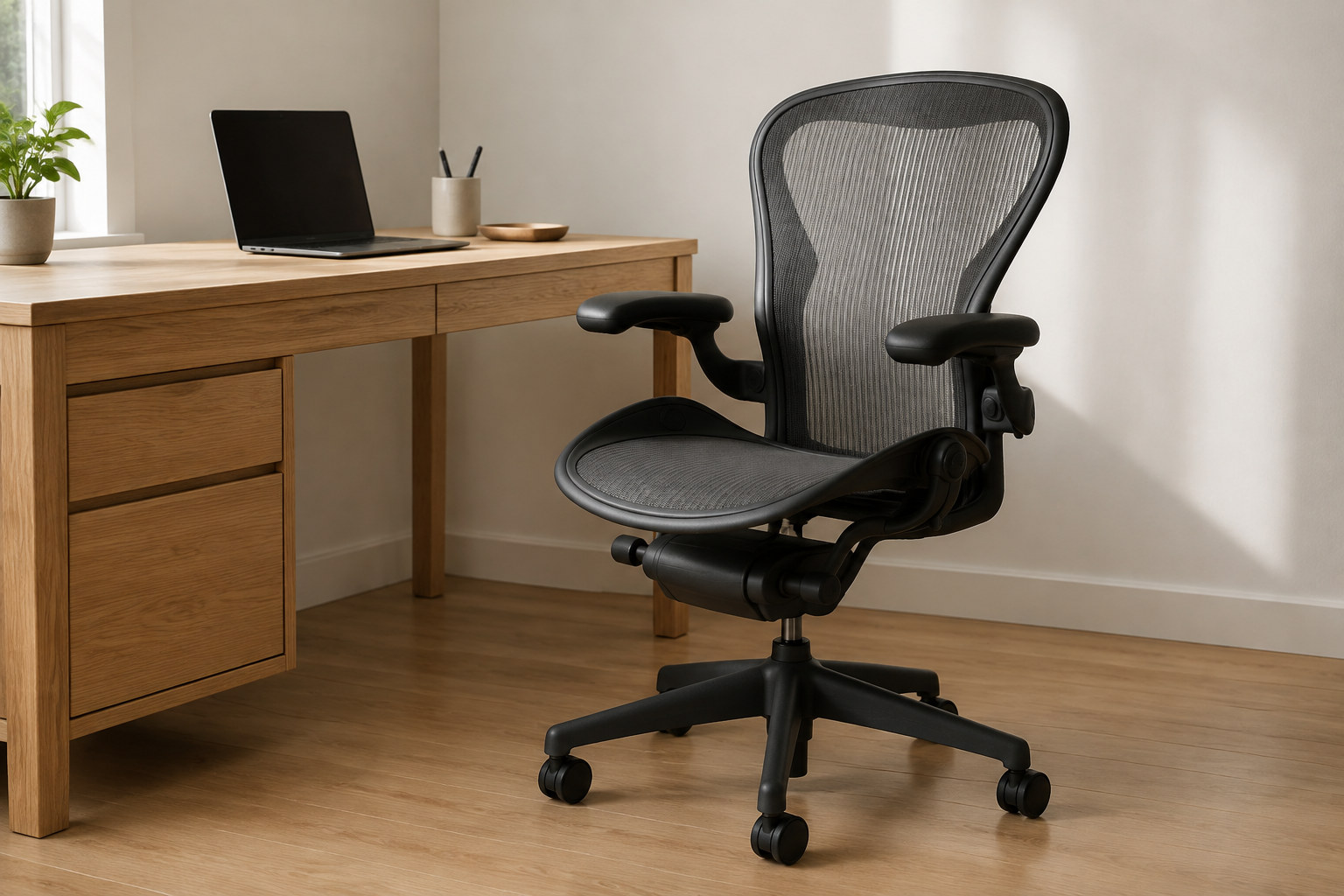
The first striking thing about Aeron is the space you can see through it. The seat and back are not thick upholstered blocks. A tensioned suspension material spans the frame, making the supporting surface itself part of the visible design.1
This changes the relationship between softness and structure. A conventional cushion invites the eye to read thickness as comfort. Aeron asks a thin suspended surface to meet the sitter, while the perimeter and mechanism remain plainly visible.
The result can look technical even in a home office. That appearance follows the construction: the chair does not conceal all of its work beneath fabric and foam.
Research before the office icon
Herman Miller’s history places the 1994 Aeron after earlier seating work by Bill Stumpf and Don Chadwick, including research for a chair intended for older people. Their investigation of support and suspension helped inform the later office chair.1
The story is useful because it moves attention away from the assumption that a distinctive outline was the starting point. Questions about how a body meets a chair led towards a material and a structure. The recognisable silhouette arrived with those choices.
That is design intent and development history, rather than a promise that one chair will solve every person’s discomfort. The article’s subject is the object and its evolution.
What happened in 2016
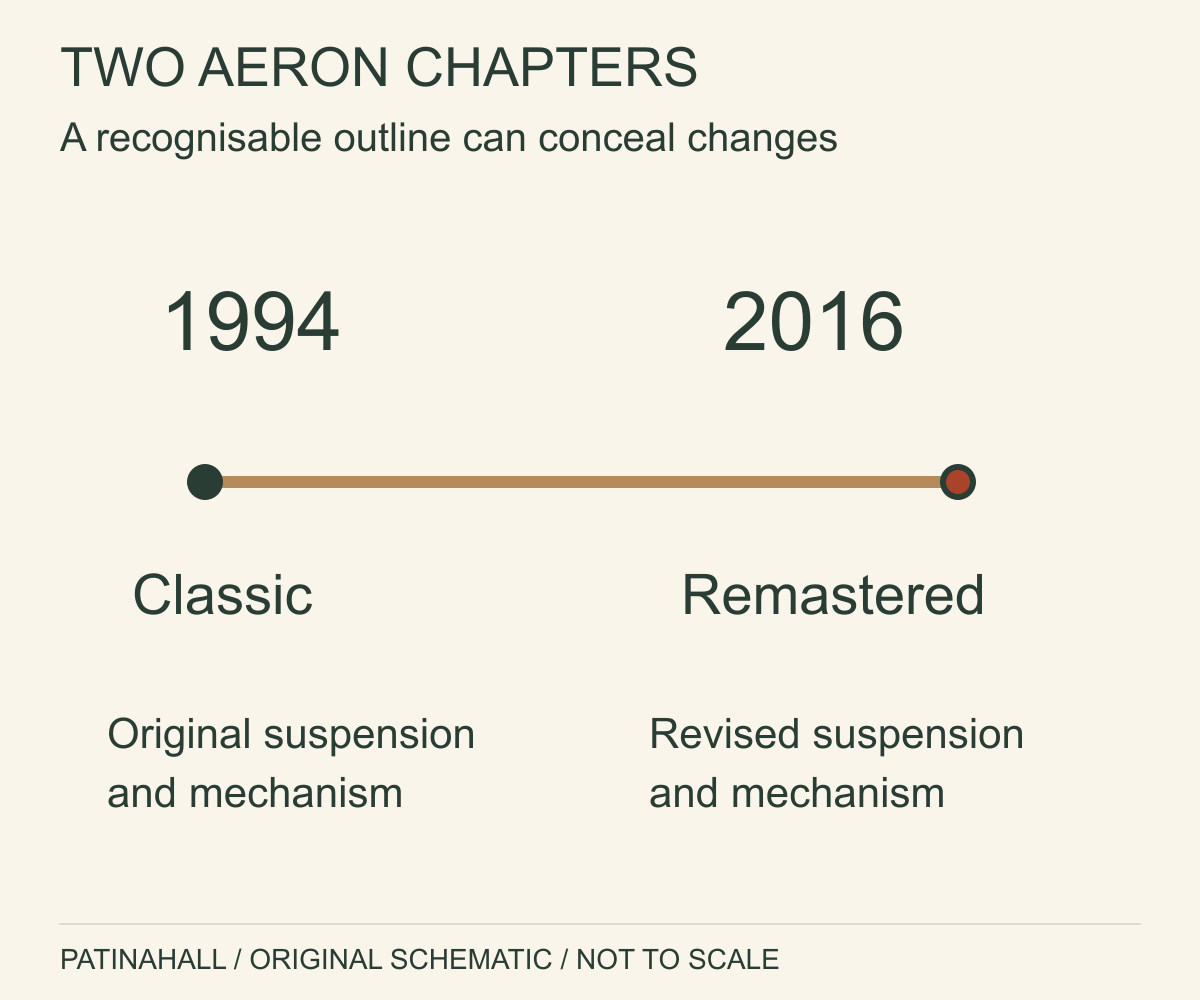
Herman Miller distinguishes the original Aeron, now commonly called Classic, from the remastered chair introduced in 2016. Its comparison documents changes to the suspension material, tilt mechanism and available back-support and arm arrangements.2
The overall family resemblance can hide those differences in a small sales photograph. A mesh seat and oval-looking back are not enough to describe the version. Controls, support components and configuration tell another part of the story.
Our timeline separates the two design chapters. It is deliberately not a visual authentication chart: a specific chair may have replacement parts or a refurbishment history that its outline alone cannot explain.
The second office life
Herman Miller now offers refurbished Aeron chairs alongside new production. The maker’s own programme is evidence that a second life is part of the chair’s present market, not merely a label applied by independent sellers.3
Refurbishment also makes the distinction between design and object especially clear. The Aeron idea can remain recognisable while an individual chair has a different history of use, service and components.
For someone who meets one beside a second-hand desk, the memorable detail is still the thin surface across the frame. A very familiar office object grew from reconsidering what the sitter actually needed to sit on.