A saddle in the office
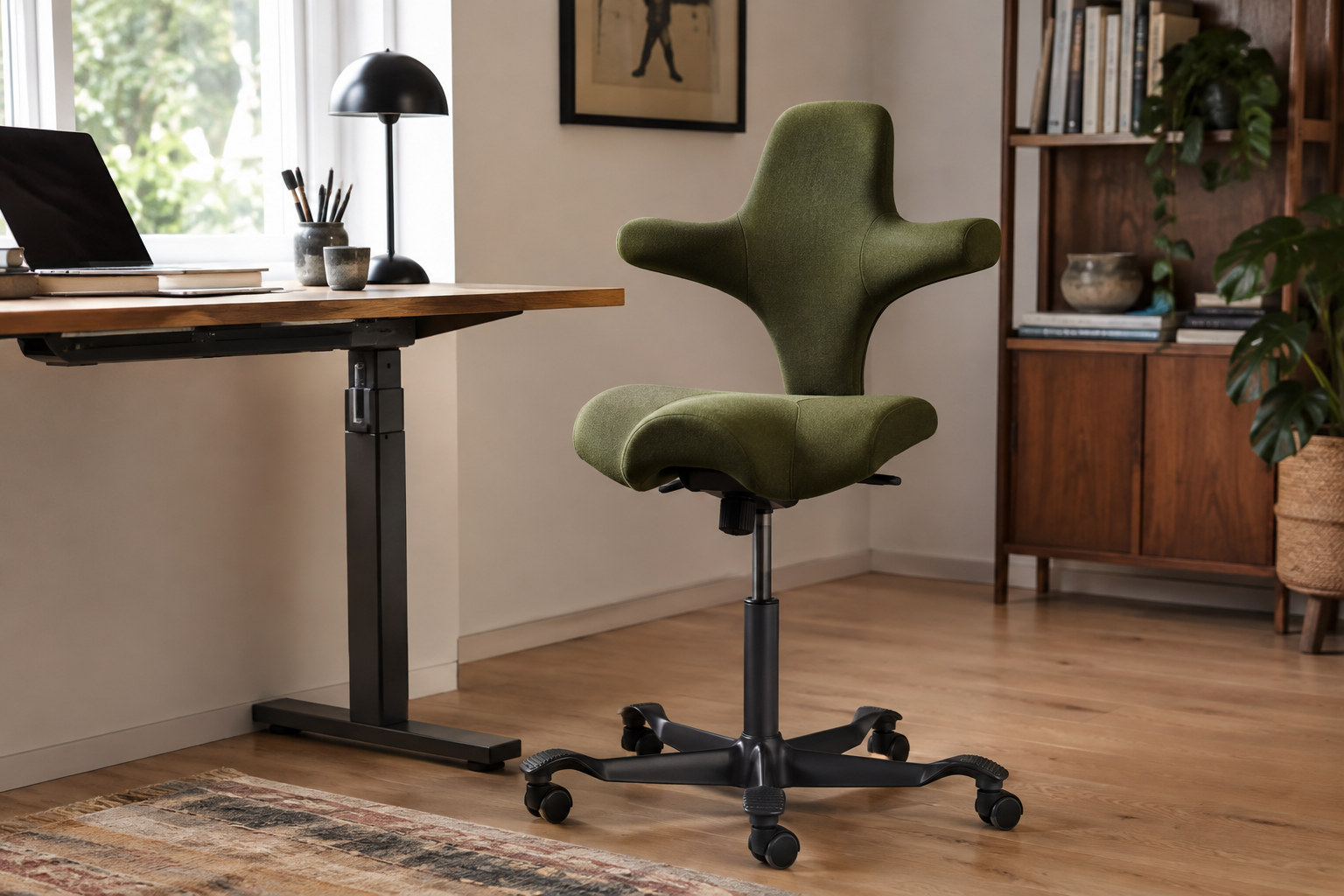
A rider does not sit on a horse in quite the same way as someone sitting at a dining table. Flokk’s account of Capisco connects Peter Opsvik’s design to that observation: the saddle suggested an alternative to a broad horizontal office seat.1
The reference helps explain the outline. Capisco leaves space beside the sitter instead of filling the whole area with a deep seat and large arms. Its unusual back also creates openings around which a person can change orientation.
This is a useful way to read the chair’s unfamiliar shape. The missing material is doing something: it leaves room that a more enclosing chair would occupy.
A chair meant for changing position
HÅG describes Capisco through different sitting positions and working heights. Its current family includes variations in upholstery, back and lift configuration, so the exact version affects the furniture a user encounters.2
A backrest can also become a support approached from another direction. The branching shape makes more sense when the chair is imagined in use over time, rather than treated as a silhouette with one permanent front-facing pose.
Those are intended ways of using the design, not medical conclusions. Whether a particular configuration suits someone remains a personal and practical question. The historical interest is that the chair was conceived around variation instead of one idealised still pose.
1984, then a different Puls
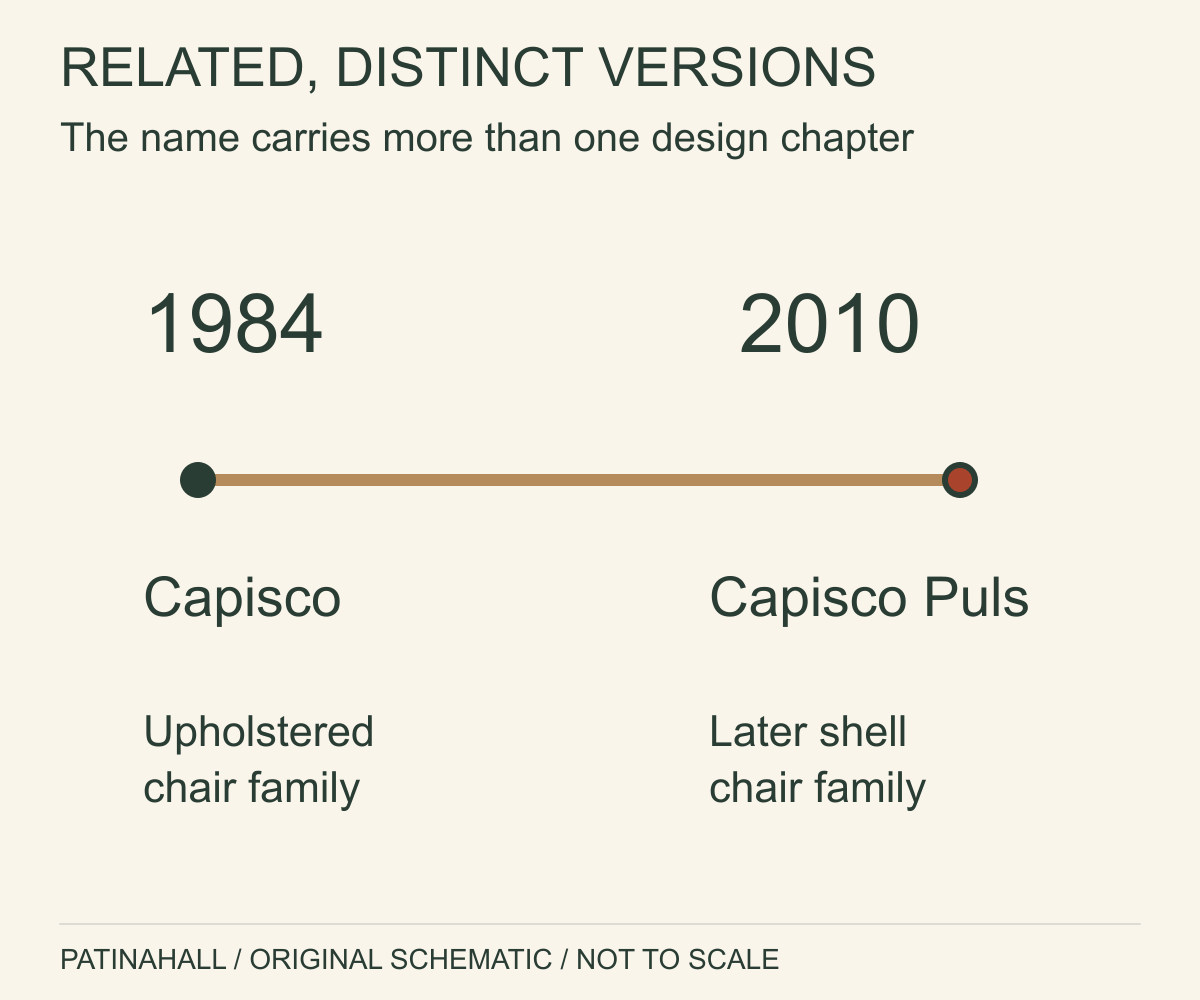
Opsvik’s own works timeline dates HÅG Capisco to 1984 and Capisco Puls to 2010. The shared name points to a relationship, while the separate dates record a later design chapter.3
That distinction is helpful in the used market. A lightly padded plastic Puls and a fully upholstered Capisco may appear in the same search results. Their visual relationship should not erase differences in components, surfaces or configuration.
The older upholstered chair makes the saddle idea look softer and more substantial. A later version can reveal it through another material treatment. Neither needs to be called the other to have an interesting history.
The space around the sitter
Capisco’s memorable feature may initially be the back, but the more revealing detail is the space around it. The chair is shaped partly by where a person might move, turn or place an arm.
That makes it an engaging everyday object to recognise beside a desk. Its unusual appearance is not an arbitrary attempt to look futuristic. It follows a specific question about how much freedom the structure of a chair can leave to the person sitting on it.