A wooden frame puts on its clothes
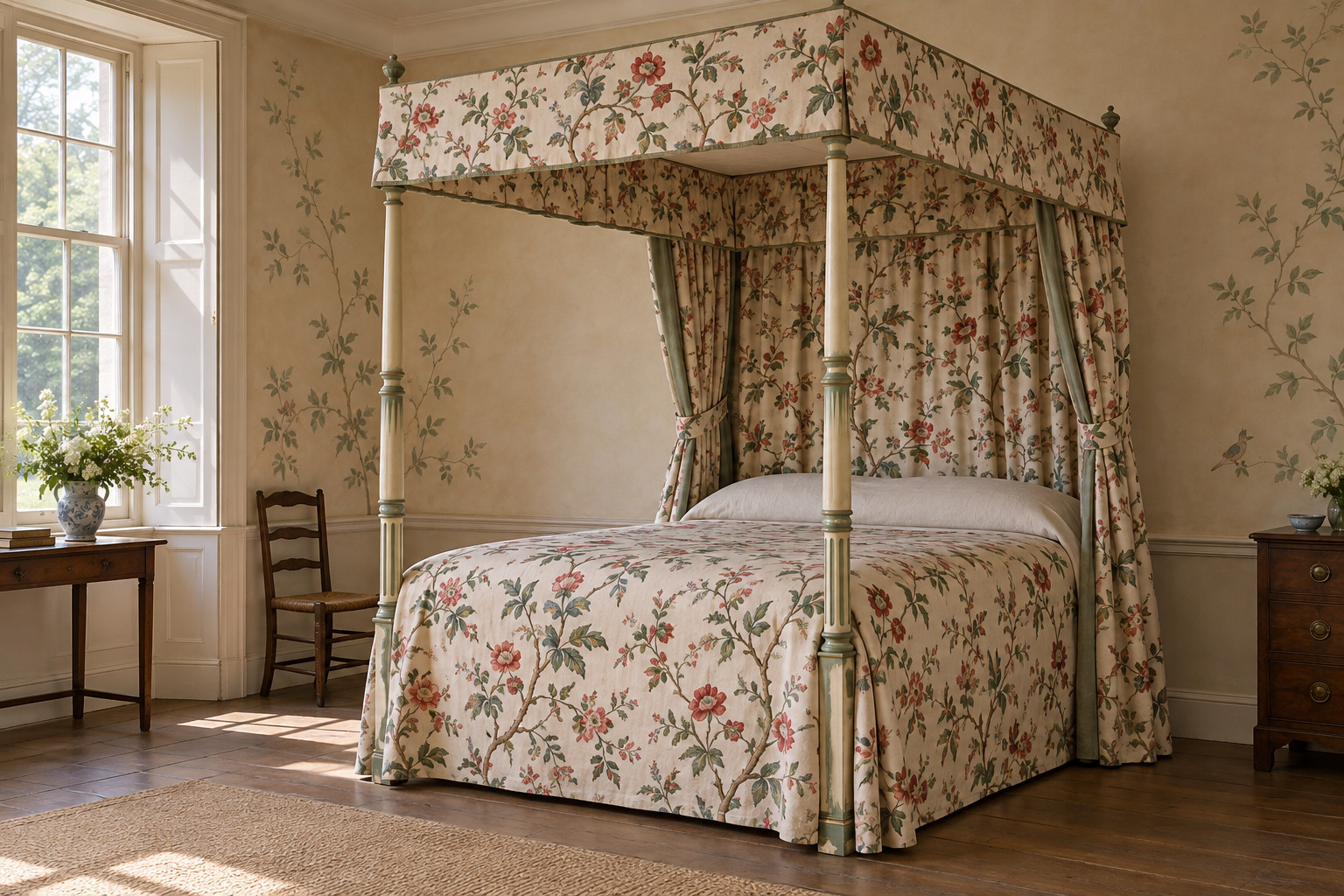
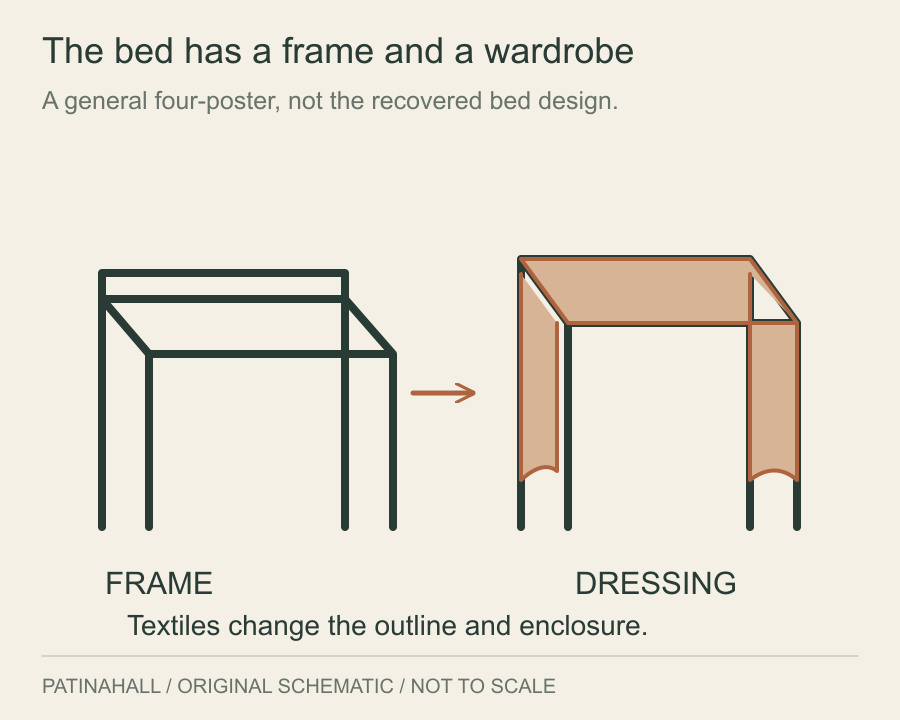
A tall bed provides a framework for fabric. Curtains can soften its corners, a valance can connect the tops of its posts, and a coverlet can carry a pattern across the broad horizontal surface. The wood establishes the volume; cloth changes the way that volume meets the room.
The Garrick Club’s record of a photograph identifies the bed as work from Thomas Chippendale’s workshops. It also records that friends in Calcutta presented the original Indian chintz to Mrs Garrick in 1775. The current hangings were made in 2001, while the originals remain in the V&A collection.2
This means a view of the dressed bed can be historically informative without showing cloth that has hung there continuously since the eighteenth century. The distinction helps us appreciate both the surviving textile and the work of presenting it.
The other furniture joins the conversation
The National Trust’s Garrick dressing table preserves another part of the bedroom ensemble. Its account connects green-and-white painted furniture with the room’s Chinese wallpaper and Indian cotton hangings.
Correspondence suggests the furniture may have been ordered before the cloth arrived and decorated once the scheme had been settled. That sequence is the Trust’s interpretation, rather than a complete surviving set of instructions. By the 1779 inventory, however, the painted suite was recorded together.1
The interesting unit is consequently larger than the bed. A flowering branch on cloth could find a visual companion on a painted case piece. Material, pattern and colour allowed furniture with quite different functions to inhabit the same decorative world.
Cloth with a complicated journey
The shipment was not simply unwrapped and hung. The V&A recounts that authorities confiscated the chintz from Chippendale’s studio because the required import duties had not been paid.3
That interruption makes the supply chain unusually visible. Textile makers, merchants, a client and a furnishing workshop all stand behind the apparently settled bedroom. The finished room compresses their separate work into something that can look as if it arrived at once.
When the Royal Ontario Museum revisited its 1970 exhibition on chintz, the Garrick bed coverings appeared among the memorable loans. The fabric had become a subject of study in its own right, beyond its association with a celebrated household.4
Look past the famous owner
David Garrick’s name helped keep the furniture recognisable after the ensemble was dispersed. Yet the cloth draws attention towards Eva Maria Garrick and the decisions involved in furnishing a bedroom she used.
Look at the canopy again. It is a support for cotton, colour and pattern, but also for a much wider history of making, trade and domestic choice. A bed can carry a room’s story long after that room has come apart.