
Start with the place your fingers go
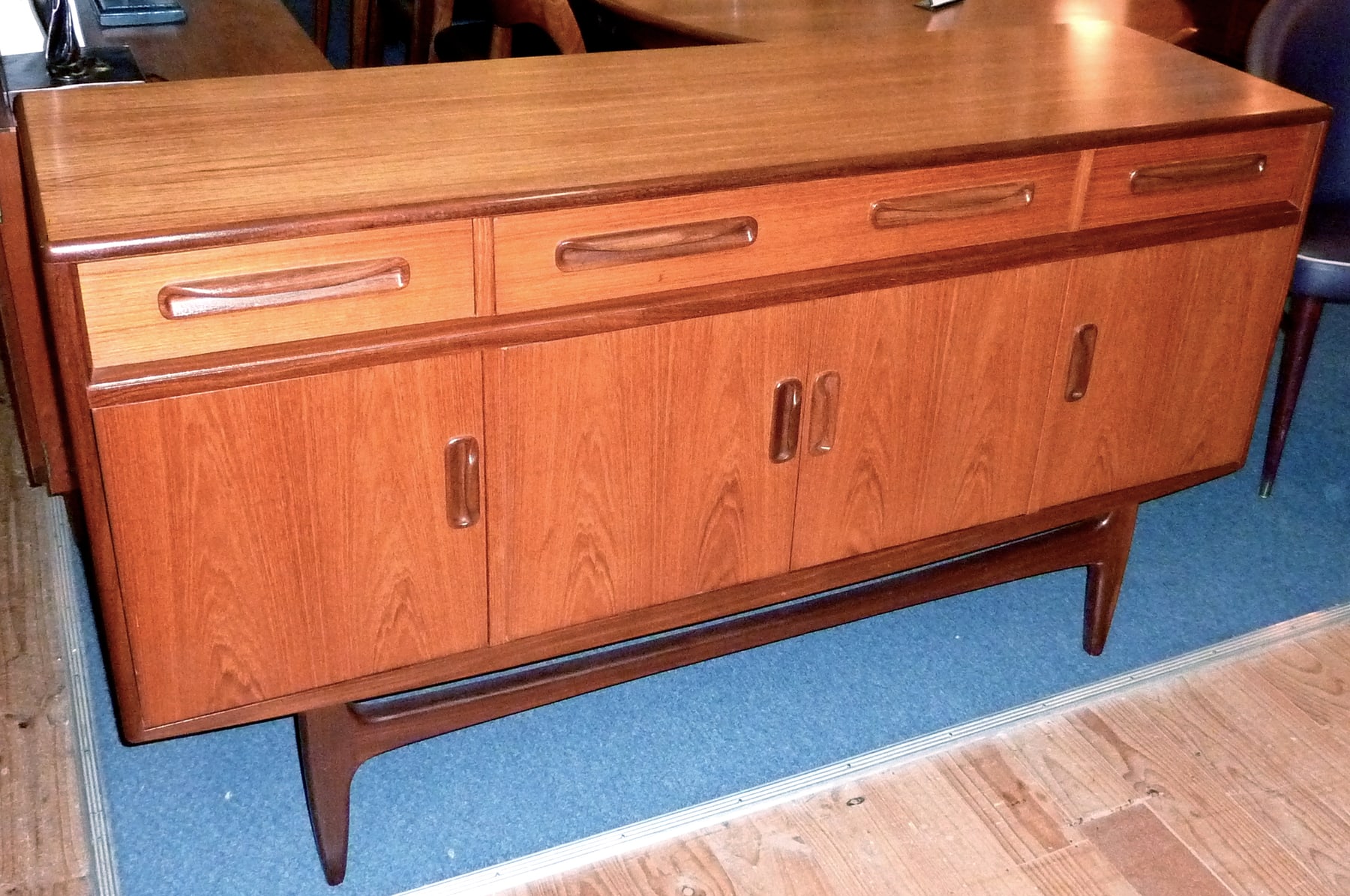
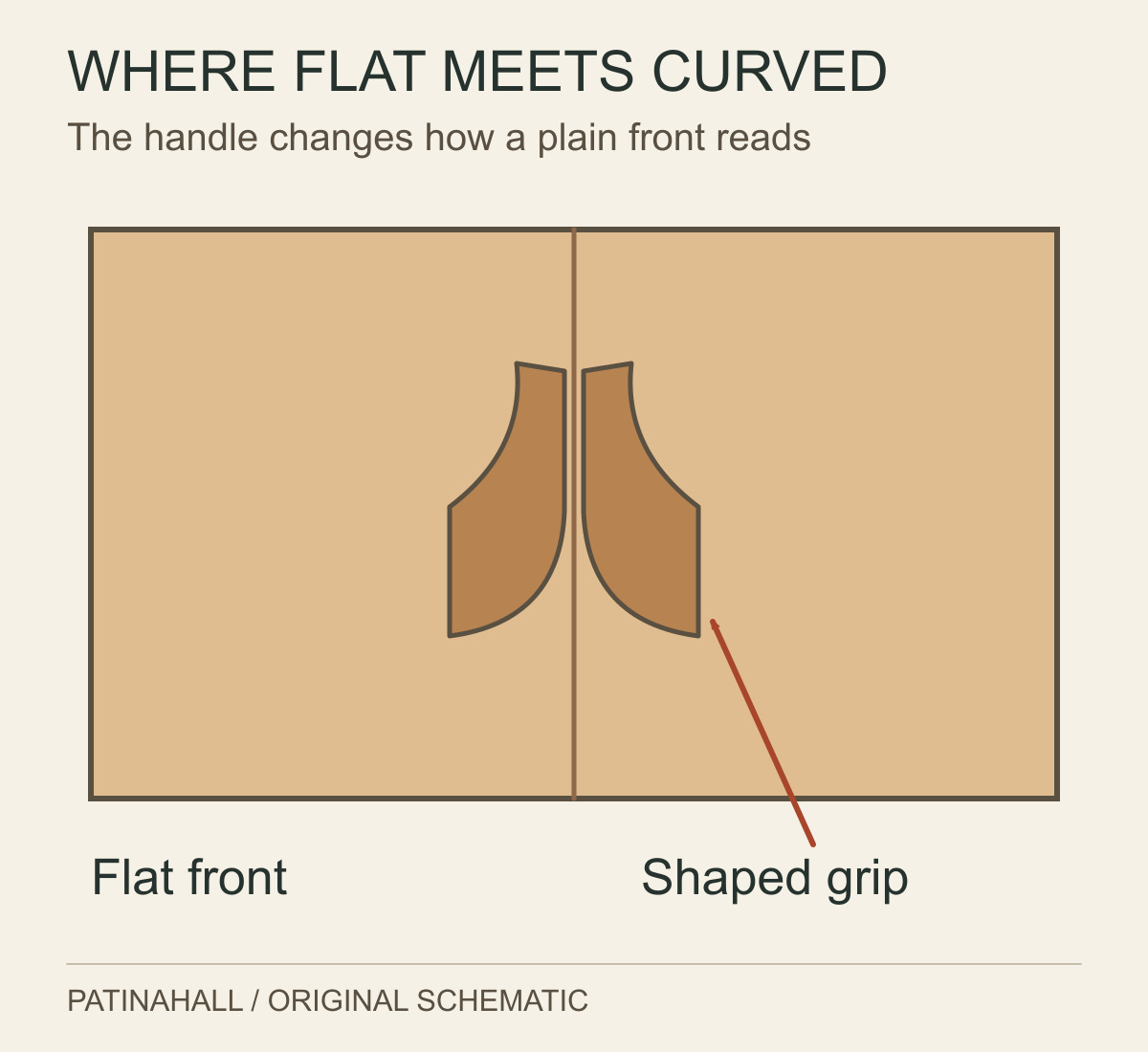
On many cabinets, a handle looks like a small accessory attached at the end. On a Fresco sideboard, it helps organise the whole front. Its shaped outline interrupts the rectangle of a door or drawer, giving your eye a place to pause before your hand follows.
That is a useful way to understand furniture which can seem very plain in a distant photograph. Move closer and the interest shifts from the cabinet's silhouette to the little transition between flat surface and projecting grip. The part you touch supplies much of the character.
G Plan's anniversary history identifies sculpted handles as a feature of Fresco and places Victor Bramwell Wilkins's work within Italian and Scandinavian influences. That is the maker's retrospective account, but the handles offer something more immediate than a style label: a detail you can actually point to.3
Seven feet is not the only Fresco
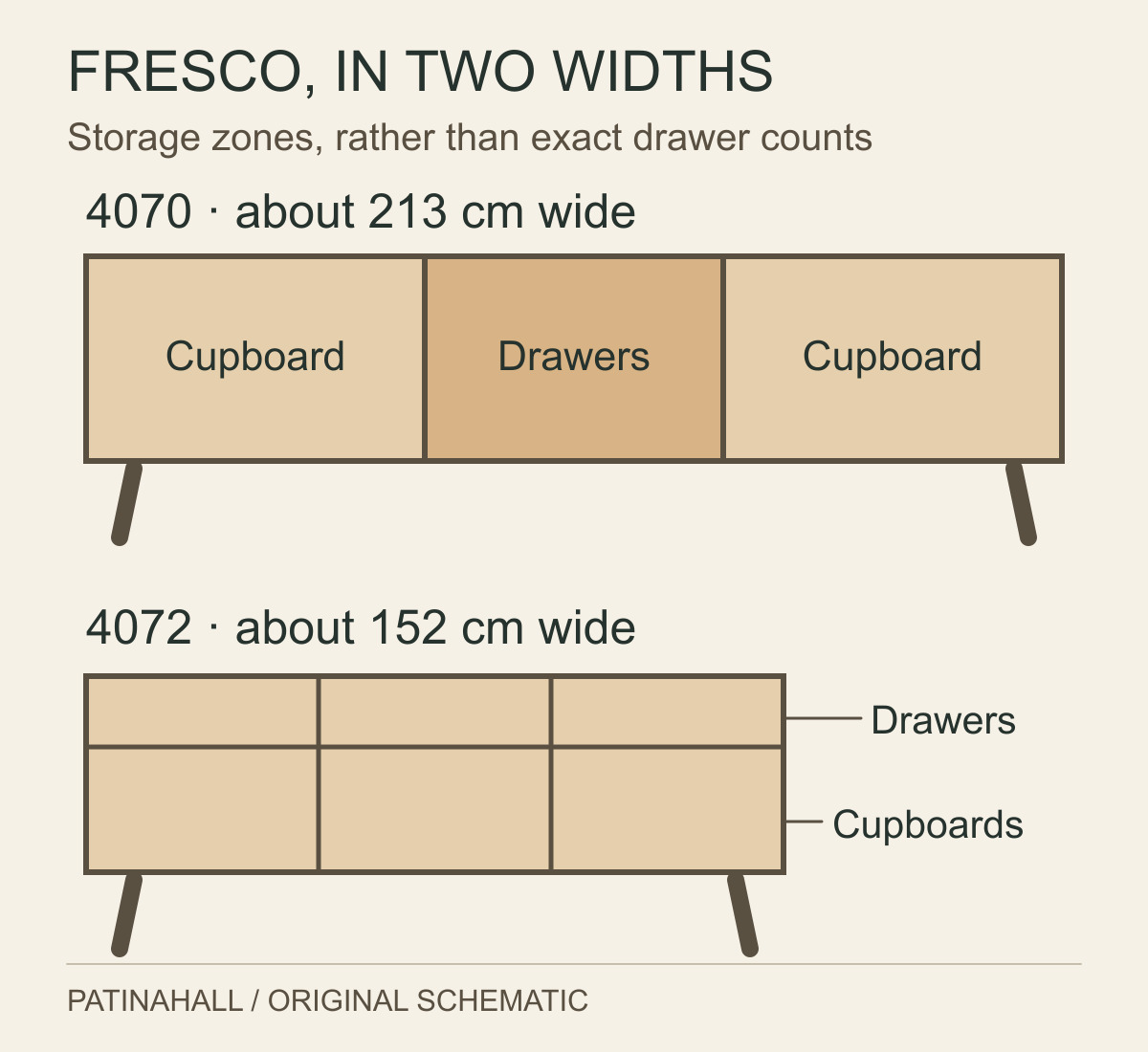
The long sideboard familiar from vintage listings is not the entire range. Steven Braggs's model research lists the 4070 at 84 inches wide, with cupboards flanking central drawers. The shorter 4072 is listed at 60 inches, with three cupboards and drawers above. Rounded to centimetres, that is roughly 213 versus 152.4
The difference is about the front as well as the footprint. The long cabinet draws your eye towards a central stack. In the shorter one, the upper drawers establish a horizontal band above the cupboards. They belong to the same family without being a large and small copy of the same arrangement.
The shorter model also has its own archive trail. High Wycombe Furniture Archive records the 4072 in a 1969 new-model folder, names V. B. Wilkins as designer and gives November 1969 as its launch. A five-foot Fresco is therefore part of the documented range's development.1
A family that kept changing
A later archive record, for a New Fresco dressing table, dates the original Fresco range to November 1966. It contrasts that earlier furniture's curved elements with a more rectilinear New Fresco appearance in 1977. The entry is about a dressing table, but it helps explain why the name covers a developing furniture range rather than a single frozen look.2
For a household, a family resemblance can be useful. Pieces need not have identical proportions to look related. A handle, a curve or the rhythm of the fronts can link a low cabinet with another piece across a room.
This is also why the model number earns its place beside the more memorable name. “Fresco” tells you where to begin looking. “4072” narrows the conversation to a particular cabinet and its catalogue history.
The box and the room around it
Picture the two sideboards against the same wall. The extra width of the 4070 changes how much wall remains visible beside it and how the furniture relates to a doorway or neighbouring chair. The 4072 leaves a different balance of cabinet and empty space. Neither proportion is automatically the more successful one.
Their fronts suggest different ways of dividing everyday belongings too: a central stack gathers drawer storage in one place, while an upper row distributes it across the cabinet. This is the domestic work behind the recognisable appearance.
Fresco is interesting because those ordinary decisions have a visible form. There is a box to store things, a rhythm to its front and a shaped place for your fingers. You do not need to turn it into a rare sculpture to enjoy how those three things meet.