Before teak became the shorthand
Search for a G Plan sideboard and a particular picture quickly forms: a low, broad cabinet in warm teak. That is only part of the company’s history. G Plan dates the launch of its brand to 1953 and describes the appeal of buying coordinated furniture gradually, rather than committing to a complete suite at once.3
Brandon belongs to that beginning. Its interest lies in furniture that could perform an immediate job and still make sense beside a later purchase. To see the idea clearly, the archive’s bedroom chests are a better starting point than an unidentified cabinet in a sales listing.
A small compartment for the morning routine
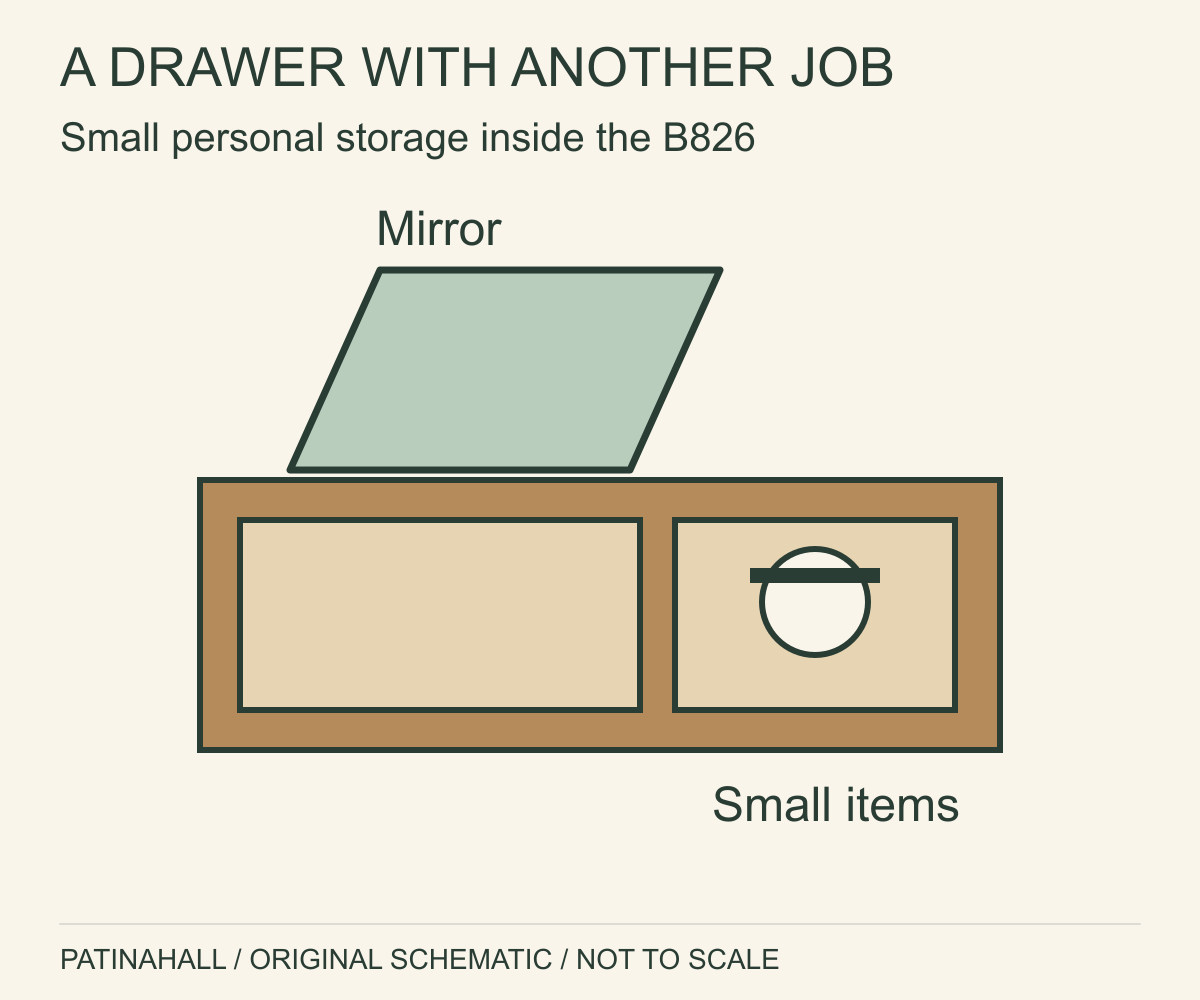
The High Wycombe Furniture Archive records the Brandon B826 fitted tallboy in light oak in 1953, naming E. Gomme as manufacturer and Victor Bramwell Wilkins as designer. Its fittings included a mirror and small personal-item storage; the archive also records a plain top-drawer option.1
A detail like this changes the way a chest is read. A mirror concealed in a drawer brings dressing-table work into a vertical storage unit. The outside can remain compact while the inside is organised around watches, small accessories and getting ready.
It also explains why a present-day room label can mislead. A bedroom chest may now carry a lamp in a hallway or stand below a television. That later use does not make its original design a dining-room sideboard.
The drawer that steps back
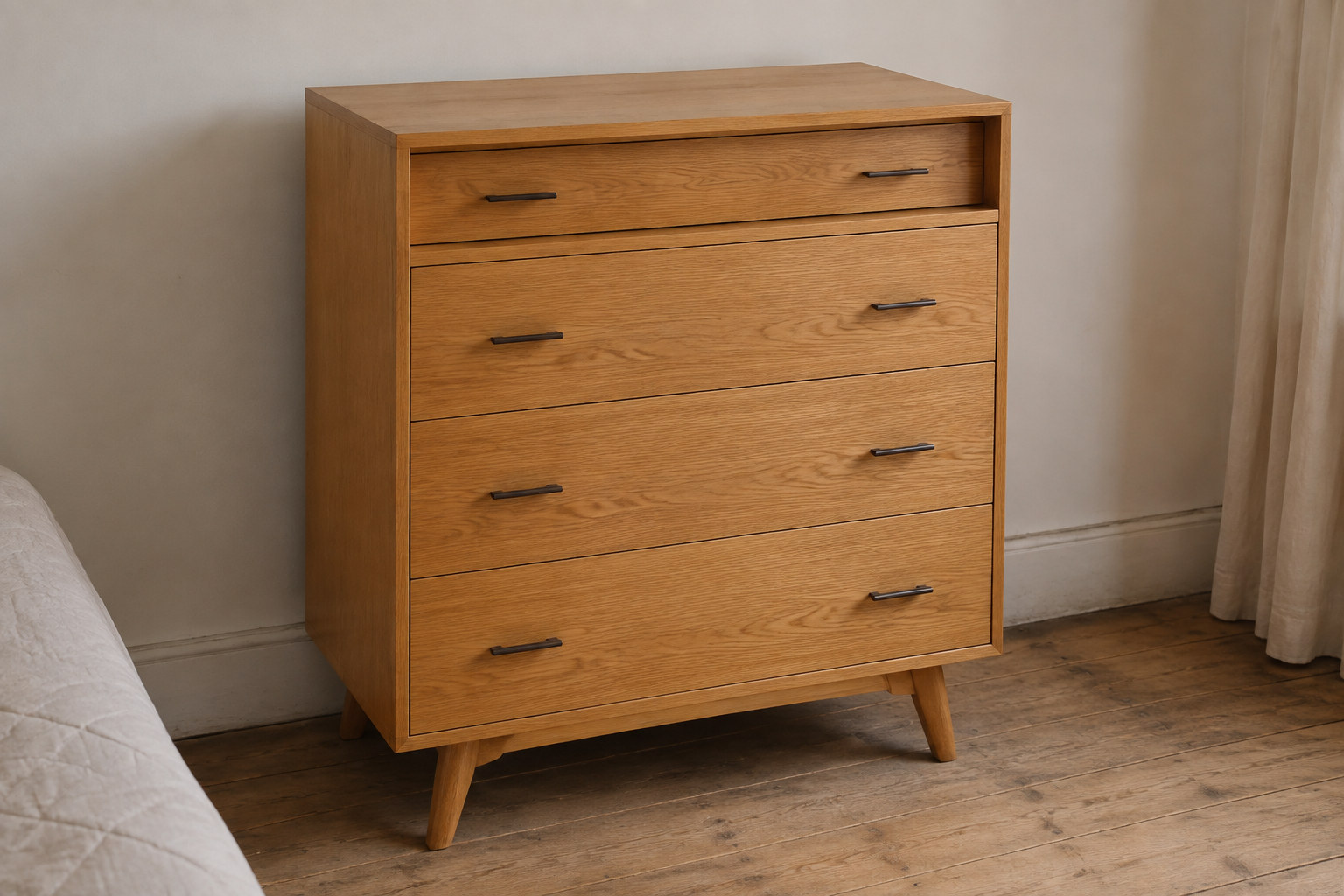
A page from the 1956 catalogue shows the B826 alongside the B820 four-drawer and B831 five-drawer chests. The archive draws attention to the recessed upper drawer, a feature that would recur in G Plan furniture.2
Set one drawer slightly behind the others and the face gains depth without an elaborate moulding. A shadow separates the upper section from the storage below. On a quiet wooden cabinet, that small step can do much of the visual work.
The catalogue’s alternative top drawers are equally telling. These were related pieces with choices inside them, not a single cabinet repeated under different names. The useful comparison is between a particular drawer arrangement and a documented model.
Reading a Brandon listing differently
“Brandon sideboard” can be a useful search phrase while remaining an imprecise historical description. The archival examples here establish the early range and specific bedroom models; they do not identify every long cabinet offered under that name.
For a reader looking at a familiar second-hand chest, the reward is more immediate than a perfect label. The light-oak appearance, stepped drawer and compact fittings reveal a version of modern domestic furniture concerned with small daily actions. Brandon becomes interesting when the drawer opens, not only when its name is attached to the listing.