A small object with a large journey behind it
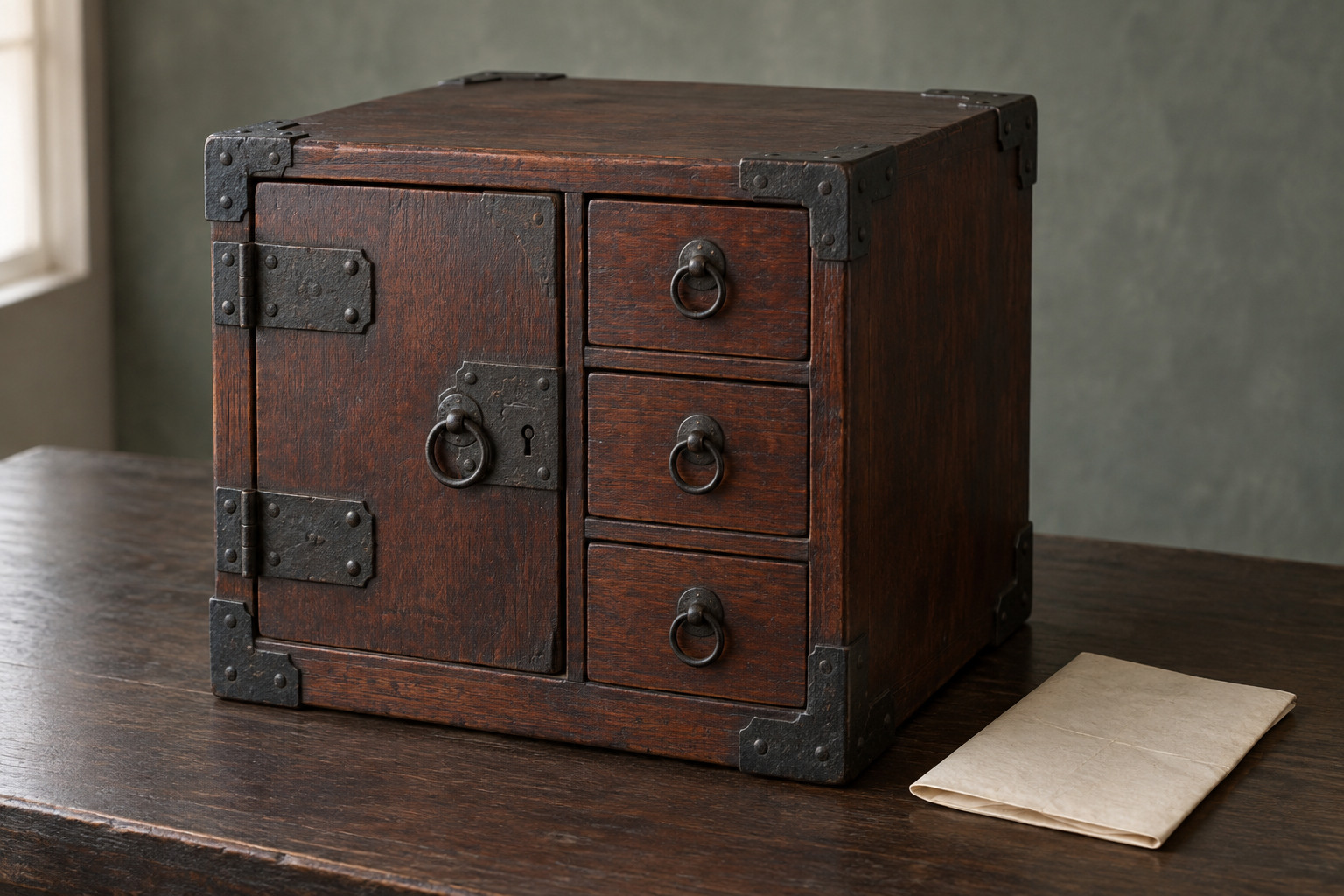
The Edo-Tokyo Museum records this chest as collection 89207581, gives its maker as 京橋 山善 and dates it provisionally to the late Edo period, in the nineteenth century. Its listed dimensions, 46.2 by 36.5 by 41.1 centimetres, describe a compact piece of furniture.1
That compactness is the first useful thing to notice. This is a container that can organise numerous small items without occupying the space of a domestic wardrobe. The exterior makes a dense unit out of several possible storage places.
Its collection record supplies an identity rather than an invented voyage. We can begin with the surviving object, then use the wider history of its type to understand what such furniture made possible.
The paperwork is part of the voyage
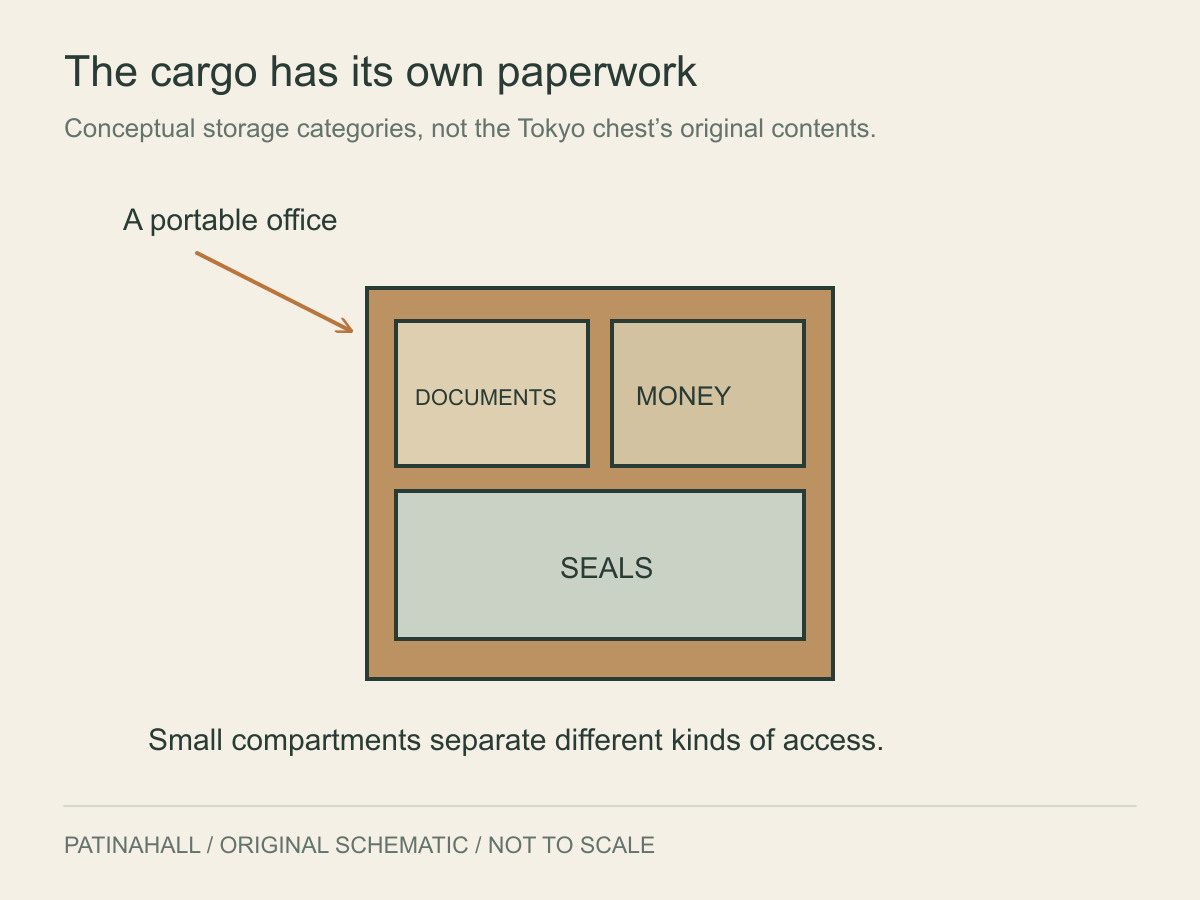
The Kotohira maritime collection explains that funadansu served trading vessels by holding money, ledgers, bills, passage papers and seals. Cargo might fill the hold, but the records governing it needed a different sort of protection and access.2
Those contents have different rhythms of use. A document may need to be shown; an account consulted; a seal kept under closer control. A collection of smaller compartments lets the user find one category without exposing the whole interior.
The chest therefore works as a miniature arrangement of authority. Opening a drawer grants access to one part of the business. A locked door can place several smaller spaces behind a second boundary. The furniture helps organise who can reach what, and when.
Iron outside, distinctions inside
Maritime museums describe the broader type through combinations of wooden bodies, protective lacquer, iron fittings and internal drawers or concealed spaces. The precise materials and construction vary, so that general description should not be used as an inventory of every feature in the Tokyo chest.2
The visible contrast is nevertheless helpful. Dark ironwork concentrates attention at corners, openings and places that can be grasped. Wood supplies the container’s volume. The fittings make handling and closure legible on its surface.
The Edo-Tokyo digital archive confirms the same collection identity and dimensions as the metropolitan collection portal. It does not add a named ship or a surviving list of the chest’s original contents.3
That absence leaves room for careful looking. The organisation of the object can explain a kind of work even when the individual worker is no longer known.
An office you could close
A modern desk spreads documents over a surface. This chest gathers them into a compact body that can be shut. The relationship between furniture and business remains recognisable despite the difference in scale and setting.
Look at the small openings again and imagine the sequence of a transaction: finding a paper, checking an account, returning the seal. The ship’s commercial life depended on these manageable actions as surely as it depended on the cargo moving through the hold.