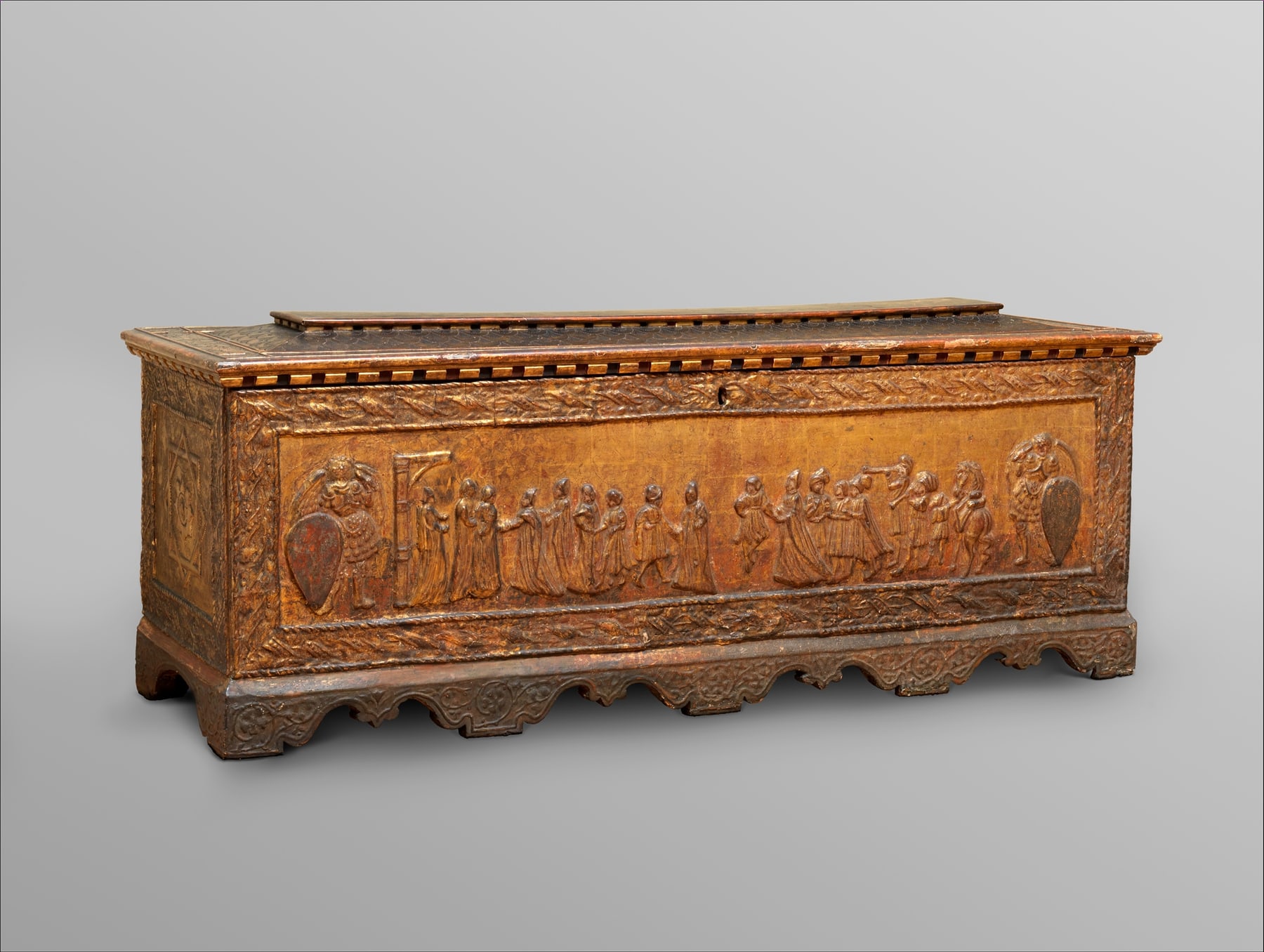
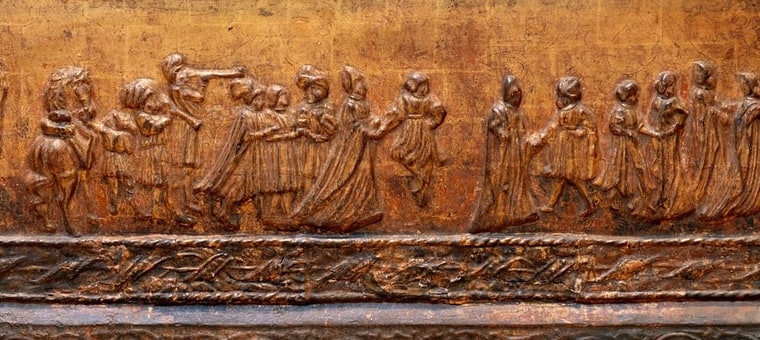
A procession runs across the storage
The long front is the natural place for a moving scene. Figures progress through a shallow decorative field, while the horizontal shape of the chest gives that movement room to unfold. The furniture’s proportions and the image’s direction support one another.
The Met describes the scene as apparently a wedding procession. Its walnut body carries painted and gilded stucco reliefs, so the raised decoration should not be mistaken for carving cut entirely from the chest’s wood.1
Marriage reached into the household
The museum’s study of Renaissance nuptial furnishings describes marriage chests, often made in pairs, as part of the material culture of family alliances and domestic life. Historical inventories could call them forzieri da sposa. Their contents and conspicuous decoration connected the movement of possessions with the establishment of a household.2
That setting helps explain why a storage chest could deserve such an elaborate public face. A closed box hides its contents, but its front continues to address anyone in the room. The procession remains visible when the practical work of storing cloth and possessions is out of sight.
The shields have lost their names
At the ends, angels accompany shields that once bore coats of arms. Those arms are now missing. The surviving arrangement still announces family identity as a subject, while withholding the names that would make the story specific.1
This is a useful place to pause over what decoration can and cannot tell us. The layout signals the importance of lineage and ceremony. It does not let a modern viewer fill the empty shields with whichever Florentine family seems plausible.
A chest could require several makers
The broader history of marriage furnishings includes carpenters, painters, gilders and locksmiths. Their different contributions made objects whose finished appearance can seem seamless.2
Here, the later replacement lid adds another stage to that history. The front and the top do not have identical claims to an original ensemble.1
The frontal photograph is therefore worth reading slowly. Its strongest surviving statement is horizontal: a procession, bordered by architectural and heraldic elements, running across a useful container. The chest brings a ceremony into the room and lets it remain there, long after the particular event and its identifying arms have become uncertain.