Turn the shade and watch the opening
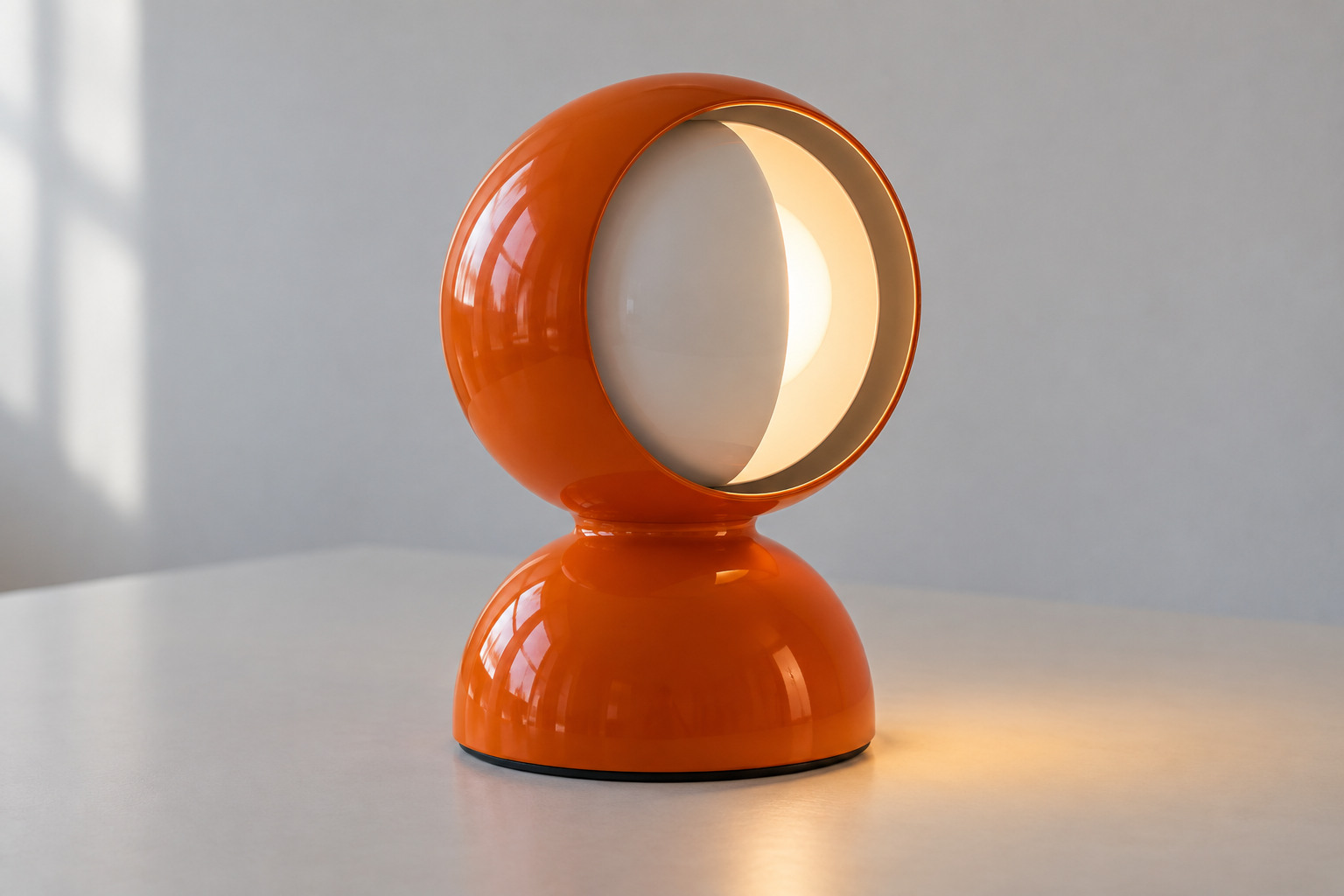
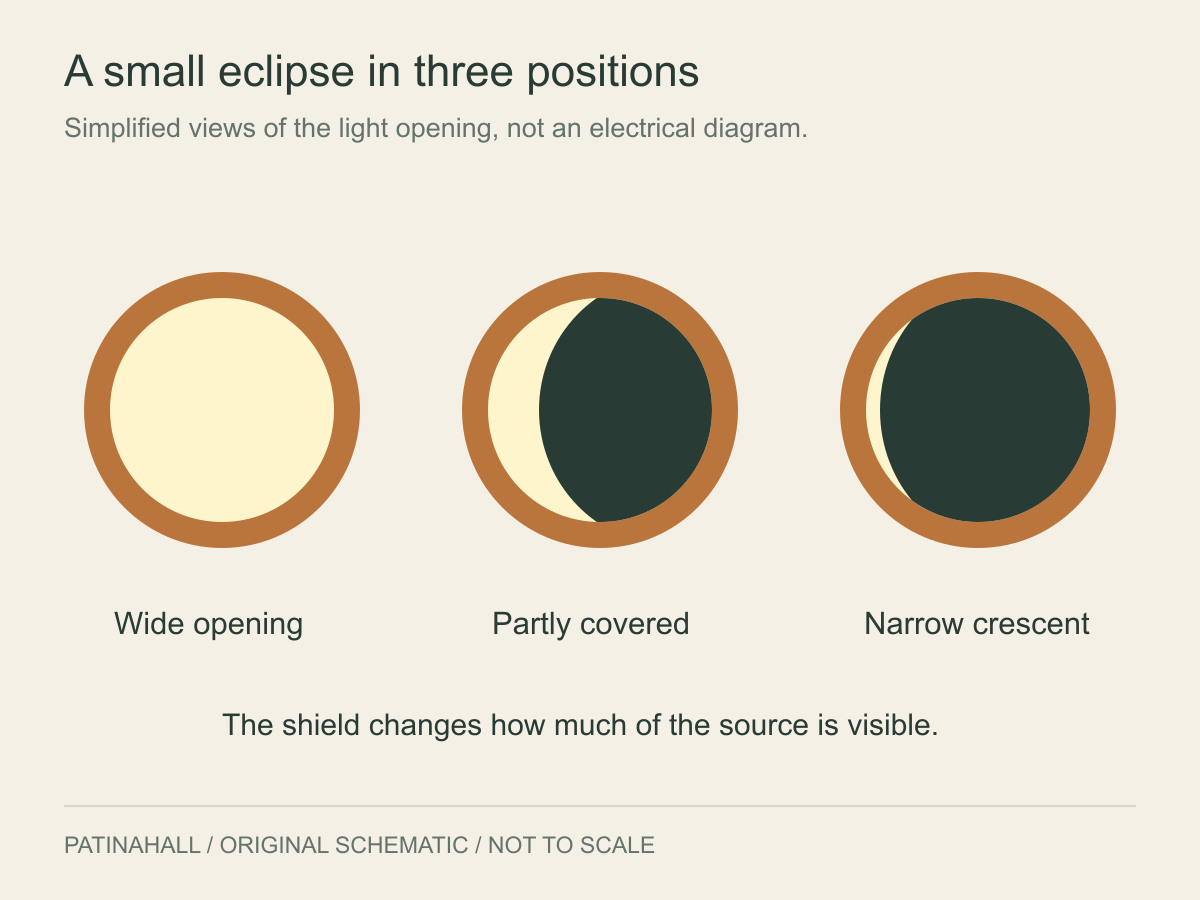
Eclisse begins with an invitingly simple gesture. Rotate the inner shade and a bright circular opening narrows. More of the light source disappears behind metal. The little lamp performs the eclipse promised by its Italian name.
Artemide describes a fixed outer shell and a moving inner one, with the latter controlling how directly the light emerges. The change is visible in the object itself. You do not have to infer what an unseen mechanism is doing.1
The familiar rounded form helps the movement make sense. One shell sits within another, and their changing relationship is announced by the bright opening. The light itself supplies the most effective explanation.
A dark lantern enters the bedroom
The Fondazione Vico Magistretti connects Eclisse to the dark lantern associated with Jean Valjean in Victor Hugo’s Les Misérables. In the foundation’s account, an older lighting object supplied a useful idea: a light could remain present while its opening was covered.3
That is a more interesting connection than a borrowed silhouette. Magistretti carried a way of controlling light from one object into another. The result is small enough to sit beside a bed, with a movement understandable from the shape of the shade.
The foundation’s exhibition Projects over the phone places this sort of observation within his wider design practice. It pairs familiar things with later designs: a lantern with Eclisse, a screw with the Vidun table, a bicycle chain with Maralunga. The exhibition follows ideas that could be grasped clearly before their final detailing was resolved.4
That clarity helps explain the lamp’s appeal. You can describe its central action in a sentence and then recognise it immediately when the object moves.
Covering light is different from dimming it
The turning shade physically masks the source. It changes the balance between the bright opening and the light reflected within and around the shell. This is an optical action: the amount of the source directly visible to the viewer changes.1
The distinction matters when looking at the design. Nothing about the moving shell, by itself, establishes a reduction in electrical power. The ingenious part is a tangible relationship between metal, light and the viewer’s position.
Look at the small crescent that remains when the inner shade turns most of the opening away. Its edge makes the movement legible. A modest adjustment becomes a graphic event, readable from across a bedside table.
Three dates, three kinds of label
Artemide gives 1965 as the design date and records the Compasso d’Oro award in 1967. MoMA catalogues its Eclisse Table Lamp under 1966 and specifies lacquered aluminium for that physical example. The foundation also uses 1967 in its account.123
Those labels should stay attached to their sources. They do not justify assigning a manufacture year to an unexamined lamp, and they need not overwhelm the experience of looking at one. They locate a short period in which the design entered production, collections and recognition.
The enduring pleasure is easier to demonstrate than to date. A hand turns a small shell; a circle of light becomes a crescent. The lamp lets its user make a tiny, repeatable event out of the ordinary act of changing the light.