Artefact story

Congo armchair: where two parts meet

An armchair usually arrives in the eye as one upholstered volume. Congo invites a second reading: two major assemblies meet to become a chair. Theo Ruth makes that encounter an organising idea that can remain visible even after the furniture feels complete.

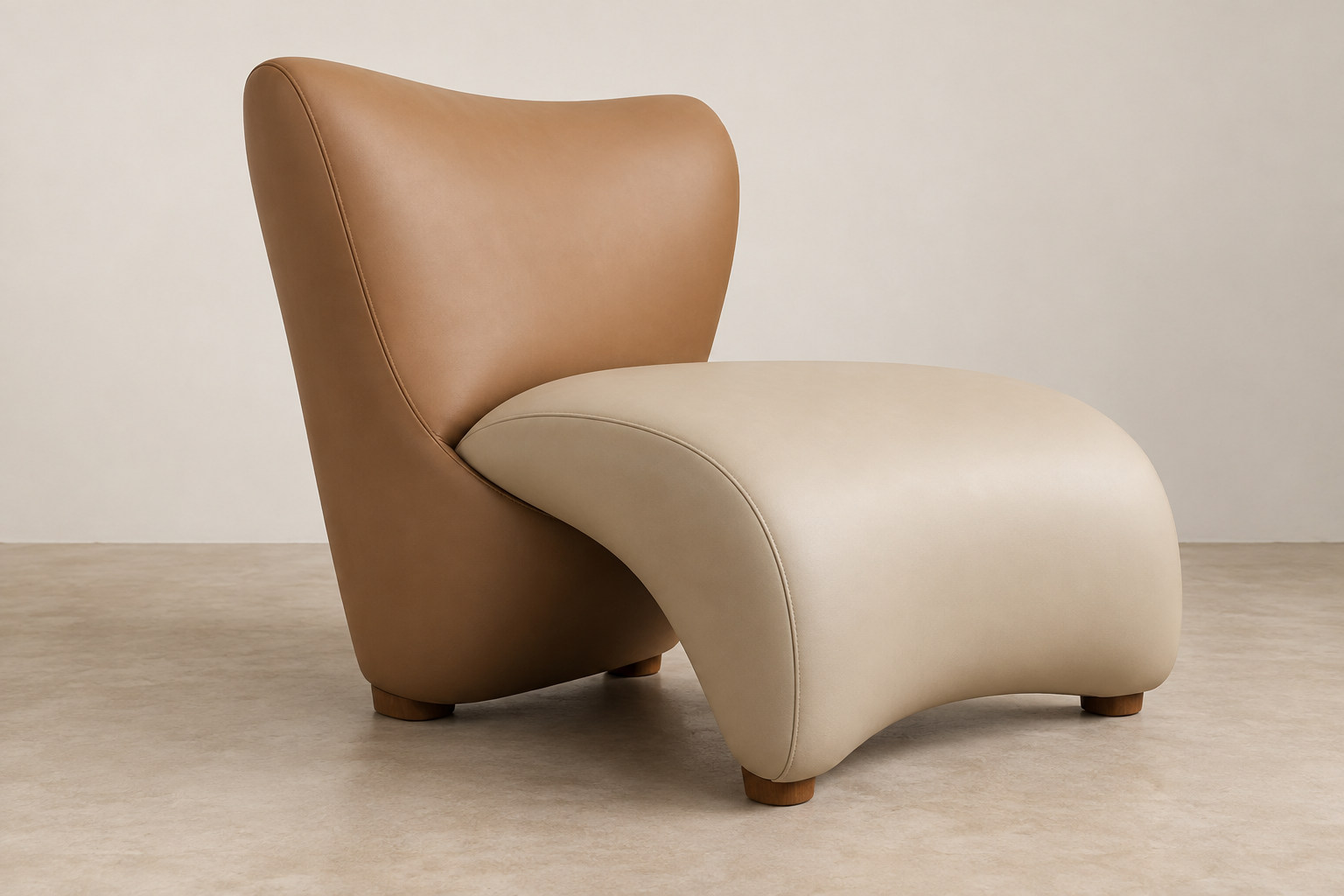
Smooth tan and cream padded forms overlap above small visible timber feet.
PatinaHall editorial reconstruction. It is not a documentary photograph. Two large continuous padded forms make their overlap legible. The image interprets the major-assembly idea without reproducing the museum chair’s internal joinery, colour or condition.
On this page
Key facts & takeaways

At a glance

Subject
Congo armchair, Centraal Museum 26422
Entry
Artefact story
Last reviewed
26 October 2026
Object dated
1953documented

Three things to remember

  1. The junction between the major assemblies helps explain the whole chair.
  2. Centraal Museum’s exact object is dated 1953.
  3. Artifort’s later Niloo continues the two-element question with a different designer.

Seeing a chair in two readings

Congo rewards a small change in attention. First notice the complete seat: the place to sit, the rising back and the supports beneath. Then look for the meeting between its major assemblies. The same chair becomes readable as a relationship between parts.

Centraal Museum’s armchair 26422 is dated 1953. Its record credits Theo Ruth as designer and Artifort as executor, keeping a particular physical object at the centre of the account.1

Artifort’s retrospective links Congo and Pinguin with the idea of two major elements interlocking. That account gives the eye a specific relationship to look for: the larger forms meet in a way that makes their connection part of the design.2

The junction becomes a feature

A connection has a practical role, but it can also guide looking. Here it offers a place to pause between the larger shapes. The eye can move from an assembly to the point where it meets its neighbour, then continue through the chair.

That makes the relationship worth noticing at the scale of a room. From a distance, the silhouette introduces the chair. Closer attention reveals how its organising parts belong together. The detail changes the reading without requiring a visitor to turn the chair into a diagram.
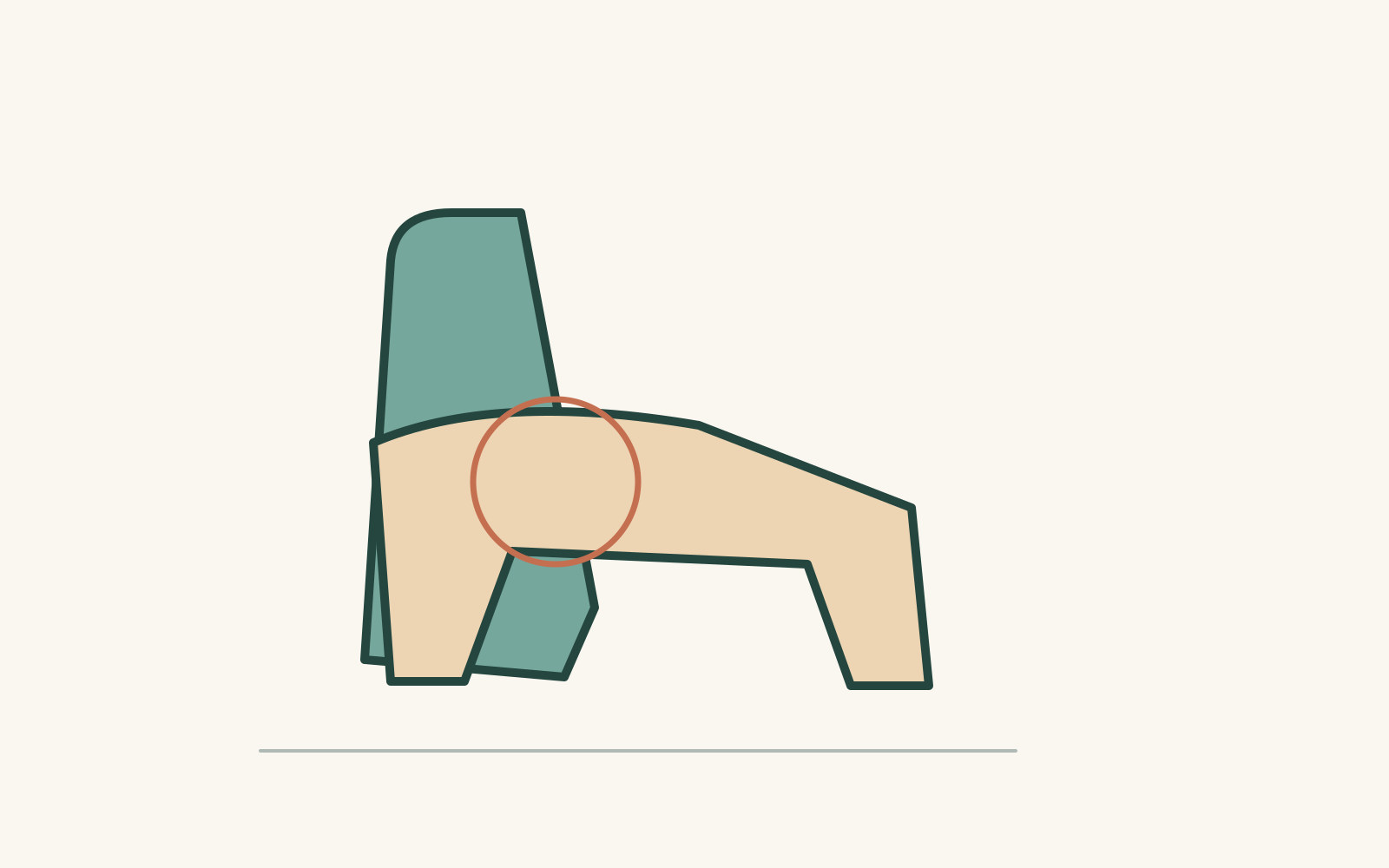
A tall green form and a lower warm form overlap beside a highlighted junction.
Large forms can be followed separately until their meeting makes one chair-like arrangement. The coloured overlap is conceptual, without an internal joinery claim. Original PatinaHall schematic, not to scale.

An idea another chair can ask again

Artifort returns to this question in its account of Niloo, a later chair by Khodi Feiz. It places Niloo beside Ruth’s Congo and Pinguin as a continuation of the idea of two principal elements meeting.2

That is a useful way to understand a design legacy. Another designer can take up the relationship between parts while giving it a different outline. The continuing question matters alongside the recognisable historical form.

Look back at Congo with that question in mind. Its most memorable detail need not be a decorative flourish. It can be the meeting that lets two assemblies become one piece of furniture.

Research notesEvidence, connections and limits

This story is anchored to museum object 26422. Its technical record includes glue, screws and upholstery fasteners; two major elements do not mean a chair without fasteners. No specific cultural origin is inferred from its name.

Evidence map

Connected subjects and evidence

Reviewed facts

  • Object dated 1953documented

    Centraal Museum dates its exact armchair 26422 to 1953; this is not a universal date for every model example.

    Reviewed 26 October 2026 by PatinaHall editorial.
    • Source 1Basic data: Maker, Dating and Object number; Additional data: materials and techniques

Reviewed connections

  • Congo armchair, Centraal Museum 26422attributed toTheo Ruthattributed

    Centraal Museum credits Theo Ruth as designer of object 26422. The 1953 object record does not establish a factory-management biography.

    Reviewed 26 October 2026 by PatinaHall editorial.
    • Source 1Basic data: Maker, Dating and Object number; Additional data: materials and techniques
  • Congo armchair, Centraal Museum 26422made byArtifortdocumented

    Centraal Museum names Artifort as executor. Glue, screws and upholstery fasteners remain in its technical record; two major elements do not mean no fasteners.

    Reviewed 26 October 2026 by PatinaHall editorial.
    • Source 1Basic data: Maker, Dating and Object number; Additional data: materials and techniques

Research trail

Sources and further reading

  1. Congo armchair, object 26422Centraal Museum UtrechtAccessed 26 October 2026
  2. The Making of NilooArtifortAccessed 26 October 2026

Last reviewed 26 October 2026. Found an error or a stronger primary source? Contact PatinaHall.