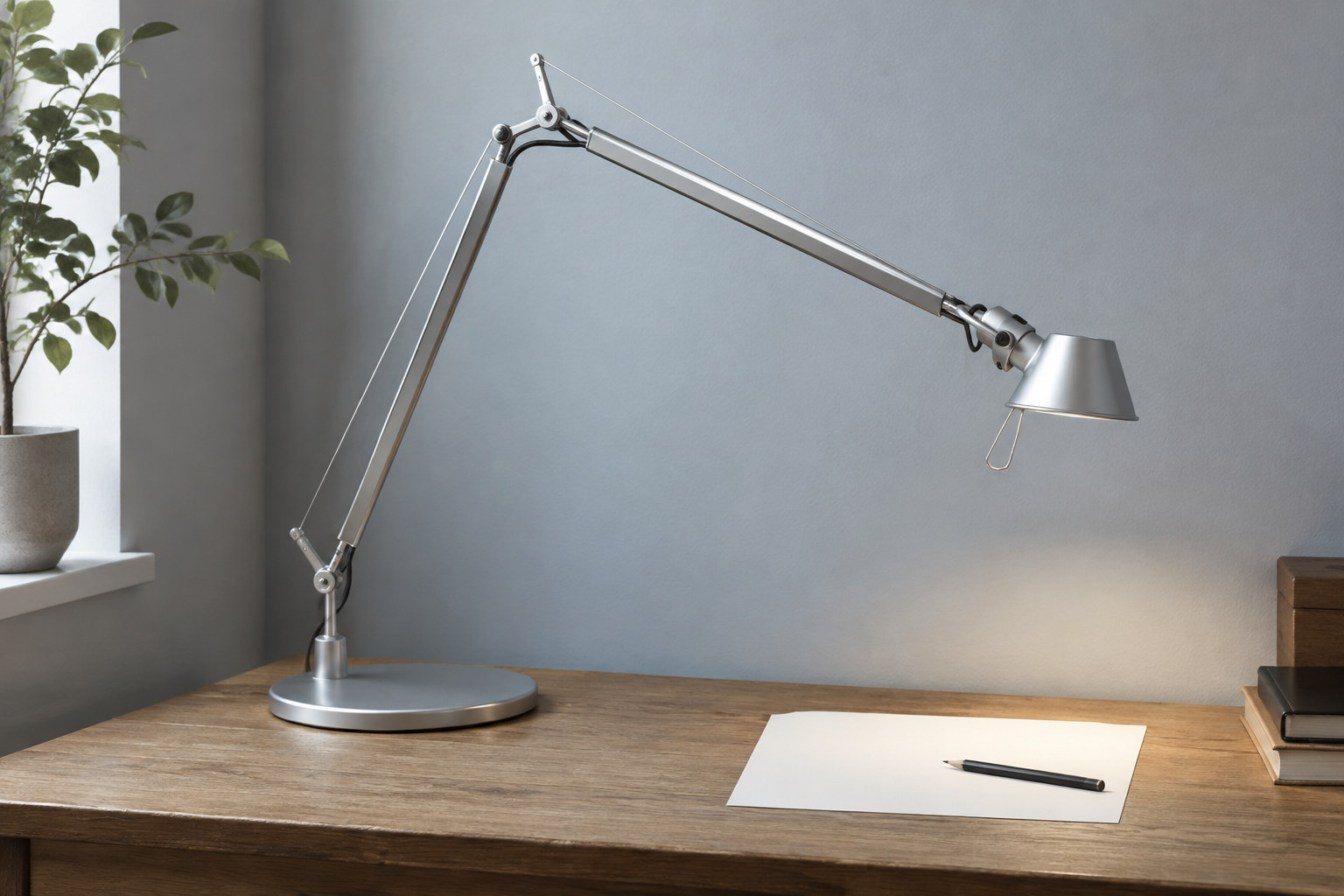
The thin lines have a job
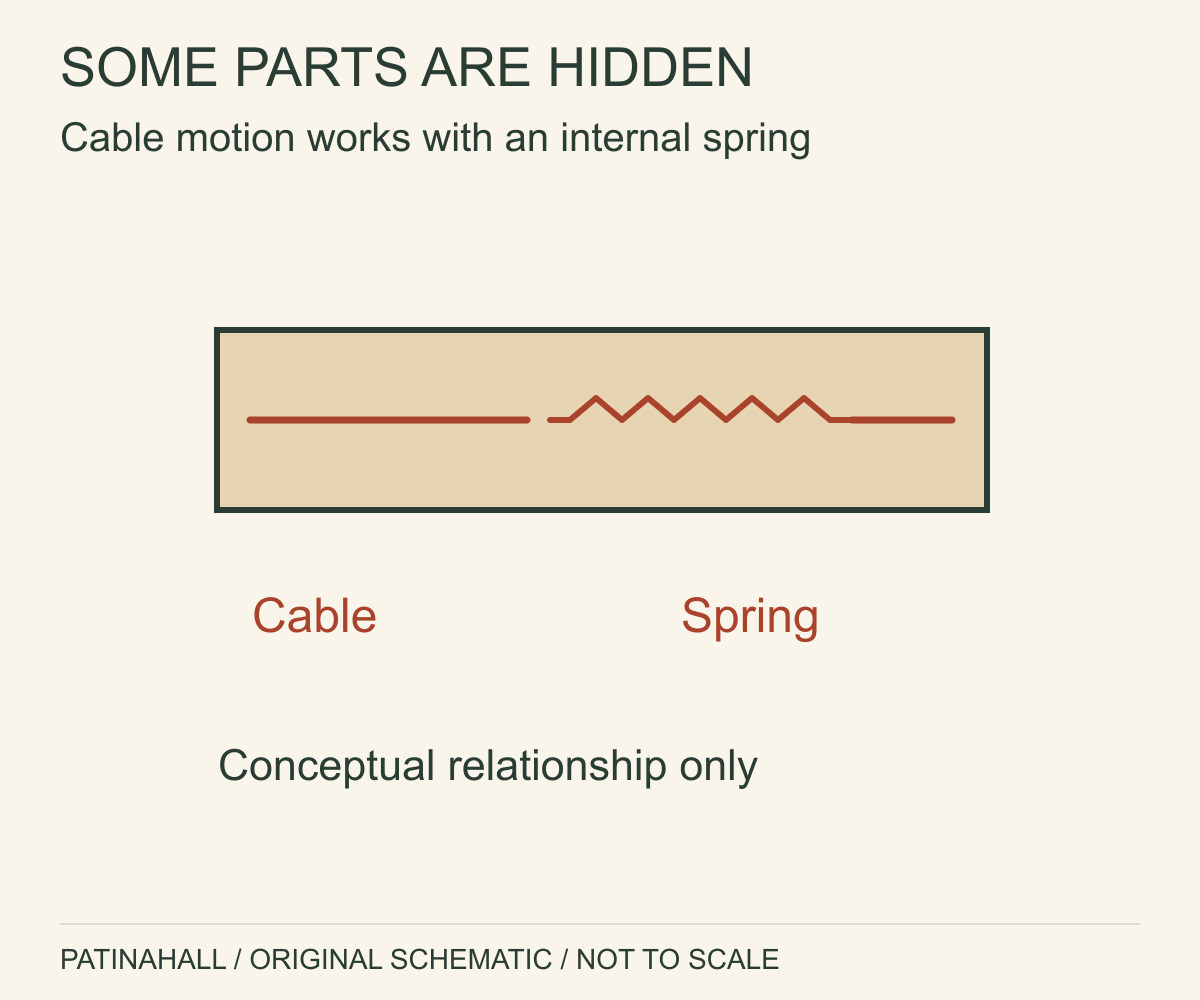
Look beside Tolomeo’s aluminium arms and another set of lines appears. These are steel tension cables, working with internal springs in the balancing system described by Artemide. The arms, joints and cables cooperate as the lamp changes position.2
The distinction matters. A thin line beside a lamp arm might be mistaken for an exposed electrical lead or a decorative brace. Here, the visible cables belong to the mechanism that controls the moving structure.
Some of the engineering is on show and some is hidden. That split lets the lamp remain visually fine without making its movement mysterious: the eye can follow enough of the system to understand that it is doing work.
A 1987 desk lamp
Artemide dates the design to 1987 and credits Michele De Lucchi and Giancarlo Fassina. The table version joins long articulated arms to a small adjustable head, bringing a directional light above the working surface.1
Its character comes from the contrast between reach and delicacy. The head may sit well away from the starting point, yet the arm reads as a narrow aluminium line rather than a heavy crane. The rounded joints punctuate that line at the places where movement happens.
This gives Tolomeo a useful domestic presence. Its technical parts remain visible, but their small visual weight allows books, paper and other furniture to remain prominent around it.
Move the head, keep the arrangement
The lamp’s head can change direction as the articulated structure brings it closer to the task. The resulting movement is more complex than simply tilting a shade on a fixed stem. Reach, height and light direction can be considered separately.1
Artemide’s technical description identifies aluminium arms, die-cast joints and a weighted base arrangement for the reviewed table configuration. The base has a different job from the slender parts above: it anchors a structure whose position can change.2
A clamp version changes where that structure meets the furniture. It belongs to the same larger idea, but its installation and footprint are different. The mounting choice is part of the lamp rather than an incidental detail outside the design.
One family, many settings
Tolomeo has expanded into a broad family. A wall lamp, small desk version and larger floor arrangement may share recognisable parts of the visual language while differing in size, light source and mounting.
The table lamp remains a clear place to understand the idea. Follow the aluminium arm, notice the thinner cable beside it, then look at the joint between them. The object turns a practical balancing problem into a set of visible relationships—small enough to live among the ordinary things on a desk.