The corner is the invention
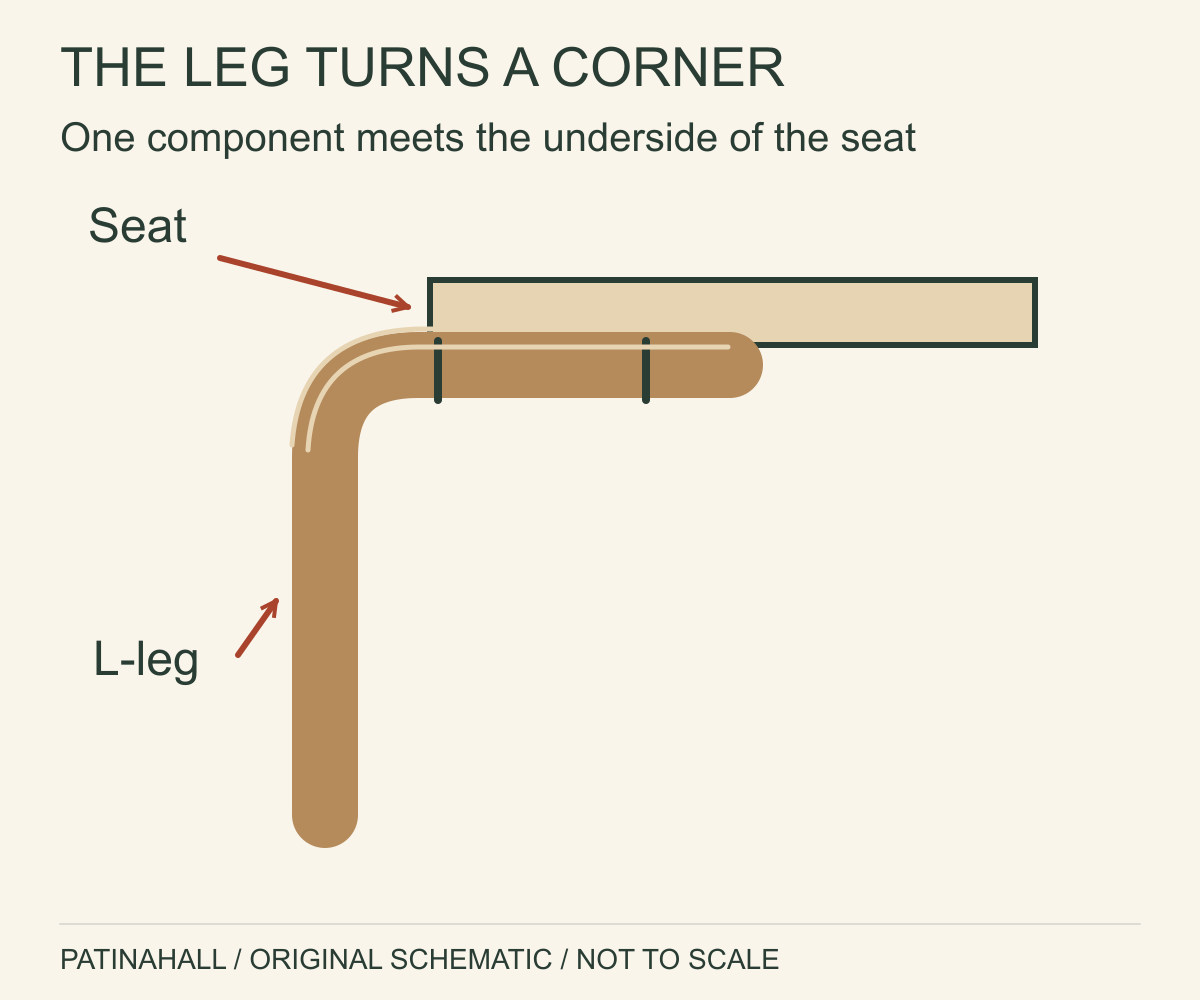
Where a leg meets a seat, furniture needs some way to turn a vertical load into a secure connection. Aalto’s answer was to give the leg a short horizontal end. The resulting L could attach directly beneath the round seat, with the curved corner left visible.
Artek’s account describes the development of this bending method with furniture manufacturer Otto Korhonen. The end of a wooden blank receives parallel cuts and inserted veneer strips before bending. The L-leg was patented in 1933 and became a component that could serve more than one piece of furniture.2
The useful idea is the change of direction. Instead of hiding the meeting beneath a complicated underframe, Stool 60 lets the bent leg perform the junction. The corner is doing construction work and giving the stool its character at the same time.
Three legs leave room for another stool
Stool 60 dates to 1933; Artek’s brochure places the four-legged E60 in 1934. The extra letter matters because a similar round seat can sit on a different arrangement of supports.2
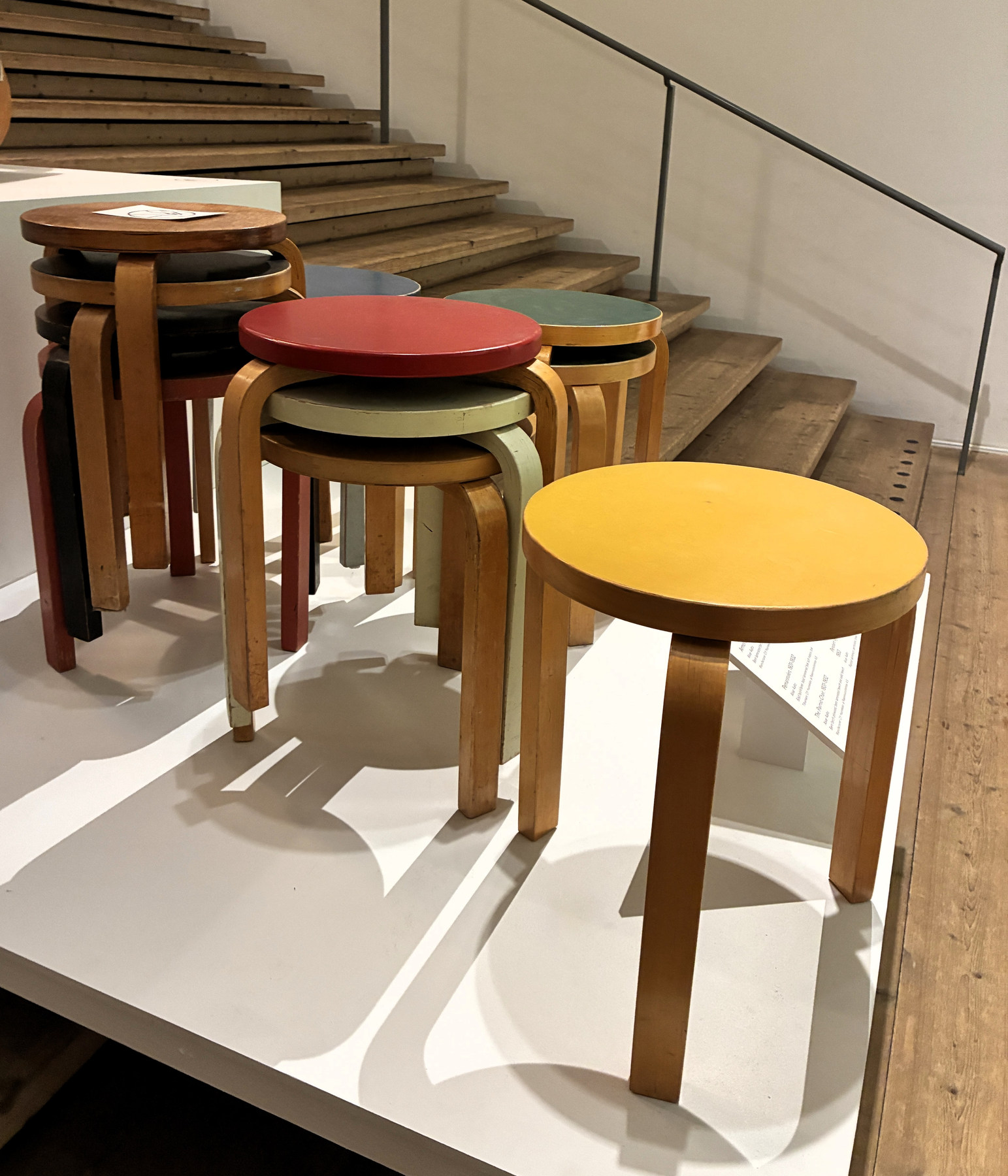
Stacking is one of Stool 60’s pleasures. A group of stools becomes a compact vertical form, with legs passing around the seats beneath them. The furniture can retreat into a corner between visits, then separate into individual places to sit.
The photograph at Millesgården, taken by Gotogo in January 2026, makes that everyday action visible. Coloured seats and wooden legs gather beside a staircase; several stools are already stacked. The image is a record of that display, not proof that every stool shown dates to the design’s first year.3
A seat that can become a little table
Artek describes Stool 60 as suitable for several roles, including a seat and a small table, and still supplies it in a flat pack. Its present material list also shows that the family includes different seat cores and surfaces, from exposed birch to linoleum and upholstery.1
The round top helps explain its flexibility. There is no front edge telling a person which way to face, and no backrest determining how the object must stand beside a sofa. An unupholstered version can offer a small landing place for a book as readily as it can join a group of chairs.
The ordinary stool worth looking under
Stool 60’s long history can make it sound untouchable. Its physical idea is much more approachable. You can understand the bend, the screws beneath the seat and the way one stool makes room for another without memorising a list of exhibitions.
An old example carries its own finish, wear and production history. A current one continues the same recognisable arrangement. In both cases, the feature worth remembering is a small wooden corner: one repeatable component that lets a simple stool become useful in several different situations.
