A lamp that meets the hand
A fixed lamp asks the paper, book or person to move into its pool of light. An articulated lamp can bring the light towards the work. On the 1227, two arm sections extend and fold while the shade changes direction at the end.
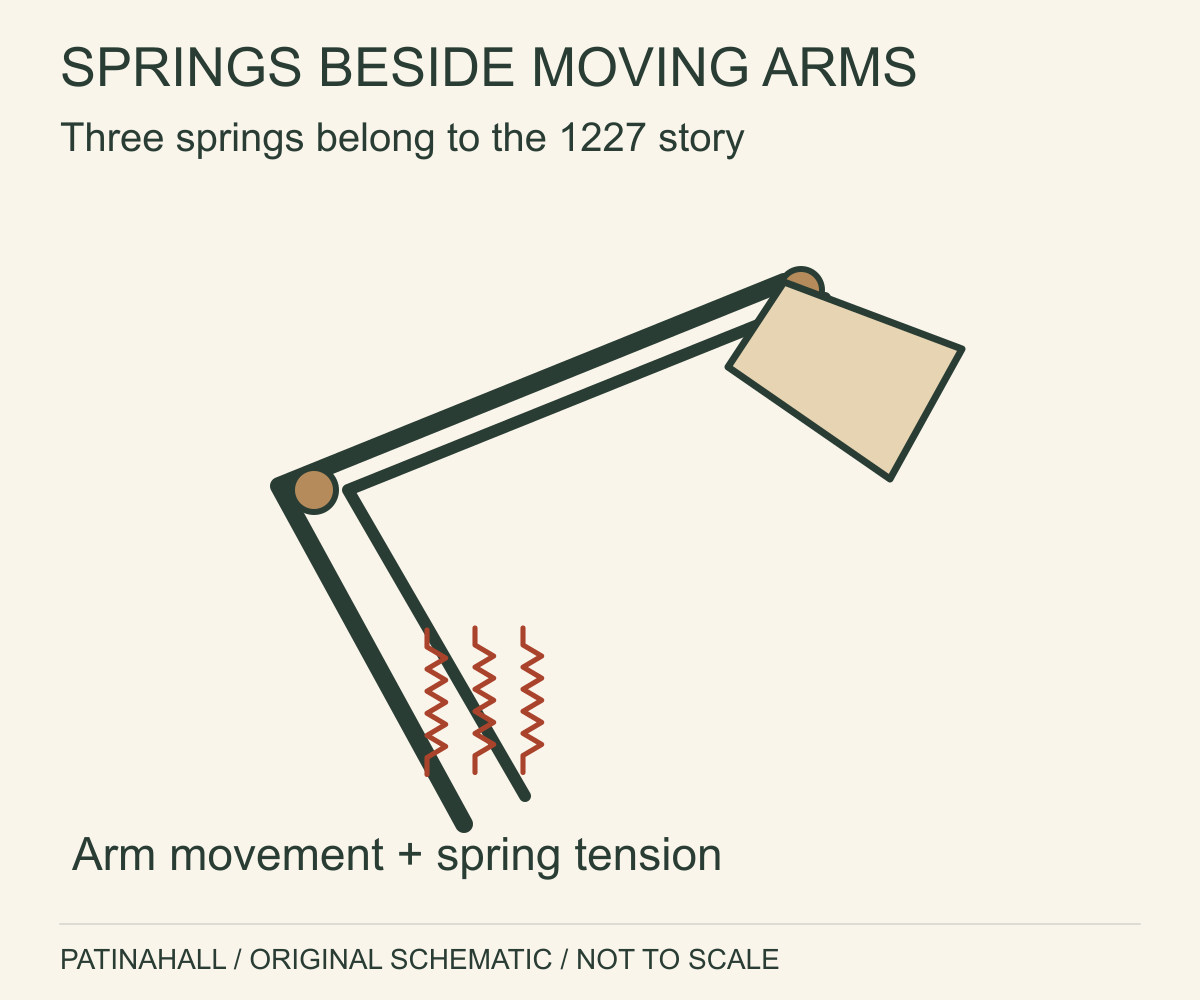
The springs are the clue to why this can feel different from repeatedly loosening and tightening a rigid joint. Their tension participates in balancing the moving assembly. The position of the arms and the pull of the springs work together, rather than relying only on a heavy structure that refuses to move.1
The mechanism remains visible. It is part of the lamp’s appeal precisely because the eye can follow the action without opening a cover.
Carwardine and the spring maker
Anglepoise traces the balancing idea to engineer George Carwardine’s work in 1932. Herbert Terry and Sons, a spring manufacturer, became involved in producing the lamp. The company’s timeline identifies the four-spring 1208 in 1933 and the three-spring 1227 in 1935.12
Those two dates often become blurred in general descriptions of “the original Anglepoise”. Keeping the models separate makes the history clearer. The familiar 1227 belongs to a development of the earlier mechanism, not simply another name for it.
The collaboration is also a useful reminder that a lamp can grow from mechanical expertise. A company experienced in springs brought a different kind of knowledge to the problem of placing a light above a desk.
What the museum photograph shows
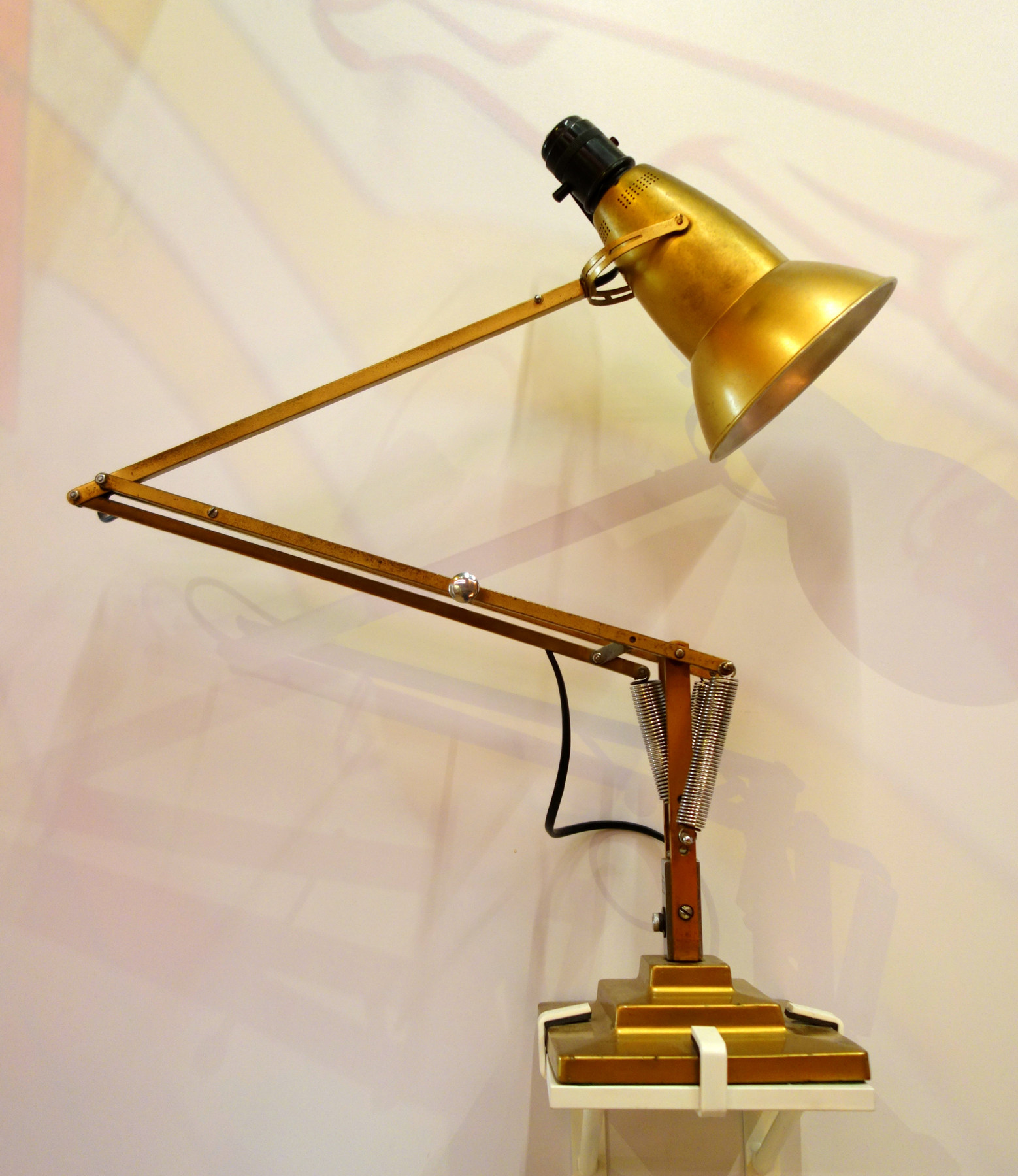
Daderot’s photograph records a Type 1227 displayed at the Design Museum in London. The stepped base, articulated arms and clustered springs are visible, along with the museum’s support clips. The image was taken in 2024; the record’s 1935 description concerns the lamp’s design history.3
The photograph is valuable because the springs and joints are real, visible parts of an object. It is not a reconstruction of a 1930s room, and the finish of this displayed example should not be treated as the finish of every 1227.
A familiar shape with working parts
The 1227 survives as a recognisable design as well as a family of individual lamps with different ages and histories. The model name alone cannot tell the story of a used lamp’s wiring, repairs or replacement components.
What it can explain is the relationship between the person and the light. A hand guides the shade; an arrangement of arms and springs lets the lamp follow. The object’s character comes from making that ordinary adjustment into a visible piece of engineering.
