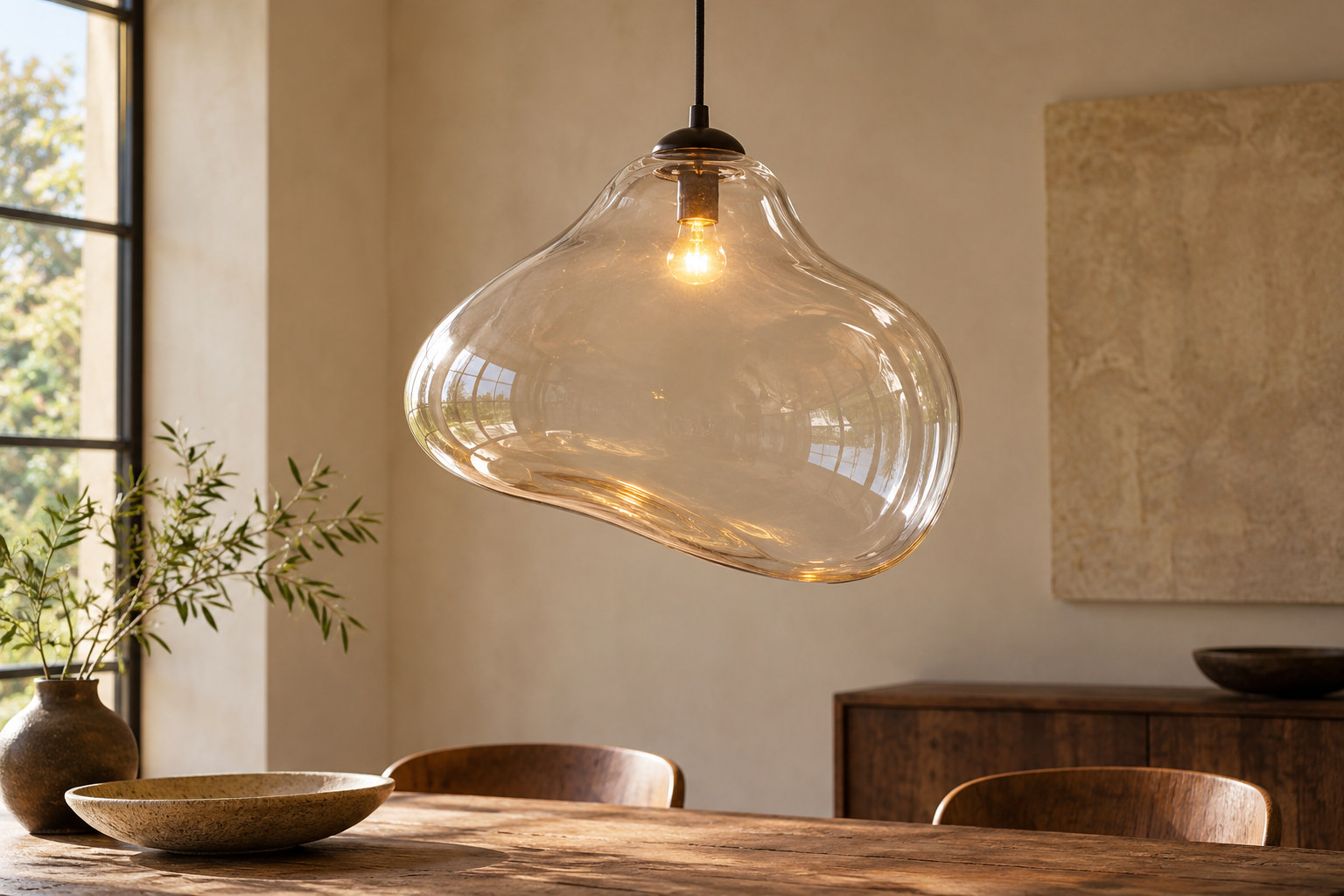
A light made around a breath
Glass can make a light feel almost absent while still giving it a definite outer shape. In The Big Bubble, the outer shape is part of the attraction: it is bulbous, extended and allowed to vary rather than becoming a completely regular envelope.
Alex de Witte’s studio describes mouth-blown production in the Czech Republic and says the design was first launched in 2013. Its account emphasises working closely with glassblowers and encouraging the process towards unusual forms.1
That is the studio’s account of making, rather than a physical test of every lamp. It nevertheless establishes a useful way to look: the silhouette belongs to a controlled craft process in which individual differences are expected.
The outline keeps a little uncertainty
A rotationally regular shade invites a quick mental description. A less regular glass form gives the eye a longer journey. One side can swell differently from the other, while reflections make those changes easier to notice.
The material also adds depth to the outline. A viewer reads the outer contour and the reflections across the glass together. The apparent boundary can shift as the viewing position or surrounding light changes.
That relationship gives a large glass envelope its particular presence. The object can remain visually light while its full silhouette occupies a substantial area around the source of illumination.
A family of individual examples
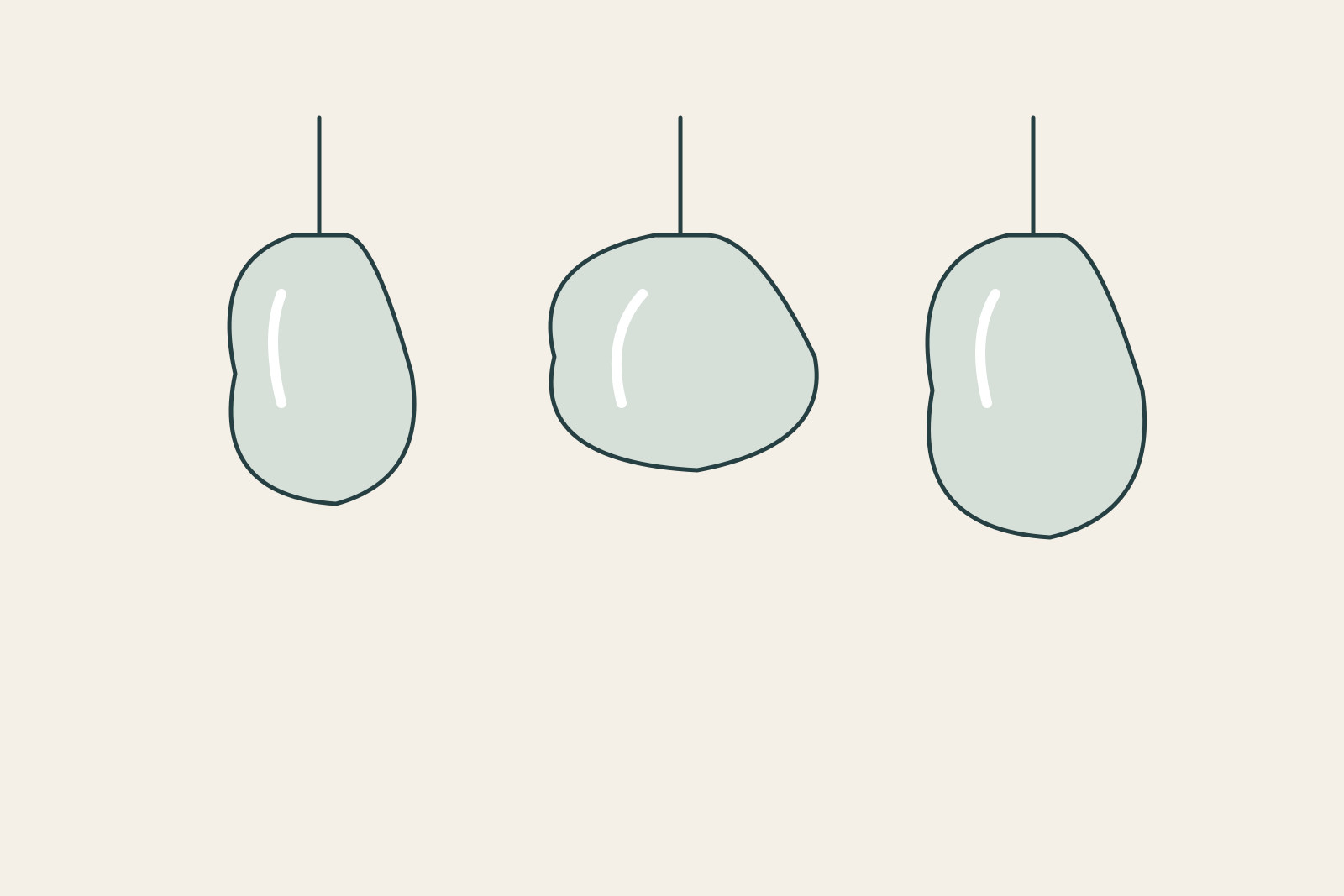
Kazerne’s accounts of its Open World and Escape exhibitions describe The Big Bubble as a mouth-blown hanging glass light whose examples are individually shaped. Its presentation history supplies a separate institutional setting for the studio’s work.2
The studio’s own catalogue offers several size categories. Those are a way of organising versions, rather than an assurance that two hand-blown outlines will be identical or a specification for every older example.3
Keeping the family and the individual apart avoids an easy mistake. Recognising a design does not mean that the viewer has already seen every form it can take.
The process stays in the room
A finished lamp often conceals the sequence by which its shape emerged. Here variation keeps that sequence imaginable. The glass does not need a decorative image of a glassblower to suggest the work of blowing and controlling it.
The useful change of attention is small: follow the contour before looking towards the light within. The Big Bubble makes the space around a light source feel as carefully considered as the source itself.